The most consequential spiritual challenge in Kali Yuga is not disagreement over philosophical fine points about Lord Rama or Krishna; it is the ordinary, relentless tendency to forget the Divine moment to moment. In practical terms, this forgetfulness functions like rejection, and it predictably multiplies confusion, restlessness, and suffering in material life. Addressing this core lapserather than pursuing ever finer abstractionstransforms practice from concept into lived stability.
Classical sources consistently diagnose Kali Yuga as an age of diminished memory, heightened distraction, and chronic agitation. The Bhagavata Purana observes, “mandāḥ sumanda-matayo manda-bhāgyā hy upadrutāḥ,” describing people as slow to spiritual endeavor, misled, unfortunate, and disturbed. Yet the same tradition identifies a precise remedy for this age: “kaler doṣa-nidhe rājann asti hy eko mahān guṇaḥ, kīrtanād eva kṛṣṇasya mukta-saṅgaḥ paraṁ vrajet” (Bhagavata Purana 12.3.51)in an ocean of faults, there is one great virtue; through kīrtana of Krishna’s Names one becomes free and attains the supreme goal.
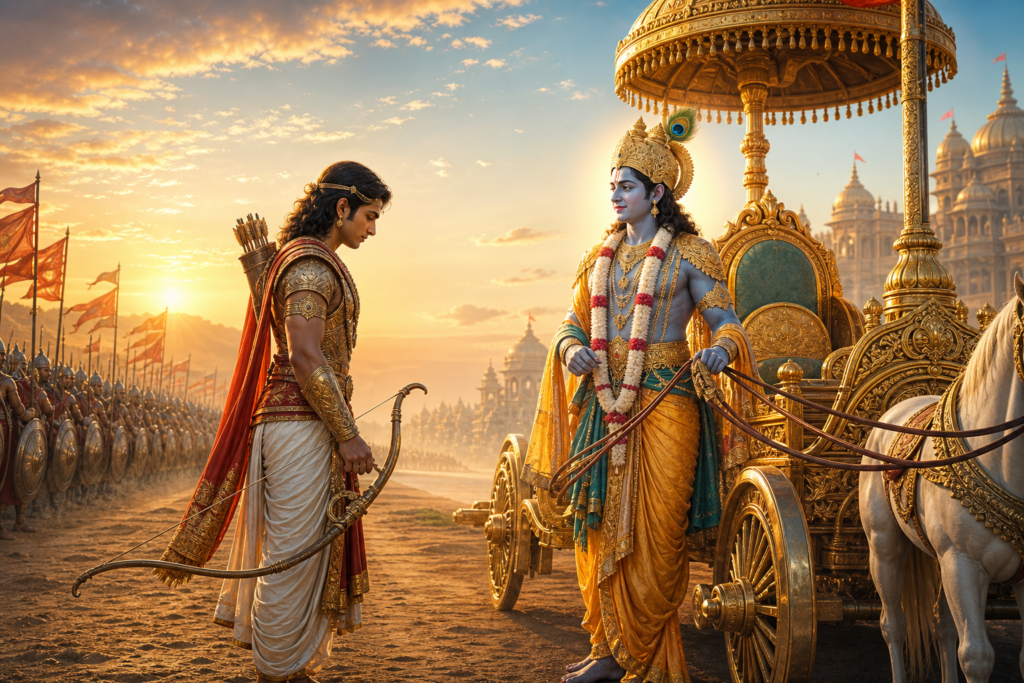
The Bhagavad Gita offers the principle behind that prescription with striking clarity: “tasmāt sarveṣu kāleṣu mām anusmara yudhya ca” (8.7)therefore, at all times, remember Me and fight. The imperative is dual: sustained remembrance (anusmaraṇam) and righteous engagement (yuddha as duty). This directly reframes spiritual life as an attentional discipline that accompanies action, not an escape from it.
Within bhakti-yoga’s nine processes“śravaṇaṁ kīrtanaṁ viṣṇoḥ smaraṇaṁ pāda-sevanam…” (Bhagavata Purana 7.5.23)smaraṇam (remembrance) animates the rest; without memory, hearing, chanting, and service remain episodic and fail to consolidate into character change. Yoga philosophy corroborates the same mechanism: Patañjali emphasizes smṛti as a driver of meditative stability (Yoga Sūtra 1.20), and īśvara-praṇidhāna (2.45) as the devotion that completes effort by surrendering its fruits.
This priority of remembrance aligns broadly with the unity of dharmic traditions. Buddhist mindfulness (sati/smṛti), Jain samayika and pratikraman, and Sikh simran (Naam Japna) converge on one operational aim: weaken forgetfulness, strengthen continuous recollection of ultimate truth and ethical commitments. Naming conventions differ, but the cognitive and ethical arc is sharedsustained remembering refines attention, reduces reactivity, and anchors conduct in dharma.
Theologically, Kali Yuga’s forgetfulness is rooted in avidyāfundamental misapprehension of self, world, and the Divine. Avidyā breeds raga and dvesha, which in turn fuel restless seeking and aversion. In contemporary terms, this manifests as compulsive over-engagement with stimuli that hijack attention. The more attention is dispersed, the more inner life fragments; the more it fragments, the easier it is to forget the Divine.
Modern cognitive science helps map this territory. Working memory is limited (roughly four items) and easily saturated; constant task-switching produces attentional residue, leaving cognition stuck between tasks. The “attention economy” is thus a Kali Yuga amplifier: notifications, feeds, and perpetual novelty maximize dopaminergic spikes while weakening the capacity for stable recollection. A practice architecture that protects and periodically refreshes remembrance is therefore not ancillary; it is essential.
Remembrance, as a lived discipline, must be precise, portable, and repeatable. A helpful starting point is the principle of Ishtaselecting a personally resonant focus for devotion, study, and mantra. Ishta does not negate plurality; it channels it, allowing an individual to cultivate depth without denying the legitimacy of other dharmic paths. This single-pointedness converts scattered inspiration into compounding attentional strength.
A daily protocol that integrates scriptural counsel with behavioral science can be articulated as follows. It is explicitly inclusive: one may center on Sri Krishna, Sri Rama, Śiva, the Guru’s form or Name, or the impersonal Brahman as guided by lineage and conscience. Across dharmic streams, remembrancenot sectarian rivalryremains the pivotal variable.
Morning anchoring (15–30 minutes). Begin with sankalpa (clear intention) and a stable seat. Practice mantra japa synchronized with the breath. For Vaishnava lineages, Kali-Santarana Upanishad identifies the maha-mantra: “Hare Krishna Hare Krishna Krishna Krishna Hare Hare, Hare Rama Hare Rama Rama Rama Hare Hare.” Shaiva practitioners may employ “Om Namah Śivāya,” Sikh practitioners may engage in Gurmantra (Waheguru) or Japji recitation, and Buddhist practitioners may repeat “Buddho” or “Om Mani Padme Hum.” The objective in each case is the same: entrain attention to the Name and carry it forward into the day.
Micro-remembrance loops (60–90 seconds, hourly). Insert brief smaraṇa breaks between tasks. Close the eyes if appropriate, inhale gently, and repeat the chosen Name or a universal breath mantra such as “So’ham.” These short resets evacuate attentional residue and restore the original sankalpa.
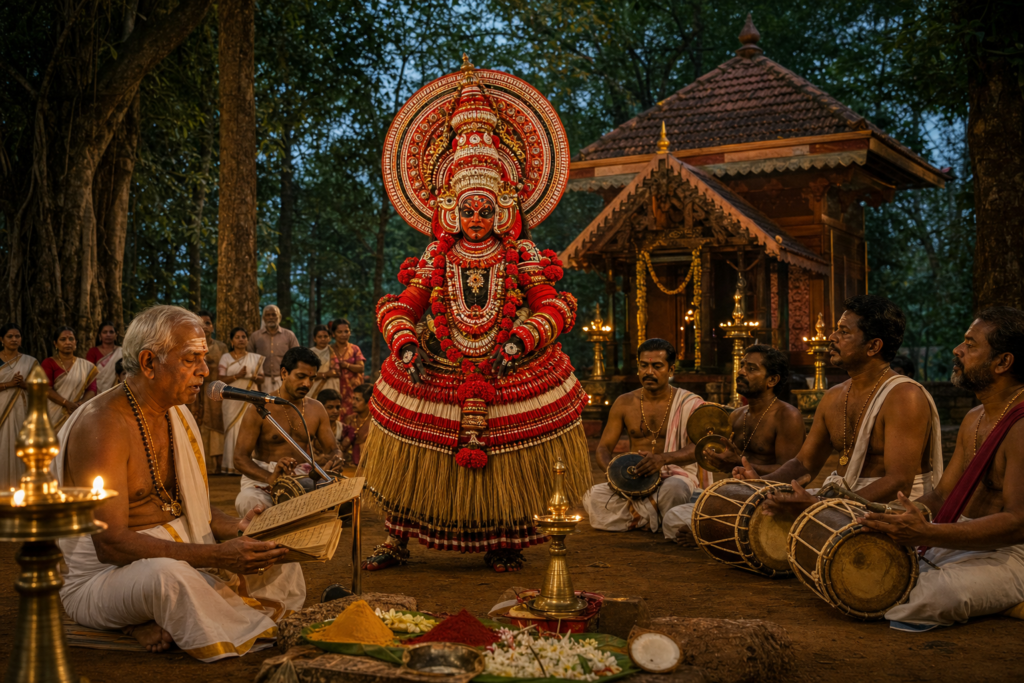
Sound and heart entrainment (10–15 minutes, once daily). Kīrtana, nāma-saṅkīrtana, or melodious simran stabilizes affect and recruits group synchrony where possible. Vocalization modulates vagal tone, reducing sympathetic arousal and promoting a state conducive to remembrance.
Scriptural micro-doses (10 minutes). Read a short passageBhagavad Gita, Bhagavata Purana, Dhammapada, Tattvartha Sutra, or Japji Sahibthen distill one actionable principle for the day. This is svādhyāya as cognitive rehearsal: reading plus deliberate recall.
Digital hygiene (structural guardrails). Disable nonessential notifications; schedule batch checks for messaging and news; set device-free windows around japa and study. Protect the beginning and end of the day with non-negotiable quiet.
Community reinforcement (weekly). Participate in satsang, sangha, or sangat. Group remembrancethrough study, service, kīrtana, or simranprovides social proof, accountability, and warmth that lone practice often lacks.
Evening integration (10–20 minutes). Conduct a gentle review akin to Jain pratikraman: note lapses in remembrance without self-criticism, express gratitude, and restore focus with a short round of japa before sleep. The day then closes in the same key in which it opened.
This framework is content-agnostic with respect to lineage while being content-specific with respect to attention: the content is the Divine Name or teaching chosen; the specificity is the unwavering return to it. In this way, argument over metaphysical nuance yields to a shared operational commitmentremember well, remember often.
Observable outcomes of sustained remembrance accumulate across weeks. Practitioners report fewer impulsive reactions, steadier mood, and an easier return to center after provocation. From a yogic perspective, this indicates a reduction in the turbulence of the guṇas and a strengthening of sattva. From a neuroscientific perspective, it reflects enhanced top-down regulation and improved salience mapping; significant life events cease monopolizing attention at the expense of meaning.
Measuring adherence sharpens progress. Simple japa counters, habit trackers, and brief mood logs provide feedback without becoming another distraction. Physiological markers such as resting heart rate and heart-rate variability can complement subjective reports of calm and clarity.
Common obstacles and responses can be anticipated. When practice feels dry, shift temporarily from silent japa to melodious recitation or brief scriptural contemplation to re-evoke bhāva. When restlessness prevails, shorten sessions but increase frequency; consistency outperforms intensity in the long run. When doubt surfaces, revisit unifying principles: remembrance strengthens ethical clarity, compassion, and resilience regardless of the chosen dharmic form.
Crucially, continuous remembrance supports, rather than replaces, worldly responsibilities. The Gita’s pairing “mām anusmara yudhya ca” frames memory as the internal posture that dignifies external action. This is dharma-in-action, not withdrawal. Whether in boardroom, classroom, farm, clinic, or home, remembrance guides decisions toward non-harm, fairness, and courage.
Because the blog’s purpose is dharmic unity, it bears emphasizing: the shared enemy in Kali Yuga is not one another’s paths; it is collective amnesia. Remembrancewhether as smaraṇa, sati, samayika, or simranbuilds a bridge across vocabulary differences. In practice, joint service projects, inter-tradition musical remembrance, and shared study of universal ethical teachings (ahiṁsā, satya, daya) cultivate mutual respect and dissolve caricatures.
Historical reflection reinforces this approach. Periods of dharmic renaissance repeatedly coincided with intensified remembrance practicestemple-centered kīrtana traditions, monastic meditation reforms, and movements emphasizing Naam across regions. The same medicine is applicable now, with contemporary constraints: smaller but more frequent sessions, protected attention, and supportive communities.
Some will ask whether a Krishna-focused solution marginalizes others. In the spirit of Sanatana Dharma’s breadth, the answer is practical and inclusive: the principle is universal remembrance of the Divine as realized in one’s tradition. The Bhagavata’s praise of kīrtana highlights a powerful path, not a monopoly on grace. Sikh, Jain, Buddhist, and Śaiva streams offer equally potent modalities of the same attentional alchemy.
Others may question scriptural chronologies of Kali Yuga. A balanced response acknowledges textual timelines while pointing to the verifiable human predicament they depict: attention is frayed, memory is short, and distress is widespread. The proposed remedystructured remembranceremains valid whether one reads yuga doctrine literally, symbolically, or historically.
When life becomes painful and unsatisfying, that very disquiet is diagnostic. It signals that remembrance has thinned and identification with passing mental states has thickened. Reintroducing frequent, compassionate returns to the Divine Name or teaching reorients the entire field of experience, not by suppressing thought, but by giving consciousness a luminous, unifying center.
In sum, Kali Yuga’s real problem is not theological disagreement; it is spiritual amnesia. The cure is exact: deliberate, rhythmic, and inclusive remembrance that travels with action. Anchored in the Bhagavad Gita, Bhagavata Purana, Upanishadic counsel, and parallel practices across Buddhism, Jainism, and Sikhism, this is a single medicine with many elegant deliveries. Remember, return, and remainuntil remembrance remembers itself.
Inspired by this post on Dandavats.