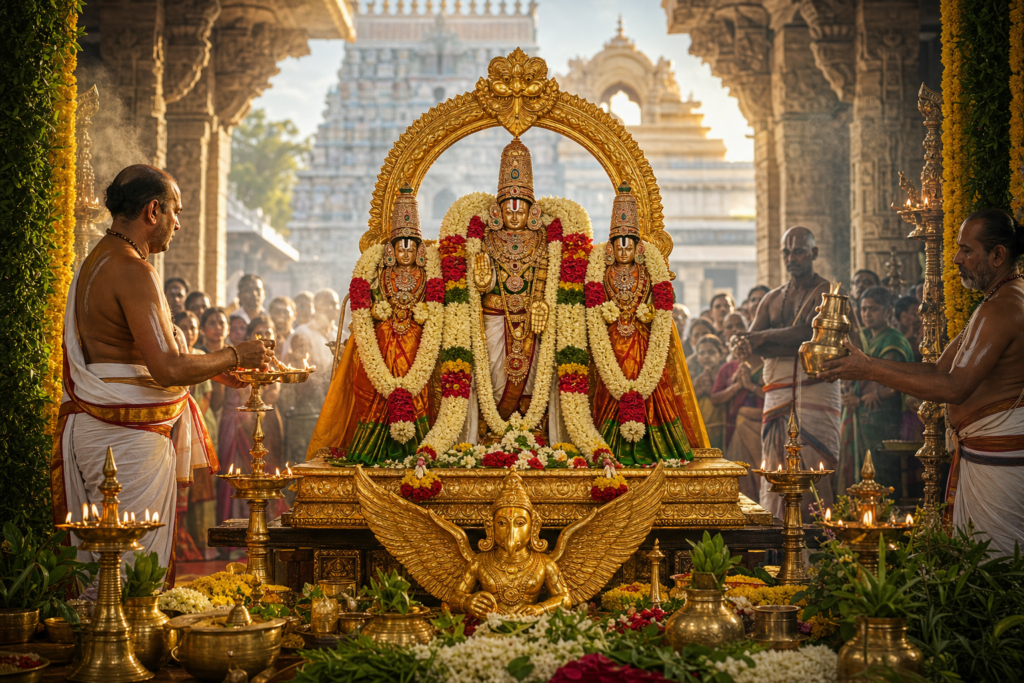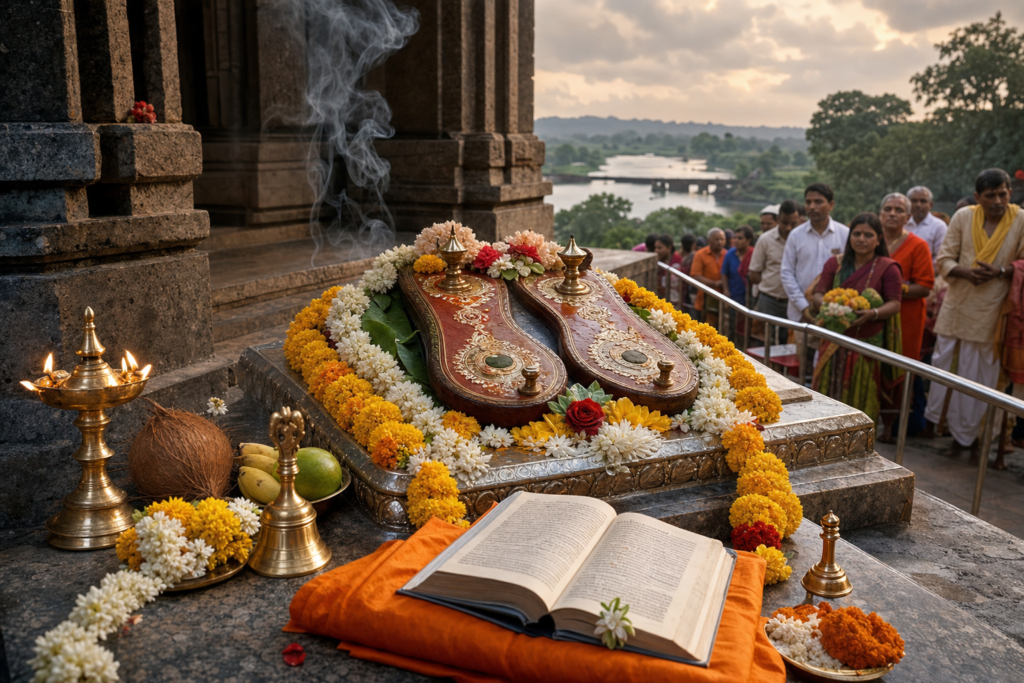
Rama Navami, the sacred appearance day of Sri Ramacandra, invites a rigorous and heartfelt contemplation of what righteous power looks like when governed by restraint, compassion, and truth. In the civilizational memory of Bharata, Sri Rama is revered as Maryada Purushottamathe exemplar of principled conductwhose life simultaneously establishes an ethical horizon for governance, leadership, and personal duty. Observances across Ayodhya and the broader Hindu world celebrate not only the birth of a divine king but also a philosophy of protection, promise-keeping, and service that remains deeply relevant to contemporary society.
Insights attributed to His Divine Grace A.C. Bhaktivedanta Swami Prabhupada emphasize a classical kshatriya ethic: a guardian of society does not retreat from a just challenge and, having accepted duty, does not waver from a given word. This chivalric ideal extends to fairness in engagementensuring parity of arms when conflict becomes inevitablepaired with cultivated generosity, truthfulness, and a readiness to govern as service rather than privilege. Such principles, when examined through the lens of Dharma-Yuddha, differentiate righteous protection from aggression, and moral courage from reckless violence.
Kshatra denotes the sovereignty, stewardship, and protective capacity required to preserve order (dharma) in the world. In the varna-ashrama framework, kshatriya duty is understood not primarily as birthright, but as a function of guna and karmadispositions and actions aligned with responsibility, courage, and social guardianship. This vocation is disciplined by vows (vrata), tempered by sattva (clarity and compassion), and energized by rajas (initiative and resolve), forming a balanced moral psychology capable of decisive yet ethical action.
Central to this ethic is the inviolability of truth and promise. The Ramayana illustrates this through Sri Rama’s acceptance of exile to honor the word of his father, establishing that leadership is inseparable from fidelity to dharma. Promise-keeping is not a mere matter of personal pride; it is an organizing principle for social confidence, political legitimacy, and intergenerational trust. In this way, the ruler becomes the first servant of the law, and the public realm is safeguarded from arbitrariness.
Another distinctive facet of classical kshatriya conduct, repeatedly noted in smrti texts and itihasa traditions, is the insistence on fairness in engagement. If a conflict moves beyond negotiation, parity is maintained: a properly armed opponent, a clear field, and the protection of non-combatants. This is not glorification of strife; rather, it is a codification of limits, discipline, and proportionality so that the use of forcewhen no other option remainsis bound by ethical constraints aligned with Dharma-Yuddha.
Sri Rama’s conduct during the Lanka campaign displays these principles in action. Diplomacy precedes confrontation; messengers carry terms; civilians are not targeted; those who seek refuge, like Vibhishana, receive protection; and fallen adversaries are treated with dignity. The moral grammar is unmistakable: justice first seeks reconciliation, escalates only when necessary, and never loses sight of compassioneven toward the erring. In this synthesis, courage is bridled by conscience, and victory is measured by restoration of order rather than annihilation of the other.
Generosity (dāna) and chivalry further round out the kshatriya profile. The guardians of society are to be large-heartedsupporting temples, learning, and the welfare of subjectsdemonstrating that strength and softness are not adversaries but allies in ethical rule. In the Raghu lineage, the expected pattern is clear: take vows seriously, protect the vulnerable, and make governance a conduit for loka-sangraha, the holding together of society through justice and care.
Rajadharma therefore integrates daṇḍanīti (statecraft) with dayā (compassion). Without the ballast of compassion, statecraft curdles into coercion; without the discipline of law, compassion devolves into sentimentality unable to protect the good. Sri Rama’s example shows how clarity of purpose, fairness of means, and devotion to truth establish durable legitimacy. This is the constitutional spirit of dharma: to align power with principle, and principle with the people’s welfare.
These ideals resonate across the wider dharmic family. In Sikh thought, the sant-sipahi ideal unites contemplative depth with protective courage, making defense of the vulnerable a spiritual act. In the Buddhist world, the historical kshatriya context of the Buddha and the later principle of dhamma-vijaya (victory through dharma) emphasize restraint, ethical persuasion, and the primacy of compassion. Jain traditions, while unwaveringly upholding ahimsa, also reflect the historical presence of kshatriya lineages among Tirthankaras, transmuting martial capacities into inner conquest and moral leadership. Across Hinduism, Buddhism, Jainism, and Sikhism, the shared thread is unmistakable: duty, truth, compassion, and disciplined strength must serve life and not dominate it.
Seen in this inter-traditional light, “accepting a challenge” does not romanticize conflict; it dignifies responsibility. It means standing firm where justice requires protection, responding proportionately, and exhausting peaceful means before any escalation. The supply of a weapon to an unarmed opponentan often-cited chivalric tropesignals the primacy of fairness over expediency, an ethic that modern humanitarian norms echo through the demand for parity, proportionality, and immunity for non-combatants.
Contemporary leadership can draw precise lessons from this canon. In public administration, corporate stewardship, or community service, kshatra translates into the courage to uphold the law without partiality, the humility to remain accountable, and the resolve to honor time-bound commitments. Promise-keeping sustains institutional trust; generosity funds shared goods; and fairness in process ensures that even those who disagree accept the legitimacy of outcomes. Courage becomes service when anchored to dharma.
On Rama Navami, practices such as kirtan, parayana of Ramayana passages, and community seva embody this synthesis. Ritual is not an end in itself; it is an embodied pedagogy. Studying episodes like the exile, the alliance with Sugriva, the counsel offered to Ravana, and the protection extended to Vibhishana cultivates moral imagination. The festival thus becomes a living classroom in Kshatra Dharmatraining the conscience to prefer truth over expedience, compassion over cruelty, and discipline over disorder.
Equally important is the careful delineation between defense and domination. Dharma-Yuddha is never a license for vendetta or excess. It demands proportionality, forbids harm to the surrendered and unarmed, and keeps the ultimate objective non-punitive: the re-establishment of justice and restoration of balance. These checks and balances anticipate modern discussions of just war and humanitarian law, yet are rooted in an older civilizational jurisprudence that binds kings first and foremost to dharma.
At a personal level, vrata-based living operationalizes these ideals. Daily commitments to satya (truth), ahimsa (non-injury in thought, word, and deed), and seva (service) transmute the kshatriya’s external valor into everyone’s inner valor. Speaking truth without spite, offering help without expectation, and keeping promises without delay are the small victories through which society is quietly, steadily upheld.
From a technical standpoint, kshatra can be read as a systems ethic. It is an architecture of constraint and capacity: rules of engagement, codes of office, and rites of promise that cohere to prevent the abuse of power and the decay of order. Guna theory explains its psychological ecologysattva offering clarity and conscience, rajas energizing purposeful action, and tamas minimized through discipline and study. Where these are integrated, leadership acquires moral traction; where they fall apart, might substitutes for right.
Interestingly, several chivalric features of classical Dharma-Yuddha find analogues in contemporary international norms: proportionality, discrimination between combatants and non-combatants, and immunity for the wounded and surrendered. While historical practice was not uniform, the normative aspiration was clear: to civilize force through law and conscience. Sri Rama’s conduct exemplifies this aspiration, reminding that the most compelling victories are those that leave the door open for reconciliation and rehabilitation.
Education in this ethic need not be limited to martial history or statecraft. The Buddhist pāramitā of vīrya (energetic perseverance), the Jain vow-centered discipline of ahimsa, the Sikh sant-sipahi synthesis, and the Hindu emphasis on loka-sangraha together articulate a pedagogy of responsible strength. The unifying insight is that fearlessness and compassion are not mutually exclusive; they co-arise when duty is anchored in truth.
Therefore, Rama Navami is both celebration and summons. It commemorates the advent of Sri Rama and calls for a recommitment to Maryada Purushottama’s template of promise, fairness, courage, and care. In a time when public discourse often confuses loudness for leadership and expedience for effectiveness, this festival re-teaches the grammar of ethical power: speak less and keep one’s word more; defend without hatred; lead without vanity; and give without counting the cost.
The reflections on kshatriya conduct articulated by His Divine Grace A.C. Bhaktivedanta Swami Prabhupada help to clarify these timeless contours. When read alongside the Ramayana’s narrative arc and the wider dharmic heritage, a coherent ethic emergesone that unites Hinduism, Buddhism, Jainism, and Sikhism in honoring truth, compassion, restraint, and service. Such an ethic is not a relic; it is a living standard capable of dignifying institutions and ennobling everyday life.
Rama Navami thus becomes more than festival observance; it becomes an annual constitutional reminder: power must be principled, promises must be precious, and protection must be paired with humility. This, finally, is the abiding lesson of Maryada Purushottamathe convergence of kshatra and karuṇā, of resolve and tendernessshaping a society where strength is safe because it is moral, and moral because it is devoted to the common good.
Inspired by this post on Dandavats.