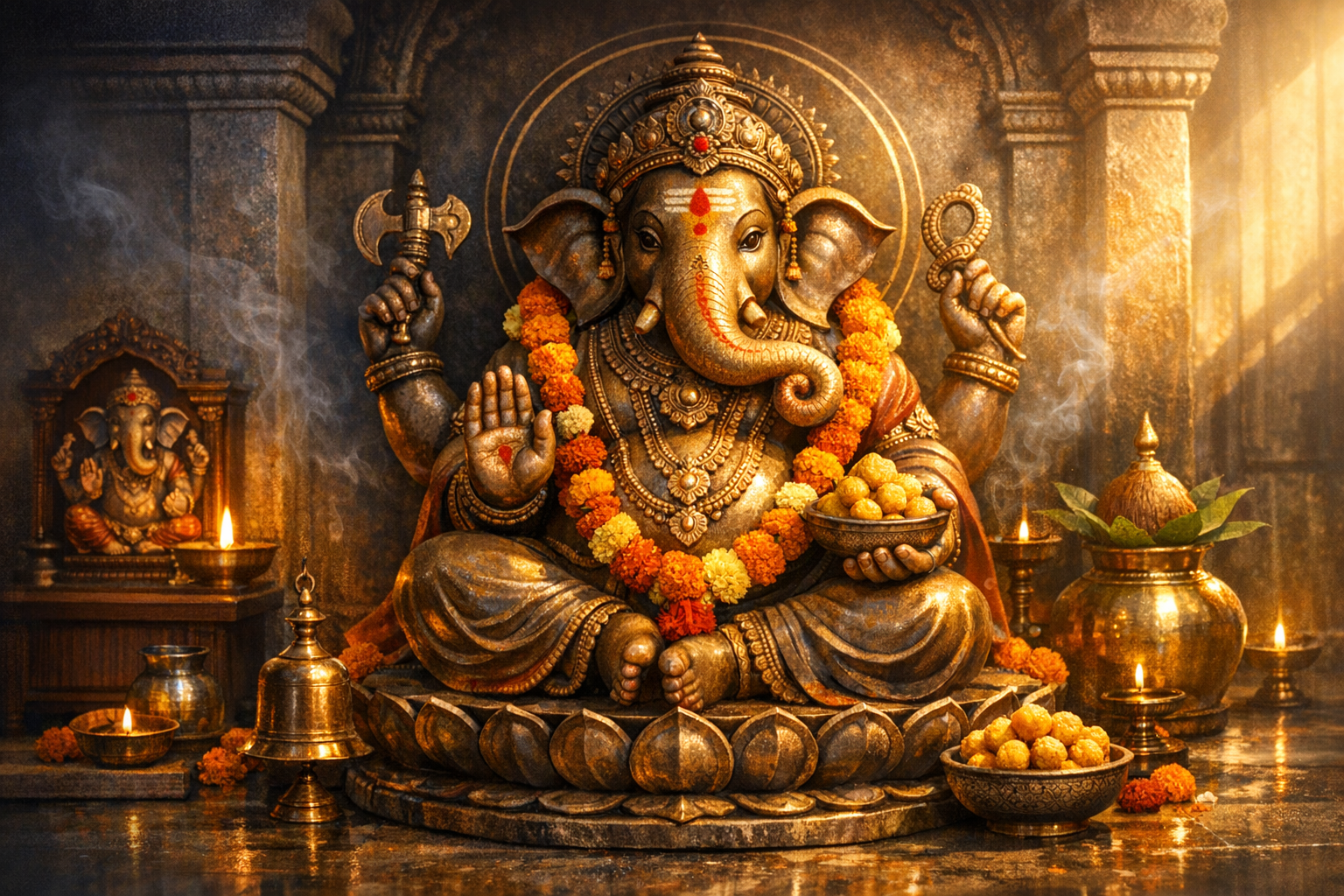
Siddhidata Ganesha, the bestower of siddhi (accomplishment) and the remover of obstacles, is often depicted with a distinctive right‑coiled trunk. In the canons of Ganesha iconography and Hindu spiritual traditions, this rightward turn (dakshinavarti) signifies a concentrated, solar potency that demands disciplined worship. For this reason, many traditional lineages advise that such a murti is most appropriate for temples or advanced householders able to maintain exacting daily niyamas (observances), rather than for casual placement in a home shrine.
Why the trunk’s direction matters is best understood through the shared yogic language of prana. The trunk turning left (vamavarti) is typically associated with Ida nadi (chandra, cooling, receptive); the trunk turning right with Pingala nadi (surya, heating, activating); and the rare straight trunk with Sushumna nadi (equipoise and transcendence). Thus, a right‑coiled trunk Ganapati emphasizes tejas (radiant energy), tapas (austerity), and swift resultspotent blessings that are precise in their response and, by tradition, call for precise worship.
The name “Siddhidata” (Siddhi + data, bestower) aligns with a broad scriptural milieu in which Ganesha is praised as granter of siddhi and buddhi, and is associated with Riddhi and Siddhi in popular devotion. Textual streams such as the Ganesha Purana and Mudgala Purana (well known for enumerating Ganesha’s forms) affirm his roles as remover of obstacles, patron of arts, intellect, and right conduct (dharma). Within these traditions, the iconographic nuance of a right‑coiled trunk further underscores a siddhi‑oriented, austerity‑centered discipline.
Shilpa Shastra and regional Agama traditions describe Ganesha’s murti-lakshana (iconometric and symbolic features), including trunk orientation relative to the modaka (sweet), the direction of gaze, and the posture of the hands holding the pasha (noose), ankusha (goad), and other attributes. Right‑coiled trunk forms, often termed dakshinavarti or dakshina-vaktra in descriptive usage, are treated as forms that radiate concentrated, “solar” efficacy. They are traditionally situated in temple contexts where agama-vidhithe full cycle of nitya (daily) and naimittika (occasional) ritescan be upheld by trained archakas with ritual precision.
Because this right‑coiled trunk Ganapati concentrates Pingala energy, it is traditionally believed to act quickly and decisivelyfruitful when revered with accuracy, and unsettling if approached casually. For householders balancing work, caregiving, and civic duties, the exacting rhythm of sunrise puja, lamp offerings, mantra counts, fragrant baths (snana), and food offerings (naivedya) may be difficult to sustain every single day. Hence, classical guidance commonly favors temple installation for dakshinavarti forms and recommends more forgiving left‑coiled or straight‑trunk murtis for general household worship.
Where a right‑coiled trunk murti is nevertheless installed at home under lineage guidance, the discipline generally includes early morning nitya-puja, a satvika regimen (cleanliness, non‑violence, sobriety, and purity of diet), steady mantra practice (for example, a fixed count of Om Gam Ganapataye Namah), ghee or sesame oil lamps, and consistent naivedya such as fresh fruits or modaka. The emphasis is on regularity, not occasional intensity. The tradition frames this not as fear but as responsibility; when the deity is invoked with a specific energetic signature, the devotee’s daily conduct becomes the vessel that holds that power safely and fruitfully.
For most homes, a left‑coiled trunk (vamavarti) Ganapatior a straight‑trunk form symbolically aligned with Sushumnais encouraged. These forms, associated with cooling Ida or balanced Sushumna, harmonize gracefully with domestic rhythms while still inviting Ganesha’s core blessings: clarity, auspicious beginnings, and obstacle‑removal. Common household conventions include placing the murti or image cleanly elevated, facing east or northeast where practical, offering a simple lamp and water daily, and observing festival days such as Vinayaka Chaturthi with special puja vidhi in a spirit of gratitude rather than anxiety.
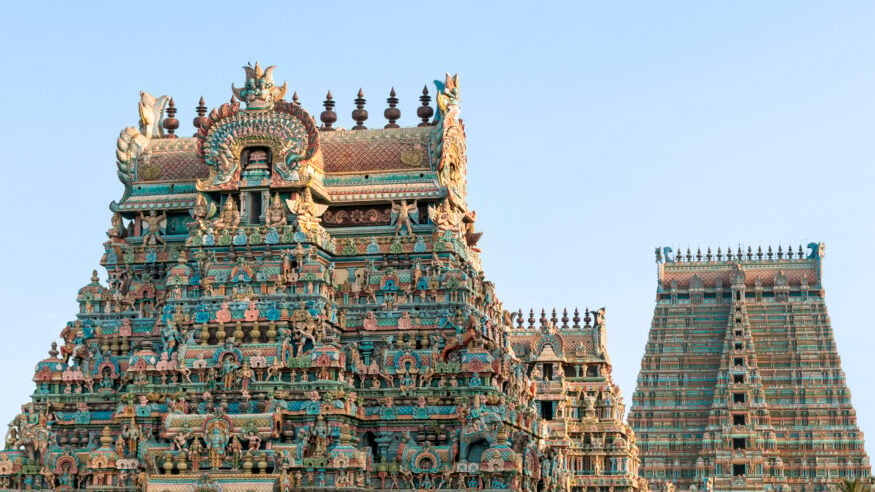
Temple exemplars, such as the renowned Siddhivinayak tradition in Mumbai, illustrate how right‑coiled trunk forms are embedded in full agama protocolstructured ablutions, consecrated mantras, and continuous service cycles carried out by trained priests. The point is not that the form is “inauspicious,” but that it is ritually high‑octane; it belongs where its energy is properly managed. In a domestic setting without the scaffolding of temple routine, the same energy can feel demanding and is therefore recommended only when supported by a stable daily discipline under guidance.
Across the dharmic familyHinduism, Buddhism, Jainism, and Sikhismthe deeper lesson is one of disciplined, ethical living. Buddhists honor the transforming power of mindful conduct; Jains elevate ahimsa and self‑restraint; Sikh tradition emphasizes nishkam seva (selfless service), remembrance of the Divine Name, and upright daily practice. The right‑coiled trunk Ganapati embodies the same principle in iconographic form: intense energy made safe through steady conduct. Read in this light, Siddhidata Ganesha invites unity through shared valuesself‑discipline, compassion, and responsibilityrather than through identical ritual methods.
Several misconceptions are worth clarifying. First, a right‑coiled trunk Ganesha is not “dangerous”; it is precise and expects precision. Second, “not to be kept at home” reflects a protective norm rather than a taboo, urging devotees to avoid anxiety or irregularity in worship. Third, a household that genuinely sustains nitya-puja and satvika living under a guru’s counsel may appropriately install such a murti. The guiding principle is suitability: choose the form that harmonizes with the home’s real, sustainable practice.
From a practical perspective, householders often find that a left‑coiled trunk image fosters devotion without the pressure of exacting temple‑style routines. It also complements the domestic emphasis on care, study, and community responsibilities. For many, this choice reduces uncertainty (for example, during travel or illness when daily rituals can lapse) and supports a devotional life oriented to dharma, learning, and harmonygoals that resonate across all dharmic traditions.
Scholarly and traditional sources converge on a simple counsel: match the icon to the capacity for niyama. In schools of Agama and Shilpa Shastra, form and function are inseparable; the icon’s energy, ritual requirements, and community context are designed to fit together. When that alignment is honoredtemple for the right‑coiled trunk form, home for a left‑coiled or balanced formdevotion flourishes, obstacles ease, and the home becomes a site of serene, sustainable practice rather than strain.
In sum, Siddhidata Ganesha with the right‑coiled trunk is a sacred discipline more than a decorative motif. It represents a compact between devotee and deity to host concentrated Pingala energy through regular, accurate worship. For most households, the same grace of Ganesha is joyfully accessible through left‑coiled or straight‑trunk forms that honor the home’s natural cadence. Guided by wisdom, compassion, and unity across dharmic paths, the choice becomes clearand auspicious.
Inspired by this post on Hindu Blog.