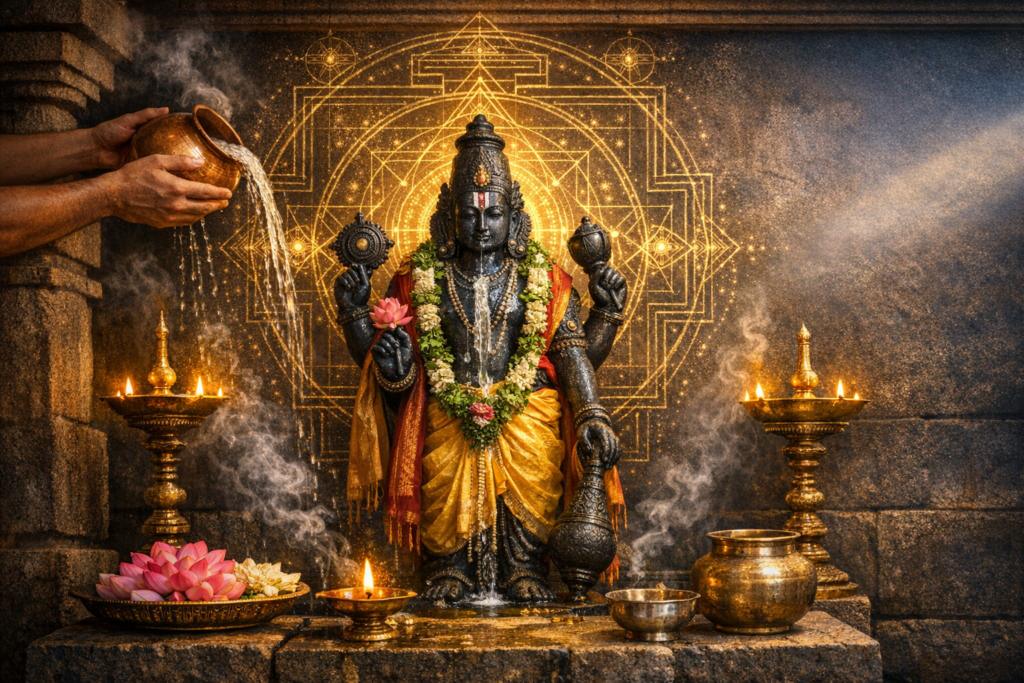
“If there is no peace in the minds of individuals, how can there be peace in the world? Make peace in your own mind first.” ~S. N. Goenka
Completing a third ten-day Vipassana meditation course offers a rare vantage point on how disciplined silence reshapes attention, emotion, and behavior. In a setting free of digital inputs, conversation, eye contact, books, and journaling, the nervous system is granted an unusual experiment: sustained inwardness. The absence of external stimulation does not dull experience; it refines it. What remains is sensation, perception, and the bare mechanics of reactivity laid open for study.
The ritual surrender of a phone at intake functions as an intentional boundary crossing. It marks the shift from a world optimized for novelty to one optimized for depth. As the ambient hum of notifications falls away, cognitive load lightens and the system begins to register the more subtle frequencies of interoception—temperature, pressure, tingling, throbbing, and the minute flux that ordinarily goes unnoticed.
This container is not escapist. It is a turning toward life without buffers—no social mirroring, no habitual exits. Ten days unfold with a consistent structure: a wake-up bell at 4:00 a.m.; formal meditation from 4:30 a.m. to 9:00 p.m., totaling roughly ten hours of Vipassana meditation daily; simple vegetarian meals (breakfast around 6:30 a.m., lunch around 11:00 a.m.); and, for returning practitioners following the eight precepts, an evening of tea without a meal. Many participants report that an almost-empty stomach and minimal decision-making support steadier attention.
Each evening, recorded discourses by S. N. Goenka provide instruction and context. Although Goenka-ji passed over a decade ago, the pedagogy remains stable and universal in intent—non-religious, non-sectarian, and designed to be accessible regardless of one’s background. The uniformity of instruction across centers preserves the technique’s integrity and comparability for practitioners returning over years.
What Vipassana Actually Trains
Vipassana is an embodied, somatic practice rooted in direct interoceptive awareness. Attention is guided systematically through the body to observe sensations as they are—pleasant, unpleasant, or neutral—while cultivating equanimity (non-reactivity). The core discipline is to refrain from automatic craving of what feels good and aversion to what feels uncomfortable. Over time, this repeated non-reaction weakens deeply conditioned habit loops.
From a cognitive and affective science perspective, the practice repeatedly decouples raw sensation from evaluative appraisal. Interoceptive circuits in the anterior insula and anterior cingulate cortex strengthen with training, while default mode network activity (midline prefrontal and posterior cingulate hubs implicated in narrative selfing and rumination) often quiets during focused attention and open monitoring. The result is less compulsive commentary and more contact with primary experience. Vipassana meditation thus functions as equanimity training, not as a purely conceptual exercise.
Phenomenologically, extended practice can evoke a sense that the body is less solid than it appears. This aligns with the technique’s emphasis on anicca (impermanence): sensations arise, intensify, fragment, and pass. Descriptions that the body “dissolves” reflect moment-to-moment noticing of micro-sensations, a plausible outcome when attentional resolution increases and the brain’s predictive models loosen their grip on a single, unitary body-map.
Seeing What Actually Operates Inside
Silence does not only reveal calm; it reveals everything. With no escape routes, the mind’s full range of content surfaces—fantasy, worry, memory, and the mischievous impulse to subvert rules. Many participants find themselves mentally composing entire projects, reconstructing childhood social networks, or staging intricate conversations that will never occur. This is not failure; it is diagnostic. The technique simply asks for a return to sensation, again and again.
More challenging material also emerges: flashes of greed, judgment, impatience, and intolerance. Vipassana does not mandate self-flagellation or forced positivity. It invites accurate seeing. Change follows honest contact with what is present—neither indulged nor suppressed. As reactivity is observed in real time within the field of sensation, it begins to lose its compulsion.
Why Insight Without Equanimity Stalls
Human beings suffer less from lack of information than from entrenched patterns of reaction. In classical dharmic language, raga (craving) and dvesha (aversion) tug attention toward pleasure and away from discomfort, generating agitation and restlessness. Modern learning theory frames this as overlearned reinforcement loops; threat and reward cues hijack behavior before reflective choice appears. Vipassana meditation introduces a third option: the middle way of presence. Sensations are permitted to arise and pass without being grasped or pushed away. Over many repetitions, the nervous system evidences new contingencies—calm without grasping, courage without pushing away, choice where there had been compulsion.
Working with Triggers and Social Projections
Group practice magnifies interpersonal projections. In one course, a participant seated nearby experienced frequent digestive discomfort, producing audible belches throughout many sessions. The initial response in the listener was not mild irritation; it was intense aversion and harsh mental narratives, a striking reminder of how quickly the mind can generate intolerance. Instead of acting on these impulses, the instruction was to return to sensation—heat in the face, tightness in the chest, pressure in the jaw—and to watch their impermanence.
Silent rooms also invite subtle comparison. A practitioner may appear perfectly still and equanimous, while another feels agitated and self-critical by contrast. When silence lifts on day ten and conversation reveals the inner reality, it often turns out that the “unshakable meditator” was also navigating storms. This discovery dissolves the imagined hierarchy and restores the shared humanity of the endeavor. Meditating side by side, eating in silence, and navigating the same structure for days on end forges a quiet, respectful intimacy without a single exchanged word.
Pain, Impermanence, and Nervous System Recalibration
Sustained sitting often brings latent tension to the foreground. Over seven days, a dense band of pain localized along one participant’s right thoracic region persisted—throbbing along the ribs, into the shoulder, and down to the base of the rib cage. The instruction remained simple: observe. No stories, no bracing, no attempts to fix. On day eight, the tension dispersed. Nothing mystical needs to be assumed; attention can alter the appraisal of nociception, and non-reactive observation reduces catastrophizing and muscular co-contraction. Yet for the practitioner, the lived truth was unmistakable: what seemed fixed was in motion all along. This is anicca as direct experience, not abstract doctrine.
Equanimous witnessing allows mental and physical pain to move through without secondary suffering. Studies of mindfulness and somatic meditation suggest improved heart-rate variability (a proxy for parasympathetic flexibility), reduced pain catastrophizing, and enhanced top-down modulation of affect. Repeated exposures to discomfort under conditions of safety resemble extinction learning: the organism learns, somatically, that unpleasant sensations need not predict threat or compel avoidance.
This Is Not a Leisure Retreat
The word “retreat” can mislead. A ten-day Vipassana course is rigorous training: early rising, disciplined silence, and ten hours of meditative work daily. There are no hammocks or novels. Comfort is not the aim; clarity is. The organizational model emphasizes service and universality, with a long-standing ethic that instruction remain accessible across cultures and faiths. Framed in a broader dharmic context, this training coheres with values shared by Hindu, Buddhist, Jain, and Sikh traditions: ahimsa (non-harm), tapas/abhyasa (disciplined practice), samayik (equanimous observation), and seva (selfless service).
After the Silence: What Actually Changes
One does not exit enlightened; one exits steadier. The most noticeable shifts often appear in ordinary contexts. Long-standing interpersonal triggers evoke a smaller jolt. Irritation arises but decays without needing a performance. Craving loses some magnetism. Acts of generosity feel less conceptual and more obvious: purchasing a meal for someone in need, adjusting work to include modest community contributions, or volunteering time. These changes are unforced; Vipassana meditation reduces the lag between knowing and doing by weakening the grip of reactivity.
In family settings, a person who previously evoked defensiveness may now elicit compassion. This is not passivity or niceness; it is the capacity to remain with the full field of sensation—tightness, heat, pulsation—without translating them into attack or withdrawal. In the language of Sikh dharma, this resembles sehaj (balanced equipoise) expressed through seva (service). In the language of Yoga, it parallels abhyasa (consistent practice) and vairagya (non-attachment). In Jain practice, it resonates with samayik (steady, equanimous awareness). Across these dharmic streams, the throughline is unmistakable: disciplined attention and non-harm instantiate inner peace that naturally expresses as outer care.
Practical Integration for Daily Life
Integration is a continuation of training rather than an afterthought. Daily sittings (commonly one hour morning and evening in this tradition) consolidate gains by repeatedly pairing sensation with equanimity. Brief “micro-practices” stabilize the habit throughout the day: noticing three breaths at thresholds (entering a room, opening a laptop), scanning for gross tension before sending a difficult message, or pausing to feel the soles of the feet when irritation spikes. Simple digital boundaries—batching notifications, device-free meals—recreate the clarity born from silence without withdrawing from responsibilities. These are small, specific ways meditation translates into fewer impulsive reactions and more deliberate choices.
A Dharmic Synthesis: Unity in Diversity
Vipassana meditation, while transmitted in a Buddhist lineage, is neither proprietary nor exclusionary. Its mechanisms—mindful attention, restraint from harm, and equanimity—are shared by the wider dharmic family. Hindu Yoga’s dhyana and pratyahara cultivate the same attentional steadiness; Jain samayik trains impartial awareness and non-violence; Sikh simran (remembrance) and seva embody stillness-in-action and compassionate engagement. Language varies, methods differ in emphasis, yet the destination converges: a mind that does not reflexively cling or resist, and a heart that opens to the welfare of all. Framed in this inclusive spirit, Vipassana is a contribution to a common project—inner peace as the ground of outer harmony.
Conclusion
The most reliable sign of transformation after a ten-day silent meditation course is not fireworks but the absence of unnecessary reaction. Equanimity is not indifference; it is potency without turbulence. When craving and aversion loosen their hold, there is more space, more choice, and more kindness toward whatever arises. From that steadier ground, personal conduct naturally aligns with the dharmic ideals shared across Hinduism, Buddhism, Jainism, and Sikhism—uniting inner clarity with outer compassion, moment by moment.
Inspired by this post on Tiny Buddha.