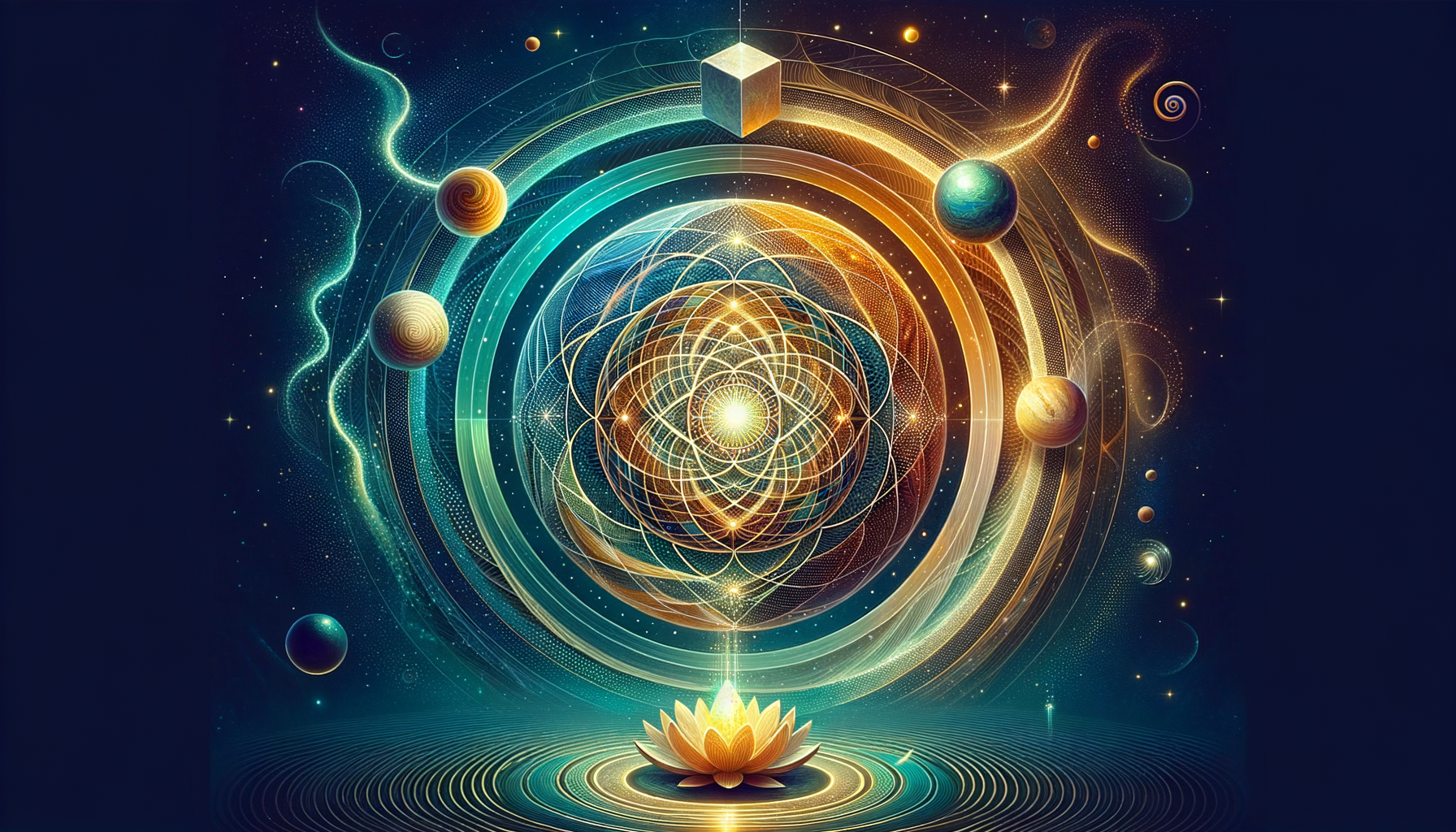
Mahat Parinama holds a consequential place in Hindu philosophy as an account of how consciousness and cosmos unfold. Within classical inquiryespecially in Sāṅkhya-Yoga and in dialogue with the analytic clarity of the Vaisheshika Darshana attributed to Kanadathe concept illuminates both the texture of reality and the laws of transformation that shape experience. Its study brings together metaphysics, epistemology, and contemplative practice in ways that remain relevant for contemporary seekers.
In Sāṅkhya, Prakriti evolves (pariṇāma) into mahat, the first manifest principle often rendered as cosmic intelligence or mahat-tattva. From mahat arise ahaṁkāra (the individuating principle), manas (mind), the tanmātras (subtle elements), and the gross elements, describing a graded evolution from subtle to gross. This is a classic statement of pariṇāma-vāda, the view that effects are real transformations of their causes. Read through this lens, Mahat Parinama names the movement from latent potential to luminous intelligence, and from intelligence to the structures of mind and world.
The Vaisheshika Darshana complements this picture through its rigorous analysis of categories such as dravya (substance), guṇa (quality), karma (motion), sāmānya (generality), viśeṣa (particularity), and samavāya (inherence). While Vaisheshika articulates causation with precision and is often associated with ārambha-vāda (effects as new productions), its attention to ontological distinctness and lawful change enriches discussions of transformation across the darśanas. In this way, Mahat Parinama can be appreciated in a broader classical conversation where Sāṅkhya elaborates the stages of emergence and Vaisheshika clarifies the structures within which change is intelligible.
Beyond system-building, Mahat Parinama resonates with lived experience. Many practitioners report seasons of sudden clarity, ethical resolve, or expansive understanding during meditation, japa, or yogamoments that feel like mahat revealing itself through the mind. When sattva is cultivated, insight stabilizes; when rajas and tamas dominate, agitation or inertia veil that luminosity. This phenomenology of the inner life mirrors the philosophical arc: intelligence unfolds, identifies, refines, and ultimately reorients toward freedom.
Viewed through a Dharmic lens of unity in spiritual diversity, the idea harmonizes with related insights across traditions. Buddhism’s pratītyasamutpāda (dependent origination) maps lawful arising without a permanent essence; Jainism’s pariṇāma (modification) and anekāntavāda (many-sidedness) underscore that reality is dynamic and multifaceted; Sikh tradition affirms the continuous unfolding of creation within Hukam (cosmic order). Though terminology differs, each emphasizes a moral-intellectual refinement in which clarity, compassion, and responsibility deepen. Such convergences illustrate a shared civilizational commitment to transformation grounded in truth and non-harm.
Practical implications follow. Cultivating sattva through dhyāna, prāṇāyāma, and disciplined ethics nurtures mahat-like clarity. Careful observationso characteristic of Vaisheshika’s methodhelps distinguish enduring qualities from fleeting states. Sāṅkhya’s map encourages self-inquiry into how thoughts, senses, and actions arise and subside, showing where freedom can be exercised. Across Hinduism, Buddhism, Jainism, and Sikhism, this shared emphasis on inner refinement supports a plural yet coherent path toward well-being and wisdom.
In sum, Mahat Parinama offers a unifying framework: it is a philosophy of emergence that bridges subtle metaphysics with concrete practice, and a contemplative orientation that honors multiple valid approaches. By situating Sāṅkhya’s evolution of mahat alongside Vaisheshika’s precise account of categories and causation, the concept becomes both intellectually robust and experientially relatable. It invites a collective journeyrooted in unity in spiritual diversitytoward clearer insight, ethical strength, and compassionate action.
Inspired by this post on Hindu Blog.