Hindu philosophy describes the human body as a sacred yet impermanent dwelling for the eternal Atman. This framing honors the body as a vessel for dharma while clarifying its transitory nature within the broader arc of samsara, karma, and the quest for moksha. The perspective encourages reverence for embodied life without attachment that obscures deeper spiritual insight.
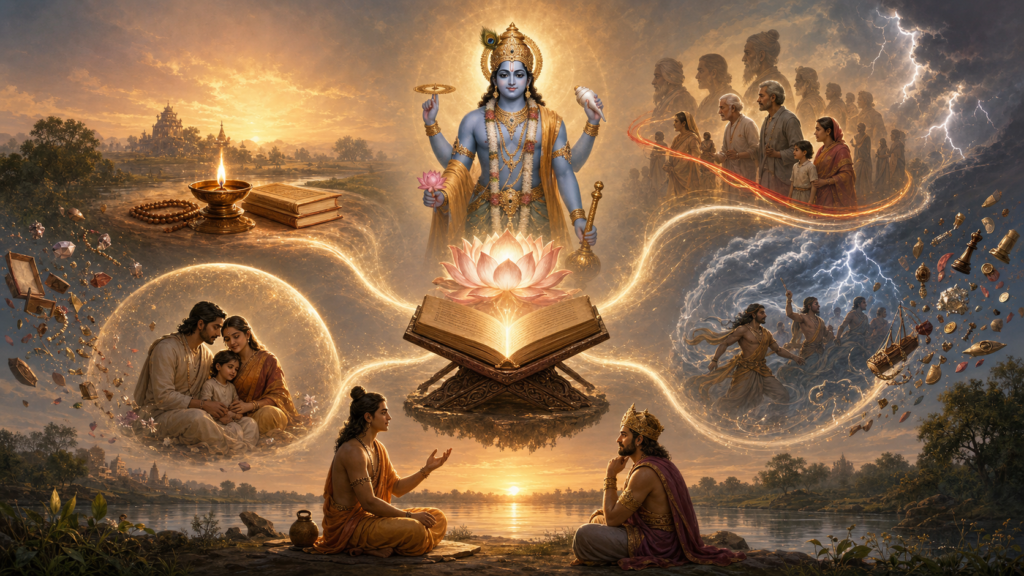
“As a person puts on new garments, giving up old ones, the soul similarly accepts new material bodies, giving up the old and useless ones.”
(Bhagavad Gita 2:22)
This teaching clarifies that the body changes while the soul endures. The analogy of changing garments offers a precise, compassionate account of rebirth that neither diminishes the sanctity of life nor encourages nihilism. Instead, it guides practitioners toward dharmic livingfulfilling duties with care, reducing harm (ahimsa), and cultivating detachment from clinging to form, status, or comfort.
Within this framework, traditional categories such as sthula (gross body), sukshma (subtle body), and Karana Sharira (causal body) help explain experience across physical, mental, and karmic strata. The Atman remains untouched by these layers, while actions and intentions flow through them, shaping future circumstances. Consequently, ethical choices and mindful conduct become not merely moral preferences but pathways that refine consciousness and support spiritual progress.
Practical implications follow naturally. Treating the body as a temple encourages disciplined carebalanced diet, Yoga, Pranayama, and meditationwhile remembering that health is a means, not an end. Such stewardship coexists with non-attachment, allowing grace in the face of aging, illness, and loss. Many readers find that this dual visionreverence and releasereduces fear of change and fosters equanimity.
This understanding resonates across the dharmic family. Buddhism emphasizes anicca (impermanence) and skillful letting go; Jainism honors the jiva’s journey with aparigraha (non-possessiveness) and ahimsa; Sikh teachings highlight hukam (divine order) and seva (selfless service). While doctrinal articulations differ, these traditions converge on compassion, disciplined living, and freedom from grasping. The Hindu acceptance of Ishtamultiple valid approaches to the divinefurther nurtures inter-traditional respect, sustaining unity in spiritual diversity.
Contemplative practitioners often report that steady practice illuminates these truths directly. Through meditation, japa, and attentive breathwork, the body-mind connection becomes clearer: sensations arise and pass, thoughts appear and subside, and awareness recognizes its own steadiness amidst change. This lived insight complements scriptural study, confirming that disciplined practice and right understanding work together.
A helpful triad of contemplations supports daily life: gratitude for the body as a sacred instrument, stewardship through ethical and healthy habits, and non-attachment that welcomes change without fear. Integrated with karma-yogaacting without fixation on outcomesthese reflections make the Gita’s insight practical: one can serve, love, and learn fully while remaining rooted in the permanence of Atman.
In sum, seeing the body as a sacred yet transient abode focuses attention where it matters: on character, compassion, and clarity. The teaching of Bhagavad Gita 2:22 uplifts daily conduct, unites dharmic traditions around shared ethical aims, and orients seekers toward moksha. Honoring the body, refining the mind, and realizing the imperishable Self together light the path to enduring freedom.
Inspired by this post on Hindu Blog.