True silence in Hinduism is not mere muteness but an unforced stillness of mind in which wisdom becomes self-evident. The paradox is clear: striving to be silent often amplifies inner noise, just as forcing sleep makes wakefulness more stubborn. Ancient sages approached this paradox by pointing beyond speech and thought to a ground of awareness that is already silent. The Upanishadic insight, yato vaco nivartante aprapya manasa saha, frames silence as a reality where speech and mind naturally come to rest.
Within this tradition, mauna (silence) has both outer and inner dimensions. External quiet reduces sensory agitation, while inner mauna refers to quietude of prana, mind, and egoic commentary. This distinction clarifies why mere suppression of speech does not culminate in wisdom; the aim is effortless clarity rather than performed restraint. Kena and Mandukya Upanishads gesture toward this inner stillness by describing the substratum that is the hearing in the ear, the thinking in the mind, and the silent fourth (turiya) beyond waking, dreaming, and deep sleep.
Yoga philosophy articulates the practical resolution of the paradox: yogah citta-vritti-nirodhah. Silence is not achieved by force but allowed through the attenuation of mental fluctuations. Steadying life-force through pranayama, withdrawing the senses (pratyahara), gathering attention (dharana), and resting in meditation (dhyana) gradually reveal a lucid quiet that does not depend on conditions. This approach is experiential and cumulative, not instantaneous or performative.
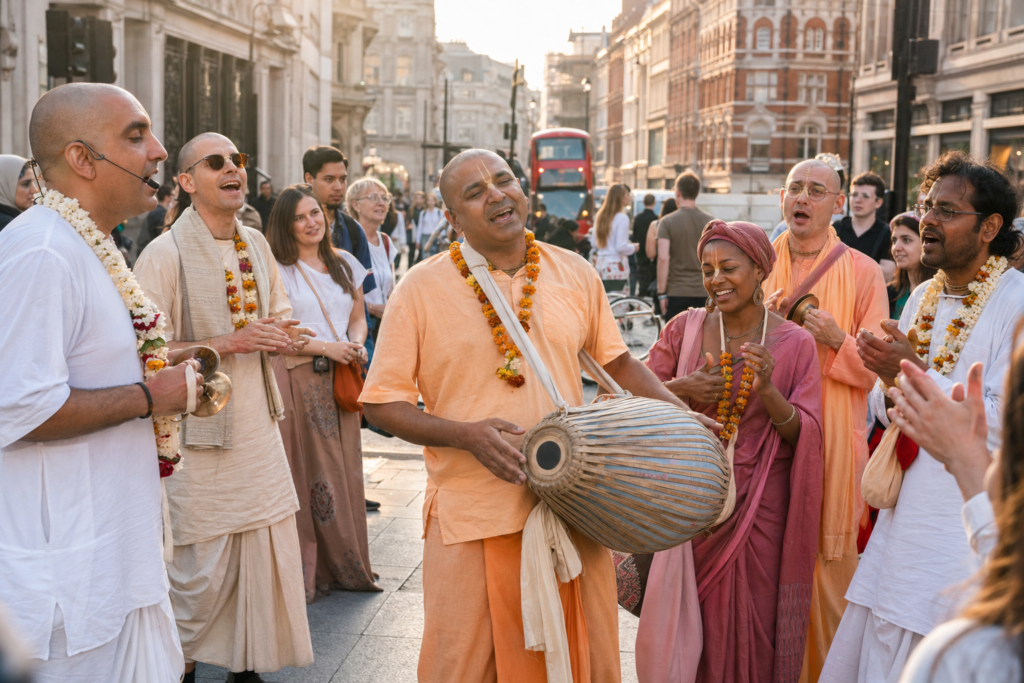
Sound itself can serve as a gateway to silence. Japa, kirtan, and attentive listening to the inner anahata nada refine attention from gross to subtle. As recitation becomes softer and more one-pointed, words fall away into awareness; when words die and wisdom awakens, what remains is a luminous presence free of compulsion. In this sense, sacred sound completes its purpose when it dissolves into silence.
Scriptural counsel further situates silence within ethical clarity. The Bhagavad Gita links steady wisdom with restraint of the senses, even amid action. Silence, then, is not escape from the world but a state of composure that enables precise speech, compassionate conduct, and discrimination (viveka). It is recognized not by withdrawal alone but by lucidity, fearlessness, and non-reactive kindness.
Everyday disciplines cultivate this inner condition. Mindful speech (thoughtful pauses, truthfulness without harm), moments of digital quiet, periodic mauna vrata, and steady breath awareness organize attention toward stillness. Over time, these practices replace reactivity with responsiveness, supporting mental clarity, emotional balance, and sustainable well-being.
Dharmic traditions converge on this insight in diverse ways, affirming a shared ethos of inner peace. Buddhism values Noble Silence and mindfulness that reveal the contingent nature of thoughts. Jainism honors mauna and samayik to purify intention and stabilize awareness. Sikh tradition emphasizes simran and the Shabad as the living current that quiets the mind into sehaj (natural equipoise). This unity in diversity reflects a common aspiration: silence that births wisdom and compassion.
Common pitfalls include repression of emotion, performative quiet, and spiritual bypassing. External silence without inner inquiry can harden into avoidance. Conversely, inner silence matures through honest self-observation, ethical alignment (yamas and niyamas), and steady meditation. Even observances such as Mauni Amavasya are most meaningful when they deepen inner listening rather than merely restrict speech.
Ultimately, true silence in Hinduism is the recognition of awareness itselfprior to words, stable amid change, and equally present in solitude and in action. It does not negate sound or thought; it frees them from compulsion. When sought through disciplined Yoga and guided by scriptural insight, this silence becomes a shared bridge across Hinduism, Buddhism, Jainism, and Sikhism, nurturing unity, clarity, and compassionate living.
Inspired by this post on Hindu Blog.