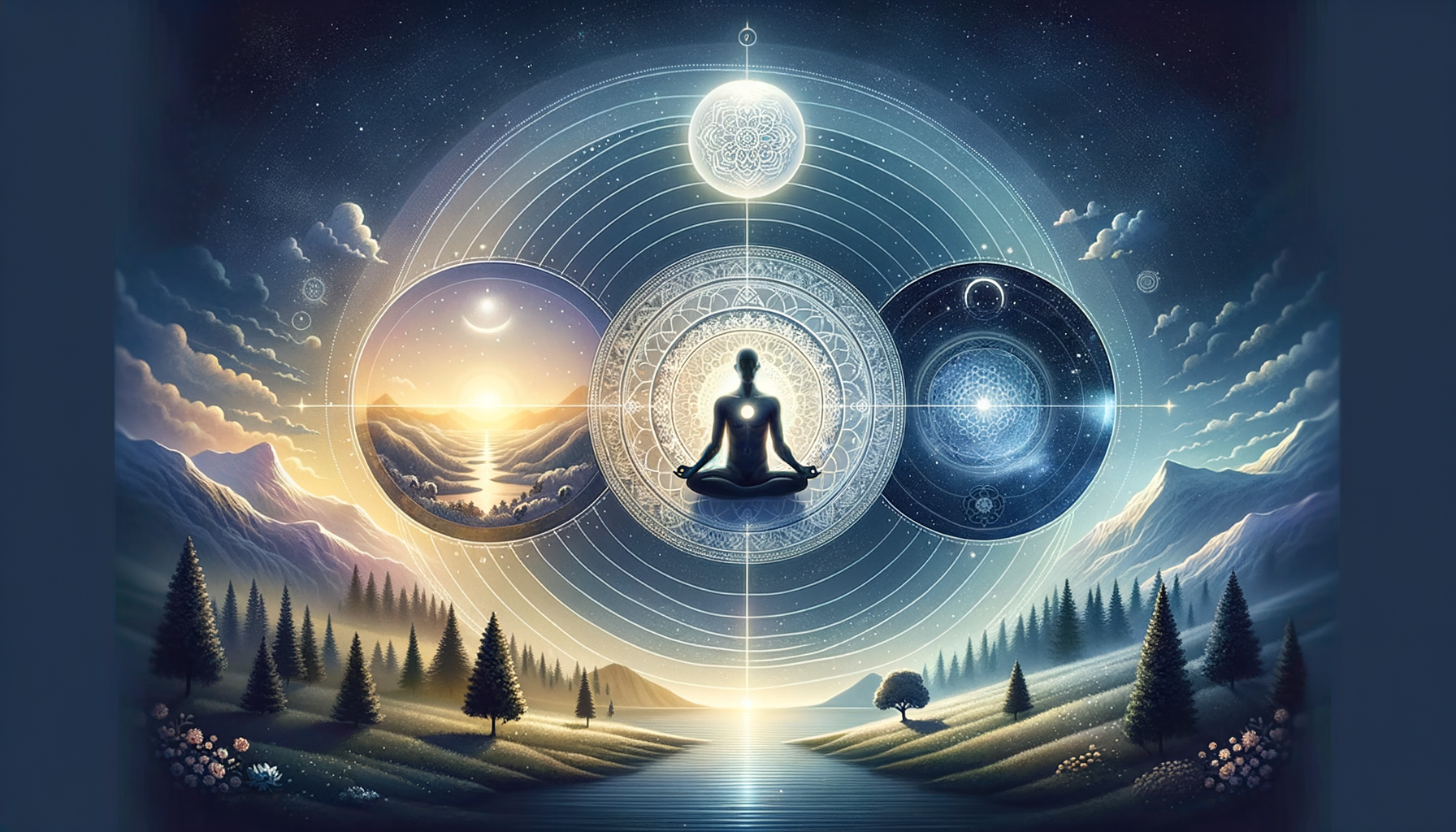
Avasthatraya Vivekaliterally the discrimination of the three statesstands as a rigorous Vedantic method to understand consciousness beyond waking (Jagrat), dream (Svapna), and deep sleep (Sushupti). Rooted in the Upanishads and clarified by Advaita Vedanta, this inquiry reveals the unchanging awareness that illumines every experience. It is a contemplative path that welcomes seekers across dharmic traditions and shows how inner clarity fosters compassion, resilience, and unity in spiritual diversity.
In Vedanta, Avasthatraya Viveka functions as a precise analytical lens. By observing how experiences arise and cease in Jagrat, Svapna, and Sushupti, it distinguishes the transient contents of mind from the changeless witness (Sakshi). The Mandukya Upanishad frames this insight succinctly: consciousness is not confined to any state; rather, it is the substratum that makes all knowing possible. The recognition of this background awareness clarifies the nature of Atman and, in Advaita Vedanta, its identity with Brahman.
Jagrat (waking) is the outward-facing mode of experience. It presents objects through the senses and seems self-evidently real because of shared, verifiable details. Yet Jagrat is marked by constant changeperceptions shift, emotions fluctuate, and thoughts flow. Avasthatraya Viveka invites careful observation of this flux to see that what changes cannot be the unchanging self. This discernment enhances everyday discernment (viveka) without dismissing the practical validity of waking life.
Svapna (dream) turns the mind inward. In dreams, impressions (vasanas) become vivid worlds, convincing until awakening. Most people recall moments of waking from a dream with a racing heart or tears, only to find the scene dissolved. Vedanta uses this relatable experience to highlight that conviction alone does not establish permanence. Dream demonstrates how mind can project meaningfully coherent realities, offering a mirror to examine how attachment forms and releases.
Sushupti (deep sleep) is characterized by the non-appearance of differentiated objects and the rest from mental activity. Upon waking, many report, “I slept well” or “I knew nothing.” This common recollection indicates two key points: a continuity of the knower across all states and the presence of blissful rest unburdened by mental agitation. Vedanta interprets this as indirect evidence of the witnessthere is awareness of the absence of content, even when particular experiences do not appear.
Taken together, these observations point to Sakshithe witnessing consciousnessthat remains present through all transitions. Often termed Turiya in the Mandukya tradition, this is not a fourth state in time but the ever-present reality underlying Jagrat, Svapna, and Sushupti. In Advaita Vedanta, this recognition culminates in the non-dual insight that Atman is not limited by body, mind, or conditions, revealing the freedom inherent to consciousness.
Practically, Avasthatraya Viveka can be cultivated through quiet reflection, meditation, and mindfulness. Observing the moment of falling asleep or the instant of waking can be especially revealing: awareness remains, while contents change. Journaling the felt differences between waking, dreaming, and deep sleep refines discrimination. Practices from Yogasuch as breath awareness and steady attentionsupport Vedantic contemplation (nididhyasana), making insight both experiential and stable.
This inquiry yields tangible benefits: reduced reactivity, clearer decision-making, and greater emotional balance. By recognizing that experiences change while the witness remains unchanged, individuals relate more skillfully to praise and blame, gain and loss, and the ebb and flow of daily life. Ethical living (dharma) becomes grounded in calm clarity rather than compulsion, strengthening compassion for oneself and others.
Parallels across dharmic traditions affirm a shared quest for truth. Buddhist analysis of impermanence and non-self complements the Vedantic focus on what is unchanging; Jain reflections on the states of the jiva and anekantavada (many-sidedness) enrich contemplative nuance; Sikh teachings on sehaj avastha (natural equipoise) resonate with abiding presence. These convergences encourage mutual respect and unity in spiritual diversity without erasing philosophical distinctions.
Common misconceptions can obscure the intent of Avasthatraya Viveka. It is not a denial of the world’s practical reality (vyavaharika); rather, it situates everyday experience within a larger understanding. Nor is it escapism; it refines engagement with life by anchoring action in the steadiness of awareness. Vedanta simply distinguishes levels of truth, allowing one to function effectively in the world while discerning the ultimate (paramarthika) nature of consciousness.
In daily life, this inquiry is remarkably relatable. When emotions surge or thoughts proliferate, pausing to notice, “All of this is appearing in awareness,” restores balance. Approaching sleep as a sacred transition and treating dreams as insights into subtle conditioning aligns contemplative rigor with gentle curiosity. Such applications make the teaching living knowledge rather than abstract theory.
Avasthatraya Viveka, then, is both an academic framework and a transformative practice. It illuminates the journey “beyond” waking, dream, and deep sleepnot by rejecting any state, but by recognizing the presence that pervades them all. With patience and discernment, this Vedantic inquiry reveals freedom (moksha) as the fullness of awareness, fostering inner harmony and strengthening unity across dharmic traditions.
Inspired by this post on Hindu Blog.