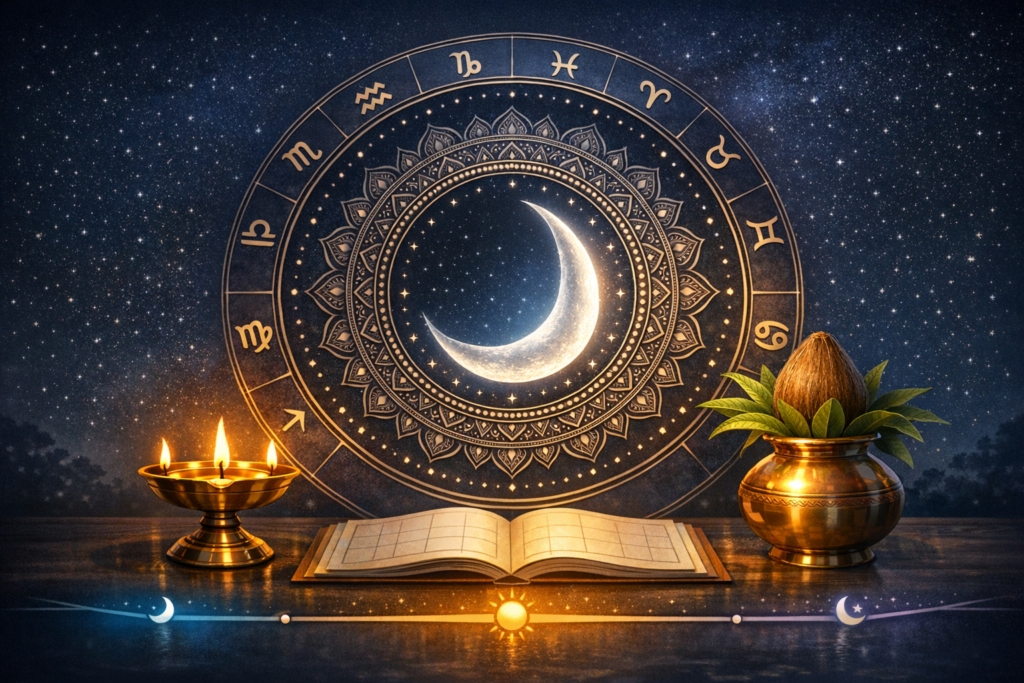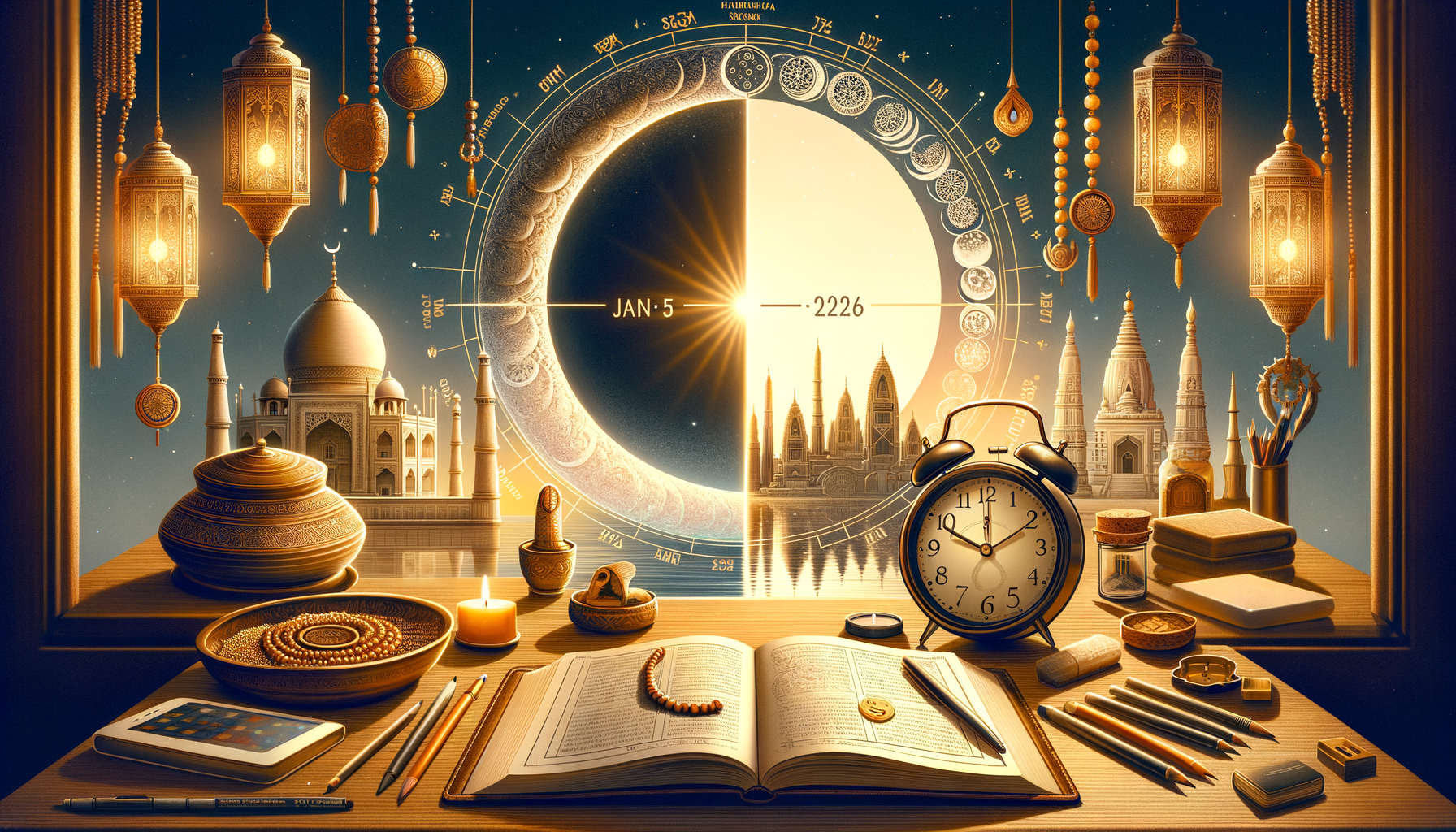
On Monday, January 5, 2026, the Hindu calendar (Panchang) notes Krishna Paksha Dwitiya tithi—the second day of the waning lunar phase—prevailing until 12:33 PM, after which Krishna Paksha Tritiya tithi begins. This precise tithi change supports careful planning of daily observances, vratas, and puja sequences, especially for those aligning activities with auspicious timings in the Daily Hindu Calendar.
Krishna Paksha Dwitiya traditionally emphasizes calmness, steadiness, and reflective discipline. Many households experience this part of the lunar cycle as conducive to gentle routines, simple daan, and quiet sadhana. Such practices often bring a grounded rhythm to the day, helping families and communities maintain clarity and continuity in dharmic life.
From 12:33 PM onward, Krishna Paksha Tritiya encourages renewed initiative with a measured, thoughtful tone. Learners, professionals, and devotees alike find it suitable for organized study, structured seva, and orderly tasks that benefit from steady attention. Aligning efforts with this tithi can enhance focus and support meaningful progress without haste.
Because Panchang details vary by region, local Nakshatra and Rashi for January 5, 2026 should be confirmed with a regional almanac or trusted panchangam. Such verification ensures that specific yoga combinations, Tara Bala, and Chandra Rashi-based guidance are applied accurately to a given location.
Commonly regarded auspicious periods such as Brahma Muhurta and the daytime Abhijit Muhurta remain widely valued across traditions, while Rahu Kalam is generally avoided for initiating new undertakings. Exact windows for these muhurats are location-dependent; consulting a regional Panchang helps synchronize practice with precise timings.
The shared lunar sensitivity across dharmic paths offers a deeper sense of unity. While Hindu Panchang guides tithis directly, Buddhists often observe lunar uposatha days for reflection and virtue, Jains align key observances with the lunar cycle for heightened self-discipline and compassion, and Sikh communities emphasize seva and simran that harmonize with the spirit of mindful action. This convergence—reflection, ethical conduct, and service—cultivates dharmic harmony without insisting on a single path.
Practical observances for the day may include japa, brief parayanam, and quiet meditation during Dwitiya, transitioning to structured learning, planned seva, or methodical household duties during Tritiya. Families often find that small, consistent acts—tidy routines, generosity, and attentive listening—translate lunar wisdom into everyday wellbeing.
Attentive use of the Panchang on January 5, 2026 helps align action with time: Dwitiya until 12:33 PM for steadiness and reflection; Tritiya thereafter for measured initiative. Such calendar clarity supports spiritual focus, cultural continuity, and the broader aim of unity in spiritual diversity across Hinduism, Buddhism, Jainism, and Sikhism.
Inspired by this post on Hindu Blog.