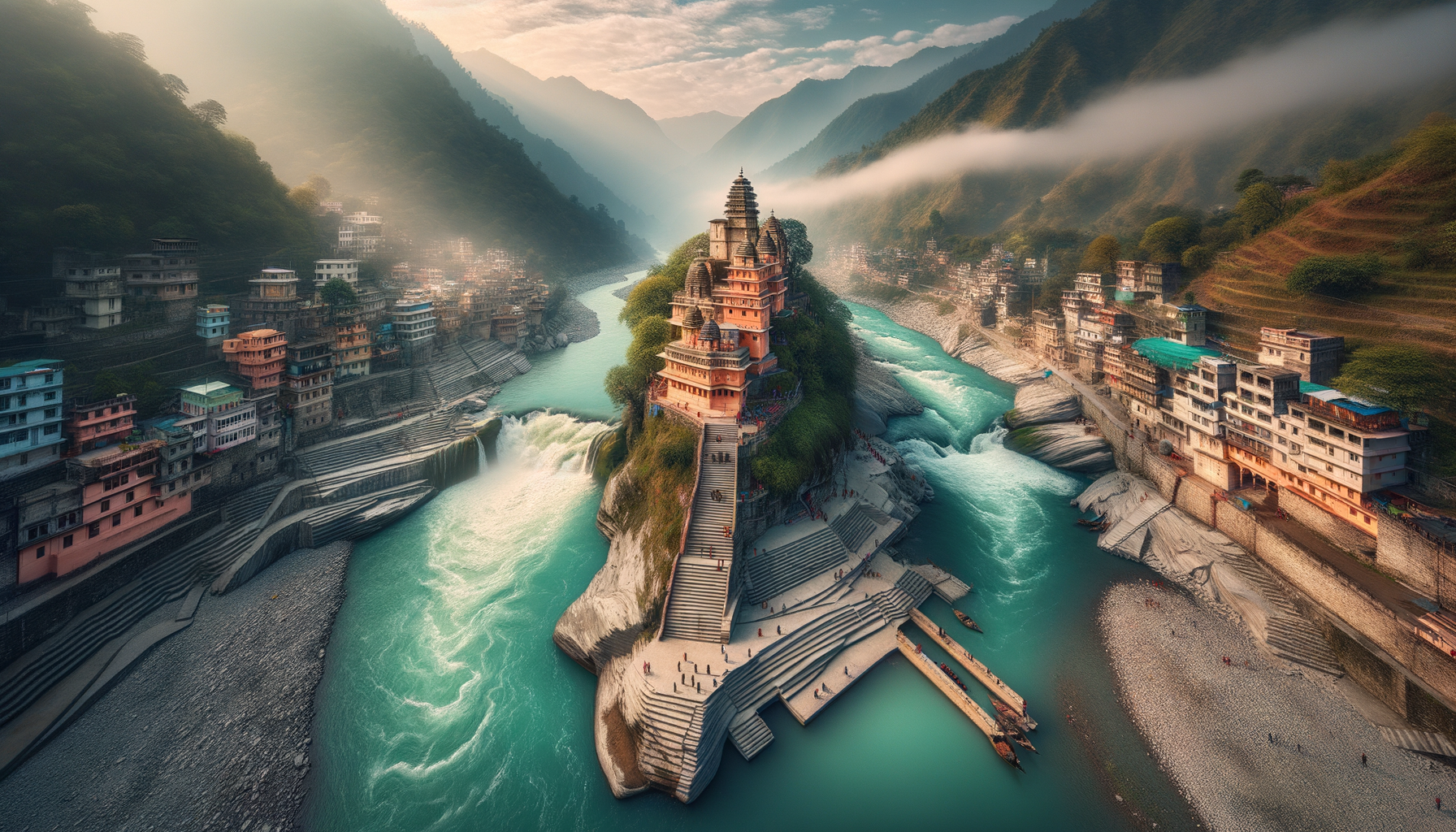
Devprayag, situated in the Tehri Garhwal district of Uttarakhand, occupies a seminal place in the sacred geography of the Himalaya. Recognized as the culminating confluence among the Panch Prayag, it is here that the rivers Alaknanda and Bhagirathi unite, and from this precise sangam the river is revered as Maa Ganga. The site embodies a continuum of pilgrimage, scholarship, and ecological reverence that has shaped spiritual life across the Indian subcontinent.
Hydrologically and culturally, the confluence is definitive. The Bhagirathi descends from Gaumukh near Gangotri, while the Alaknanda courses past Badrinath and the high Himalayan valleys before meeting at Devprayag. The junction often displays a visible contrast between the currents, offering a striking natural marker of transitionafter which the flow is known to the world as the Ganga. This topographical reality underpins the site’s status as a tirthaliterally, a “crossing”between landscapes, histories, and states of mind.
As a living pilgrimage center, Devprayag invites reflective practices that resonate across dharmic traditions. Hindus venerate the confluence through snana (ritual bathing), japa, and darshana at nearby shrines; Buddhists, Jains, and Sikhs likewise recognize the ethical and contemplative value of pure waters, disciplined conduct, and gratitude toward nature. This inclusive sensibility underscores a unifying message: diverse paths converge in a shared reverence for truth, compassion, and responsibility to the natural world.
Architecturally and historically, the town is anchored by the Raghunathji Temple, dedicated to Shri Rama, which rises above the confluence and frames the valley’s dramatic vistas. The temple’s presence reinforces the continuity of Sanatana Dharma while welcoming seekers from varied backgrounds to contemplate the perennial ideals of dharma, seva, and humility. The site’s ritual calendar and oral histories further embed Devprayag within a broader network of Himalayan pilgrimage routes.
Visitors often remark on the profound quiet that accompanies the confluence despite the river’s powerful resonance. The soundscapewhere two distinct currents merge into a single, purposeful flowencourages inner stillness and perspective. Moments spent along the ghats frequently become touchstones of memory, evoking a sense of belonging that is both personal and civilizational.
Practical considerations enhance the experience. Clear mornings in the post-monsoon and spring seasons typically yield the best visibility of the river’s hues and surrounding ridgelines. Several vantage points above the ghats offer safe, panoramic views for contemplation and photography. Responsible travelminimizing waste, honoring local customs, and supporting community livelihoodsaligns naturally with the ethical tenets shared across Hinduism, Buddhism, Jainism, and Sikhism.
Ultimately, Devprayag exemplifies how sacred confluences illuminate unity in diversity. The meeting of Alaknanda and Bhagirathi is at once a geographical fact, a cultural narrative, and a spiritual metaphor: distinct journeys merging into a single current of purpose. In honoring this confluence, communities affirm an enduring commitment to harmony, knowledge, and stewardshipvalues that sustain both river and civilization.
Inspired by this post on Hindu Blog.