Across Ancient India’s literature, temple architecture, and sacred symbolism, there is a recurring and coherent memory of colossal beings inhabiting the depths of oceans and rivers. These entities—most vividly evoked by the figure of the Makara—are situated not as fanciful inventions but as elements within a lived religious and historical worldview in which land, sky, and sea were all populated, animated, and morally meaningful. Read in context, this symbolism reflects an integrated understanding of nature, spirituality, and cultural memory that continues to resonate in dharmic traditions today.
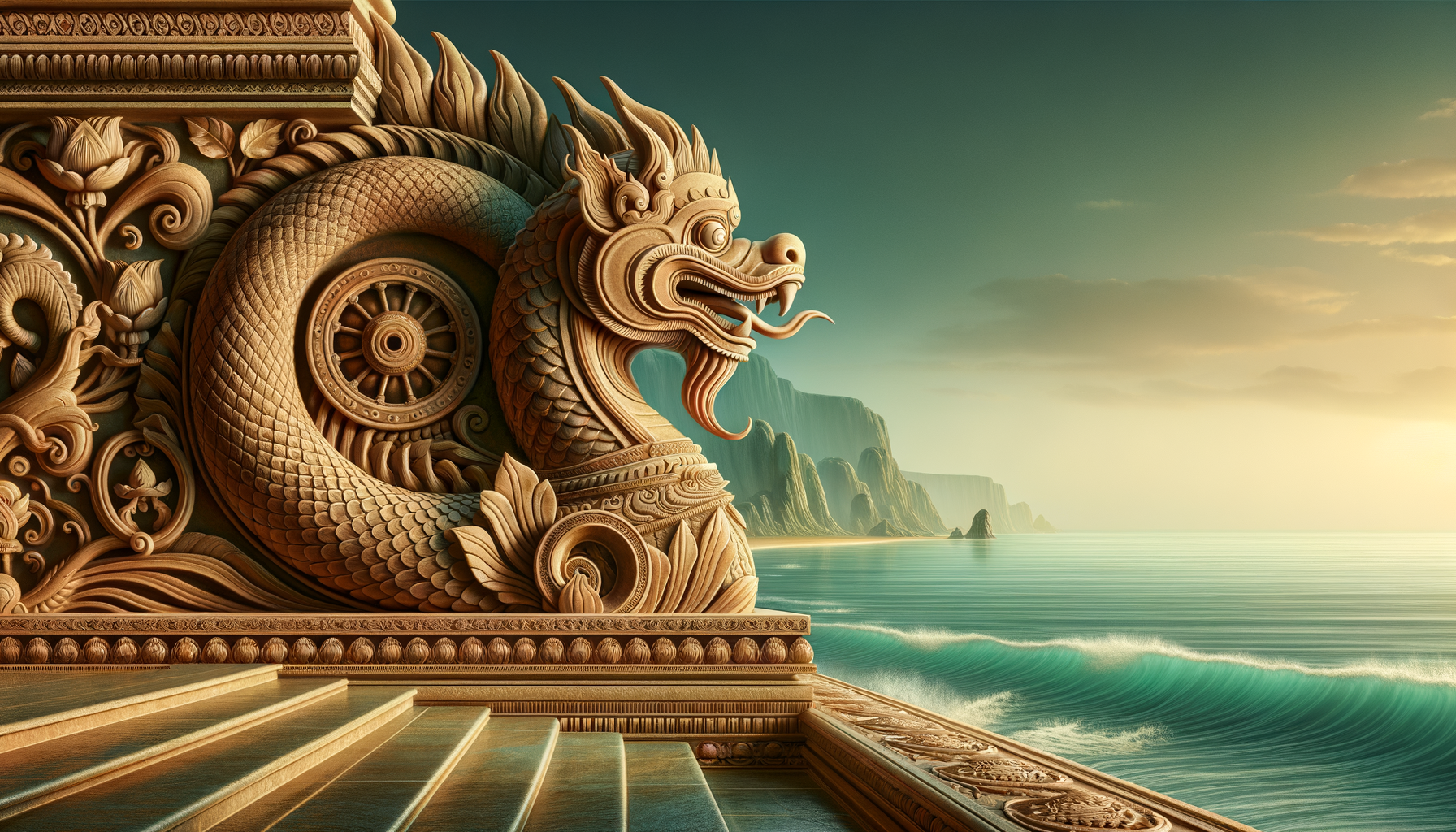
In Hindu symbolism, the Makara, a composite aquatic being, serves as the vahana of Ganga and Varuna, and adorns the banner of Kamadeva. It appears as a threshold guardian on temple balustrades, in toranas and architraves, and along the margins of sacred thrones and doorways. Comparable Makara motifs are found across Buddhist art—such as on stupa railings and gateways—and within Jain iconography as auspicious protectors at liminal, water-associated zones. The visual language signals both protection and passage, evoking the ocean’s vastness and the transformative journey from the mundane to the sacred.
Read alongside Puranas and epic literature, the Makara and allied sea-beings recall a cultural landscape attuned to the immensity and mystery of the waters. Narratives such as Samudra Manthan and the Matsya tradition frame oceans as realms of revelation, danger, and discovery. From a natural history perspective, Makara forms may encode observational memories of crocodiles, gharials, Gangetic dolphins, and the formidable life encountered through Indian Ocean trade—sharks, rays, and, by extension through sailors’ accounts, large pelagic creatures. While symbolic rather than zoological taxonomy, the sustained attention to scale and power suggests an awareness of “gigantic ocean creatures” as a lived possibility within maritime and riverine life.
Importantly, this imagination is shared across dharmic traditions. In Buddhism, sea-creatures and naga realms intersect with teachings on impermanence and the boundless nature of compassion; in Jain art, aquatic motifs function as auspicious thresholds aligned with purity and protection; in Sikh scripture, the ecological reverence is explicit—“Pavan Guru, Pani Pita, Mata Dharat Mahat”—affirming wind, water, and earth as teachers and kin. These perspectives together foster unity around a sacred ecology: the ocean is not merely a resource but a spiritually charged presence that commands humility and care.
Temple encounters make this continuity tangible. Visitors standing before a gopuram or tracing the curve of a Makara balustrade often describe a sense of awe—an intuitive recognition that these carved beings are more than decoration. They signal entry into a space where the vastness of the sea, the cycles of life, and the promise of refuge converge. For many readers and pilgrims, recognizing the Makara across Hindu, Buddhist, and Jain spaces strengthens the sense of shared heritage and invites a compassionate ethic toward rivers and oceans that aligns with contemporary ecological consciousness.
Viewed through Cultural Heritage and History, the Makara serves as a bridge between artistic form, maritime experience, and spiritual insight. It preserves the ancient Indian memory of immense aquatic life while expressing a philosophical commitment to coexistence with the living world. In this light, the question of whether ancient communities “knew” gigantic ocean beings is reframed: their arts, scriptures, and architecture testify to a civilization that felt the ocean’s power, observed its creatures with care, and wove that awe into a durable symbolic language—one honored across dharmic traditions.
Inspired by this post on Hindu Blog.