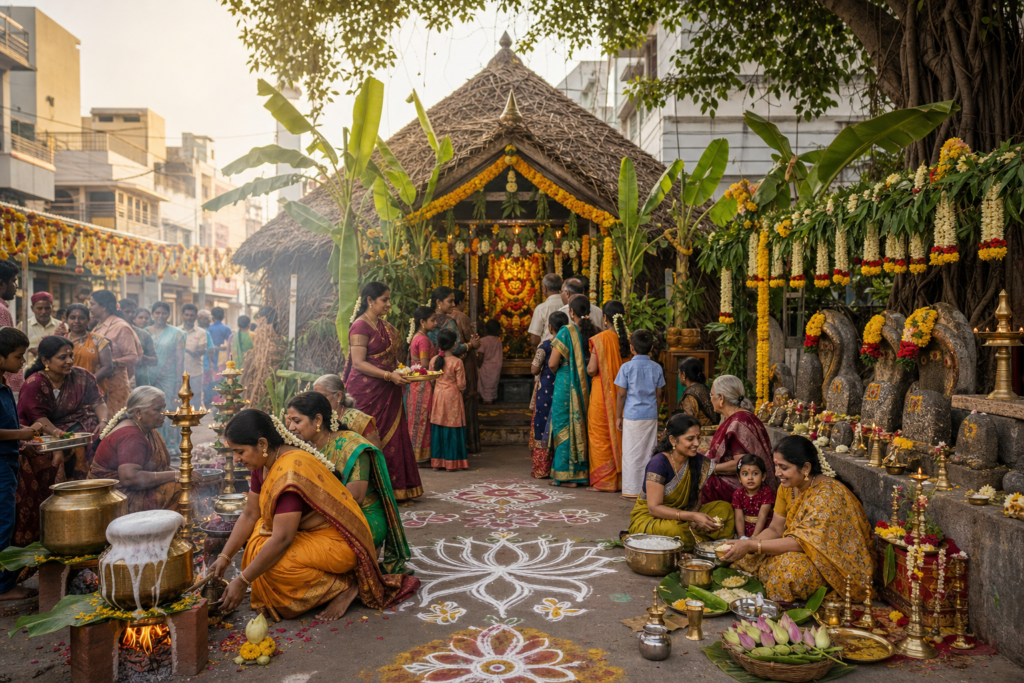
Within the spiritual horizon of Sanatan Dharma, the 68 Swayambhulingas of Lord Shiva are revered as rare self-manifestations that illuminate the sacred geography of ancient Bharat. The term “Swayambhu” in Sanskrit denotes “self-manifested” or “self-existent,” while “linga” signifies the cosmic pillar of consciousness and the aniconic, formless aspect of the divine. Together, these concepts frame a theology in which the absolute reveals itself without human intervention, offering devotees a profound encounter with the transcendent.
Across ancient India’s temple landscapes and pilgrimage circuits, references to Swayambhulingas appear in regional traditions and local sthala-purāṇas that celebrate places where Shiva is believed to have arisen of his own accord. These sites also speak to the civilizational idea of a sacred geographyan interconnected web of shrines, rivers, forests, and mountains that encode memory, meaning, and continuity. In this mapping of sanctity, the 68 Swayambhulingas function as spiritual anchors that guide seekers through history, culture, and devotion.
Theologically, a Swayambhulinga embodies the axis between the unmanifest and the manifest, the infinite and the contingent. As an aniconic symbol, the linga neither confines nor negates the divine; rather, it gestures to the limitless nature of consciousness (cit) and being (sat). For devotees, this symbolism affirms that the presence of Shiva transcends form, while still inviting ritual participationdarśan, abhiṣeka, and pradakṣiṇathrough which devotion becomes disciplined awareness.
In lived experience, pilgrims often describe a stillness at such sites: a felt sense of sanctity that harmonizes body, breath, and attention. These traditions cultivate humility, reflection, and sevā, values shared across dharmic pathways. While the Swayambhulingas are rooted in Hindu practice, the reverence for silence, contemplation (dhyāna), ethical restraint, and respect for sacred spaces resonates with the broader ethos of Hinduism, Buddhism, Jainism, and Sikhism. Such shared sensibilities reinforce a vision of spiritual unity grounded in diversity.
As cultural heritage, Swayambhulingas invite both scholarship and stewardship. Epigraphical studies, conservation of temple architecture, and careful ecological protection of their surroundings deepen understanding while safeguarding continuity. This alignment of knowledge and carepreserving inscriptions, documenting oral histories, and maintaining ritual rhythmssupports an integrative approach where historical inquiry and devotion enrich one another.
Ultimately, the 68 Swayambhulingas stand as luminous waypoints across ancient Bharat, reminding seekers that the sacred can arise wherever awareness is receptive. By honoring these self-manifested forms of Lord Shiva, communities affirm a shared civilizational inheritance and a living commitment to unity among dharmic traditions. In contemplating the Swayambhu, one encounters not only an enduring symbol of divine presence but also a pathway to inner steadiness, ethical clarity, and collective harmony.
Inspired by this post on Hindu Blog.