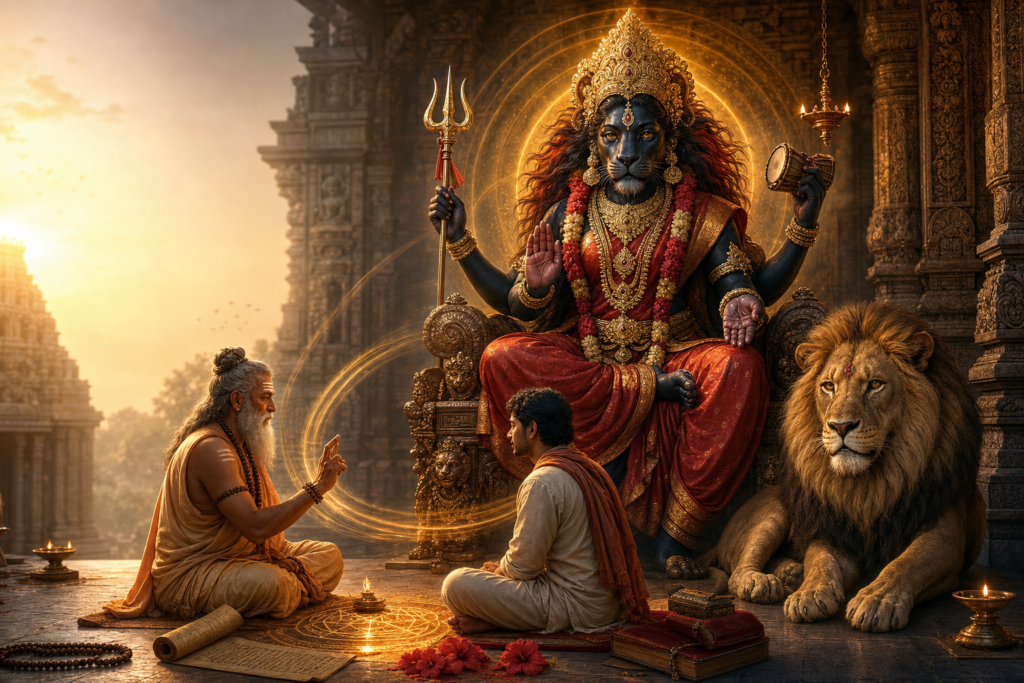
At the Sabarimala Shrine in Kerala, a living tradition honors Lord Ayyanar and Lord Karuppasamy as the Dwarapalakasguardian deitiesof Lord Ayyappa. Within this devotional framework, a popular account holds that when Lord Dharmashasta chose to incarnate as Lord Ayyappa, two of his divine attendants sought to continue their service in the new avatara. In response, Lord Ayyappa is said to have appointed them as guardians at his sanctum, embodying steadfast protection and devotion at the temple’s threshold.
This narrative situates Ayyanar and Karuppasamy within the broader tapestry of Hindu temple traditions, where Dwarapalakas symbolize the safeguarding of dharma and the sanctity of sacred space. In the Sabarimala context, they are revered as protectors who orient the devotee’s mind toward discipline, humility, and ethical conduct before darshan of Lord Ayyappa. The emphasis on guardianship reinforces a central theme of pilgrimage: spiritual readiness as a prelude to inner transformation.
Pilgrims frequently describe a sense of reassurance on encountering these guardians, as if crossing a threshold from the ordinary to the sacred. The ritual act of pausing near the Dwarapalakas often becomes a moment of reflectionon vows undertaken, conduct maintained, and the collective spirit that binds the Sabarimala yatra. Such experiences underscore how temple iconography functions not merely as art, but as pedagogy in stone, guiding behavior and contemplation.
In an academic perspective, this tradition also resonates with a wider dharmic aesthetic in South Asia, where guardian figures frame the entrance to shrines and monasteries. Comparable motifs appear across Hindu, Buddhist, and Jain spaces, pointing to a shared civilizational vocabulary that honors discipline, reverence, and ethical vigilance as prerequisites for spiritual insight. Seen through this lens, the guardians of Sabarimala embody a spirit of unity across dharmic traditions, while preserving the distinctive devotion to Lord Ayyappa.
For students of cultural heritage, the Sabarimala guardianship narrative highlights the dynamism of living traditionsrooted in local lore, animated by devotional practice, and contextualized within pan-Indian temple symbolism. For devotees, the presence of Ayyanar and Karuppasamy reinforces the journey’s moral compass: maintaining vrata, practicing restraint, and cultivating compassion. In both scholarly and devotional frames, these Dwarapalakas serve as enduring reminders that the path to Lord Ayyappa is protected by dharma itself.
Keywords relevant to this tradition include Sabarimala, Lord Ayyappa, Ayyanar, Karuppasamy, Dwarapalakas, Lord Dharmashasta, guardian deities, Kerala temple heritage, Hindu temple traditions, and dharmic unityeach pointing to the intertwined themes of protection, pilgrimage, and spiritual readiness that define the Sabarimala experience.
Inspired by this post on Hindu Pad.