
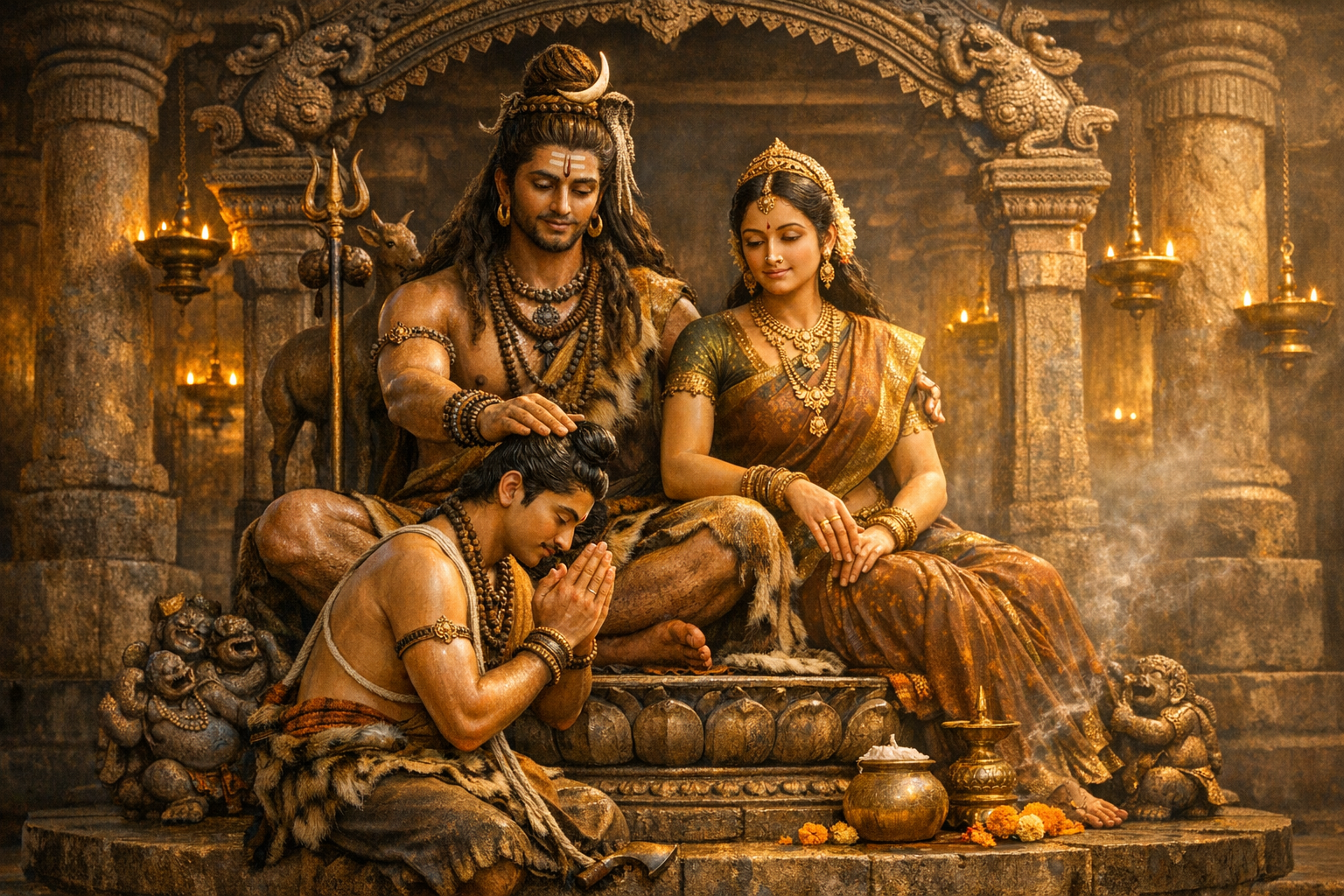
Chandesha Anugrahamurti evokes one of the most tender scenes in Shaiva art: Shiva conferring anugraha, or divine grace, upon the devotee Chandesha. In South Indian temple sculpture and Chola bronzes, this motif distills the essence of bhaktidisciplined devotion recognized and affirmed by compassionate authoritywhile also encoding a distinctive temple ethic of stewardship and accountability.
At the core of the narrative, preserved in the Periya Puranam and retold across Tamil Nadu, is a pastoral image transformed by devotion. The young Vicharasarman (later Chandesha) tended cows and offered their milk to a sand linga fashioned with care and reverence. Confronted by a father angered at what he perceived as waste, the boyabsorbed in worshipdefended the sanctity of the offering; in some versions a staff miraculously became an axe (parasu), striking the father and severing his foot (variants differ on the exact injury). Shiva appeared, restored the father, pardoned the act born of single-pointed devotion, and invested the boy as Chandesha, guardian of the Lord’s domain.
This narrative does not glorify transgression; rather, it asserts that uncompromising devotion, when illumined by grace, is harmonized with dharma. Shiva heals, forgives, and then entrusts Chandesha with custodianship of temple propertyan appointment that explains both the iconography of Chandikeshvara and his enduring ritual role within Shaiva temples.
Iconographically, Chandesha Anugrahamurti is defined by the relational triad of Shiva, Uma, and the kneeling Chandesha. Shiva is shown either seated in sukhasana beside Uma or standing in a composed tribhanga; Chandesha kneels before them, hands joined in anjali. The hallmark is Shiva’s right hand extending in graceoften touching or poised just above Chandesha’s head (a sirasi-anugraha gesture)in combination with the varada hasta (boon-bestowing) or abhaya (assurance) of the other hand. This intimate contact, more personal than a general benediction, visually enacts acceptance and investiture.
Shiva’s physiognomy follows canonical Agamic models: a tall jata-makuta with the crescent moon and the descent of Ganga, the tri-netra signaling omniscience, and the yajnopavita across the chest. Attributes may include the trishula and mriga (antelope), a serpent ornament, and a tiger-skin garment. Uma is rendered with serene gravitas, her left hand sometimes resting on the pedestal or gently stabilized upon the lap, emphasizing the household divinity underlying this bestowal of grace. Ganas clustered at the base or along a makara-torana may frame the scene, accenting its celebratory character.
Chandesha’s form is typically youthful yet resolute: a high topknot or neatly bound hair, sacred thread, and an uncluttered torso that accentuates humility. In many independent Chandikeshvara icons he holds a parasu, underscoring his role as an exacting steward; in the anugraha scene, however, he most often clasps hands in anjali to foreground the receiving of grace and duty. The subtle pairingaxe in independent icons, anjali in anugrahacaptures both the vigilance of guardianship and the surrender of devotion.
Historically, the theme is well attested in Pallava art at Kanchipuram’s Kailasanatha Temple (late 7th–early 8th century CE), where narrative reliefs emphasize Shiva’s anugrahas to devotees. The Chola Dynasty elaborated the subject in stone and panchaloha bronzes from the 10th to 12th centuries, refining posture, gesture, and the quiet psychological rapport between deity and devotee. The visual language continued into later periods, resonating within the grand ensembles of Thanjavur’s Brihadeeshwara Temple and Gangaikondacholeesvarar Temple, where Shaiva iconographic cycles interweave grace, governance, and ritual.
The ritual life of Chandesha in Tamil Shaiva temples is as distinctive as the imagery. Typically enshrined to the north of the sanctum as Chandikeshvara, he functions as the temple’s spiritual comptroller. After offerings are made to the main linga, remnants are submitted to Chandesha; priests and devotees often snap their fingers or gently clap before him, a liturgical micro-gesture signaling that nothing due to the deity has been withheld. For many pilgrims, this simple act becomes an ethical exercisean embodied reminder that resources entrusted to the sacred must be accounted for with integrity.
Materially, Chola bronzes of Chandesha Anugrahamurti demonstrate consummate mastery of lost-wax casting. The smooth planes of the torso, crisply chased ornaments, and balanced negative space around Shiva’s benedictory hand heighten the viewer’s awareness of gesture as theology: grace is not abstract but tactile, near enough to touch the crown of the devotee’s head.
The subject is best understood in dialogue with adjacent Shaiva images. Unlike Somaskandawhich centers the familial triad of Shiva, Uma, and the child SkandaChandesha Anugrahamurti elevates the devotee to the narrative foreground. It also differs from other anugraha themes such as Ravana Anugraha or Markandeya Anugraha by showcasing not cosmic prowess or miraculous rescue, but the quiet formalization of service and guardianship within the temple economy of merit.
Semiotically, Shiva’s hand upon Chandesha’s head encodes adoption, authorization, and initiation. Adoption conveys acceptance into a divine household; authorization invests authority over the Lord’s estate; initiation acknowledges the discipline that qualified the devotee to serve. The scene thus bridges personal bhakti and institutional dharma, ensuring that piety matures into responsible actionan ethic as relevant to contemporary civic life as it is to sacred precincts.
For visitors tracing this image across South India’s temple architecture, Kanchipuram provides Pallava prototypes, while Chola-period refinements can be sought in Thanjavur and Gangaikondacholapuram. In circumambulatory paths, reliefs may appear along devakoshtas or prakara walls; independent Chandikeshvara shrines, by contrast, are usually discrete and unmistakably vigilant in mood. Recognizing the kneeling devotee and the distinctive head-blessing is a reliable way to identify the anugraha scene in dense sculptural programs.
Although rooted in Shaiva Siddhanta, the affective grammar of Chandesha Anugrahamurti resonates across the dharmic family. The triumph of compassion (karuna) over retribution speaks to Buddhist sensibilities; the transformation of fierce resolve into ethical stewardship harmonizes with Jain emphasis on disciplined conduct (vrata) and ahiṃsa; the centrality of grace (kirpa) in Sikh thought parallels the scene’s trust in benevolent sanction. Each tradition, in its own vocabulary, affirms that dedicated practice is met by compassionate recognition.
For many contemporary devotees, standing before Chandesha Anugrahamurti sustains more than aesthetic appreciation. The scene invites a quiet inner inventory: What has been offered with sincerity? What responsibilities has that offering created? By making devotion inseparable from accountability, the image restores balance between inward fervor and outward dutyprecisely the synthesis that allowed Chandesha’s worship to become indispensable to the living rhythms of the Hindu temple.
Inspired by this post on Hindu Blog.










