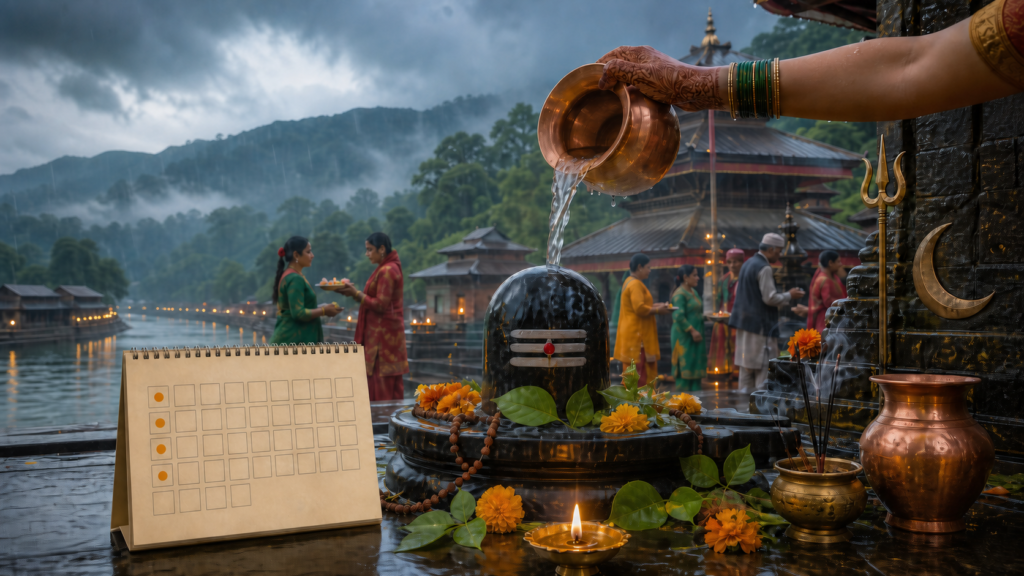
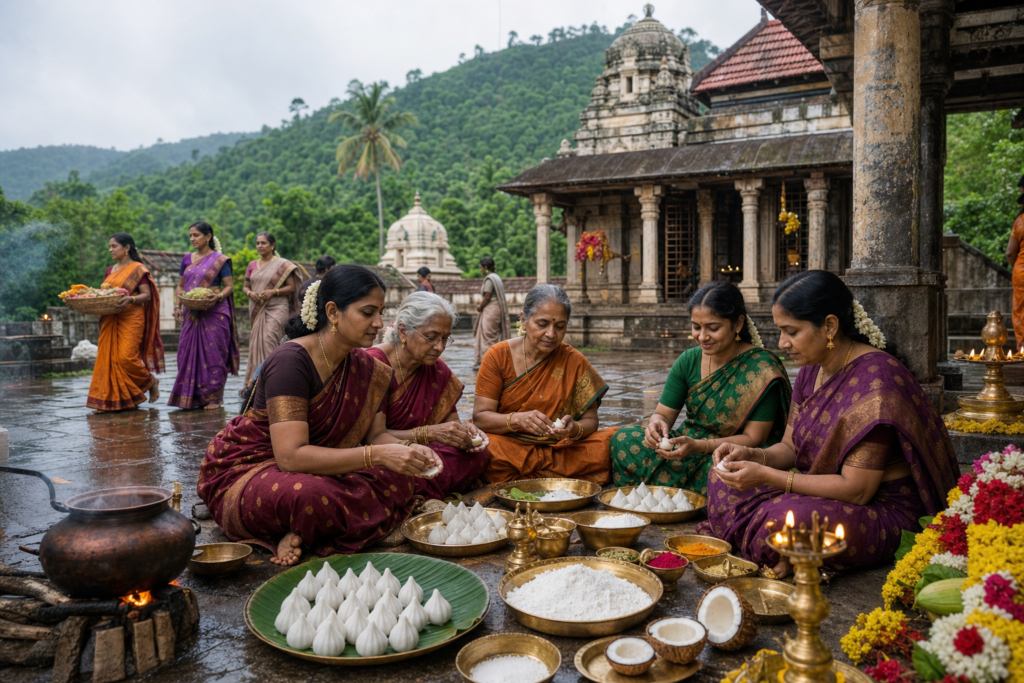
Trikala Puja, often described as the sacred rhythm of divine worship in Hindu temples, aligns daily life with the cyclical movement of time. Observed three times a day, it is more than a ritual sequence; it is a disciplined way of synchronizing devotion, attention, and community life with dawn, midday, and dusk. Within Sanatana Dharma, this cadence frames the day as a spiritual journey and sustains the living continuity of Hindu temples.
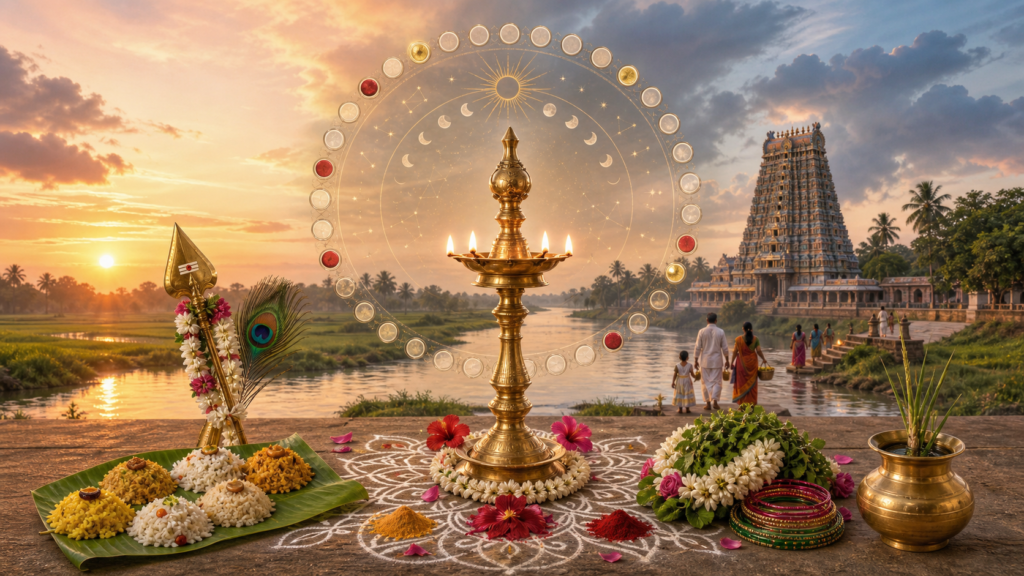
Classical temple manuals in diverse Agamic lineages enjoin worship at three junctures: prātaḥ, madhyāhna, and sāyam. Across Shaiva, Vaishnava, and Shakta traditions, priests offer upacharas, ring the bell, present naivedya, and conclude with dīpa-ārati, adapting details to the temple deity and regional customs. The pattern remains consistent in spirit even as language, music, and iconographic features vary, illustrating the flexibility and unity of Hindu rituals within the broader ecology of Hindu temples.
The spiritual significance of Trikala Puja rests on profound intuitions about human consciousness and time. Morning worship cultivates sattva and reorients intention toward dharma. Midday worship sanctifies activity and channels rajas into responsible action. Evening worship gently transforms the descent toward tamas into gratitude, repose, and reflective remembrance. In this way, the triadic structure becomes a practice of inner regulation, steadying thought and emotion through predictable sacred intervals.
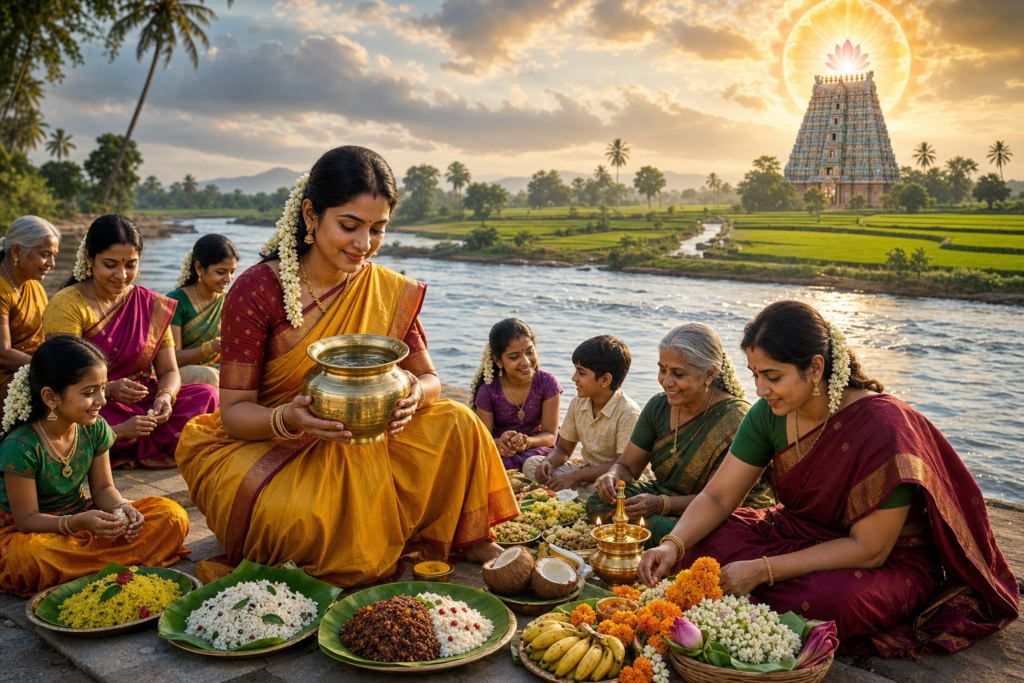
For many temple-goers, the lived experience is quietly transformative. At dawn, the rising light, fragrance of dhūpa, and the first ringing of the bell evoke renewal and clarity. At noon, the naivedya offering reframes work and sustenance as shared prasad, binding individual effort to community welfare. At dusk, dīpa-ārati softens the mind, inviting repose, gratitude, and a gentle return to inner stillness. The resulting rhythm strengthens attention, reduces stress, and anchors personal life in a shared spiritual calendar.
This tri-daily discipline resonates across the wider dharmic family. Sandhyā practices in Hindu households mirror temple timings, Jain samayik and pratikraman cultivate daily ethical attentiveness, Buddhist morning and evening chanting steady mindfulness, and Sikh Nitnem at dawn, evening, and night embodies disciplined remembrance. Such parallels affirm a common civilizational insight shared by Hinduism, Buddhism, Jainism, and Sikhism, where diverse forms of worship converge on the unity of ethical living, reflective awareness, and compassion.
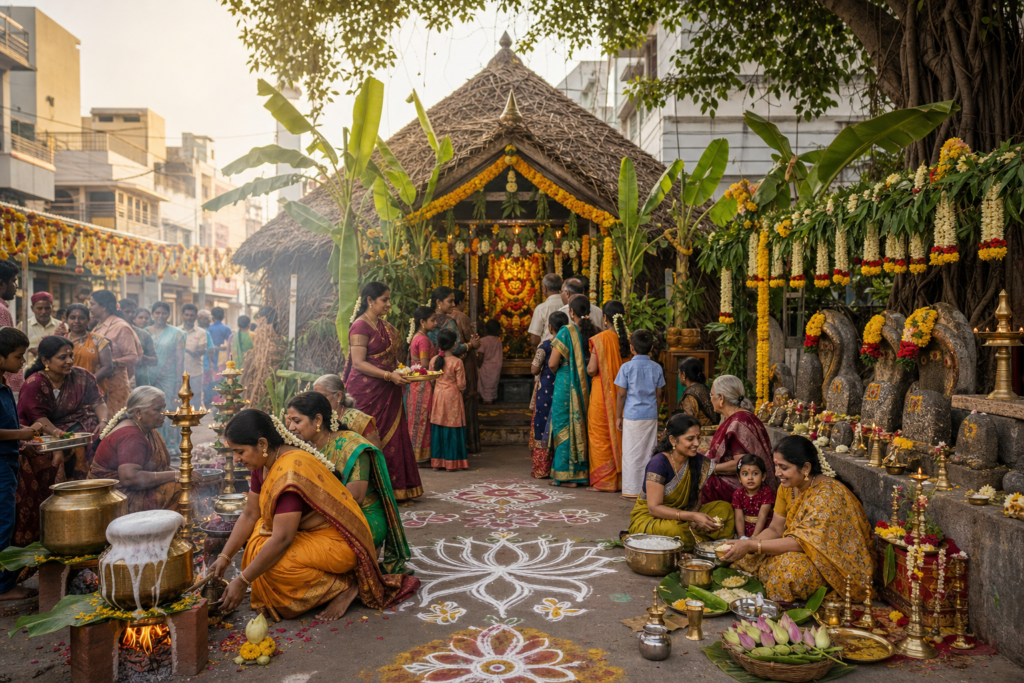
From a community perspective, Trikala Puja strengthens temple functions by creating reliable windows for darshan, shared singing, and learning. Regular timings enable intergenerational participation, preserve liturgical music and language, and uphold the temple as a place of cultural transmission. For individuals, these intervals operate like contemplative checkpoints, encouraging mindful breathing, simple japa, or silent reflection that complements formal worship with accessible daily practices.
Trikala Puja also aligns with human circadian rhythms. By punctuating the day with brief, embodied practices, the tradition supports attention regulation and emotional balance. Regardless of geography, devotees often adapt the three moments at home or work by lighting a lamp, reciting a short mantra, or observing a minute of silence. Such inclusive approaches honor one’s Ishta while respecting the diversity of Hindu practices and the plural spirit of Sanatana Dharma.
In essence, Trikala Puja is a living synthesis of theology, community, and daily well-being. It honors the deity, steadies the practitioner, and holds space for unity in diversity across Dharmic traditions. By embracing time’s sacred rhythm, Hindu temples nurture a dependable pathway to inner harmony and shared cultural continuity, day after day.
Inspired by this post on Hindu Blog.