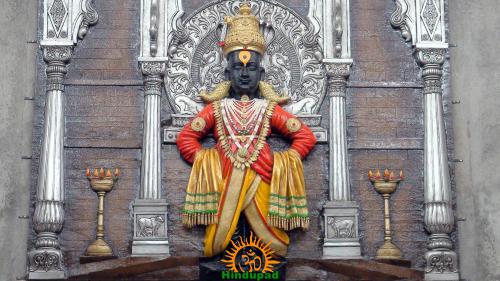
Among the most evocative features of the Tirumala icon of Lord Venkateswara Swamy are the two exquisitely fashioned golden serpent motifs resting upon the deity’s shoulders, collectively known as the Nagabharana. For many pilgrims, the brief moment of darshan offers a glimpse of these gleaming formsan intimate, protective presence that subtly amplifies the temple’s theological message of grace, guardianship, and cosmic order.
In classical temple vocabulary, Nagabharana denotes a serpent-themed bhushana (ornament), here configured as paired images that echo the form and sanctity of Lord Adisesha, the eternal serpent upon whom Lord Vishnu reclines. Installed symmetrically, the shoulder-borne ornament functions as both iconographic marker and liturgical signifier, harmonizing aesthetics with metaphysical meaning in the Vaishnava tradition centered at Venkatachala.
Within Vaishnava theology, Adisesha embodies infinity (ananta), steadfast service (kainkarya), and the protective canopy that shelters divine presence. By visually evoking Adisesha in the Nagabharana, the icon of Venkateswara communicates a layered narrative: the Lord abides as the axis of the cosmos, while the serpent-energychanneled as devotion and vigilanceencircles and safeguards dharma. The image thus unites philosophical abstraction with material artistry in a manner immediately legible to both scholars and devotees.
According to traditional accounts preserved in the temple lore of Tirumala and the Venkatachala Mahatmya of the Puranic corpus, when Lord Vishnu manifested on earth as Srinivasa, Adisesha accompanied this descent. One strand of legend identifies the Seshachalam hills themselves with the body of Adisesha, enfolding the Lord in a protective geography. Against this backdrop, the twin serpent images on the Lord’s shoulders are interpreted as Adisesha’s vigilant presencean iconographic shorthand for divine guardianship that is at once intimate and cosmic.
Ritually, the Nagabharana participates in the temple’s alankara tradition, wherein the mūla-vigraha (main icon) and the utsava-murti (processional form) are adorned in accordance with Agamic prescriptions and seasonal-temporal rhythms. The Tirumala Tirupati Devasthanams (TTD), following the Vaikhanasa Agama, regulates ornamentation in concert with seva schedules, festivals, and processions. While visibility of the shoulder ornaments can varyespecially when the icon is richly garlandedthe Nagabharana remains a stable component of the Lord’s sacred vesture, dynamically integrated with other hallmark elements such as the Sri Vatsa mark and Kaustubha jewel.
From a craft history perspective, the Nagabharana exemplifies South Indian mastery in sacred metalwork. Goldrevered for its incorruptibility and radianceprovides the ideal medium for sanctified adornment. Techniques such as repoussé, chasing, and fine filigree allow artisans to render serpentine hoods, scales, and curves with supple clarity. Gem inlay and nuanced surface finishing accentuate the living dynamism of the naga form, while the ornament’s anchoring points and curvature are tailored to the proportions of the icon so that theology, ergonomics, and visual rhythm cohere seamlessly.
Symbolically, the bilateral placement of serpents on the shoulders invites multiple readings grounded in Indic semiotics. Shoulders are loci of responsibility and strength; their adornment with nagas signals vigilant protection over the Lord’s armsthose which extend abhayam (assurance) and bestow varam (boons). In a broader philosophical sense, the serpents’ coiling energy evokes continuity, renewal, and latent potency, themes that reappear in yogic discourse as well as in the Puranic imagination. By resting upon the Lord, that latent energy is visually subordinated to and sanctified by the supreme order of Vishnu, thereby aligning power with compassion and restraint.
For devotees, the Nagabharana heightens the experiential arc of darshan. The visual of glistening serpents near the Lord’s compassionate gaze and steady stance invites a felt understanding: divine shelter is not abstract but present, personal, and near. Many pilgrims describe the reciprocal movement of devotionone approaches the Lord seeking refuge, and the sight of Adisesha’s emblematic guardianship affirms that refuge has already been extended. In this way, ornament becomes a vehicle for lived theology, translating metaphysical claims into immediate, devotional insight.
The Nagabharana also resonates across the wider Dharmic sphere. In Hinduism, Buddhism, and Jainism, nagas appear as protectors and patrons of sacred knowledgeconsider Mucalinda shielding the Buddha or the iconic canopy over Tirthankara Parshvanatha. While Sikh tradition emphasizes the formless One (Nirankar) without anthropomorphic iconography, the shared ethical emphasis on divine protection, humility, and service (seva) fosters a unifying ethos among Dharmic paths. The shoulder-borne serpents at Tirumala can thus be appreciated as part of a larger Indic language of sanctity and guardianship that honors diversity while sustaining common values.
Textually, the serpent’s proximity to Vishnu is deeply embedded in the Puranas and Vaishnava hymns, where Adisesha is praised as steadfast attendant and cosmic support. Agamic literature guides how such motifs enter temple practicegoverning scale, placement, and ritual handlingso that adornment serves not as embellishment alone but as structured liturgy. The Nagabharana thereby functions as a didactic symbol, a ritual implement, and a cultural archive, transmitting theological insight alongside artistic lineage.
Visitors wishing to observe the Nagabharana more clearly may note that visibility varies with the alankara of the day and the layering of floral garlands. During certain sevas and processional occasions, contours of the shoulder ornaments are more readily discerned. Even when partially veiled, however, the knowledge of their presence enriches darshan; understanding what the motif signifies often transforms a fleeting glance into a moment of contemplative recognition.
As a piece of living heritage, the Nagabharana exemplifies how Hindu temples synthesize theology, ritual, and art into a coherent whole. Its quiet symbolism reaffirms the role of Venkateswara as preserver and protector, while its serpentine form channels the Indic intuition that power must be aligned to dharma to become truly auspicious. In honoring this ornament, devotees and scholars alike engage an enduring conversation about how sacred forms nurture ethical life, communal harmony, and unity across Dharmic traditions.
Ultimately, the Nagabharana of Venkateswara Swamy stands as Adisesha’s golden embracea luminous reminder that divine protection is both cosmically vast and intimately near. It is a testament to the ritual intelligence of the Vaikhanasa tradition, the aesthetic sensitivity of South Indian artisans, and the timeless Vaishnava conviction that beauty, when properly ordered, becomes a pathway to truth.
Inspired by this post on Hindu Pad.