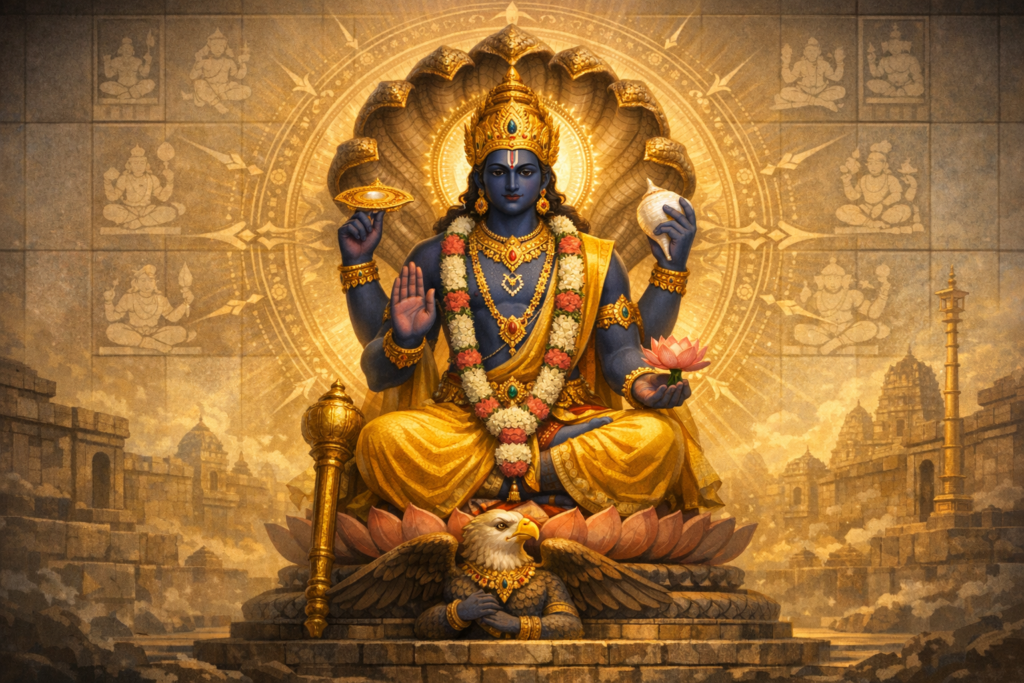
On 16 March 2026, Sahibabad witnessed a historic spiritual milestone as the ISKCON Sahibabad temple inaugurated the murtis of Lord Jagannath, Baladeva, and Subhadra with meticulously conducted Vedic rituals, resonant kirtans, and the presence of thousands of devotees. The consecration marked a significant addition to the devotional landscape of the National Capital Region, reinforcing Gaudiya Vaishnava practice through nama-sankirtana, scriptural homas, and collective seva. This is one of the twenty ISKCON temples within the Delhi region, underscoring the movement’s sustained community presence and outreach.
Sahibabad is the name for a group of neighborhoods within Ghaziabad, contiguous with East Delhi and embedded in the wider Delhi–NCR corridor. As a rapidly evolving urban cluster, it blends residential, commercial, and industrial zones, making cultural institutions pivotal anchors for shared identity and civic engagement. Within this context, the temple functions as a cultural-educational node and a public space for ethical reflection, spiritual learning, and community service.
The installation (prāṇa-pratiṣṭhā) of Lord Jagannath, Baladeva, and Subhadra followed established Vaishnava liturgical frameworks referenced in texts such as the Hari-bhakti-vilāsa and allied Pancharatra traditions. Ceremonial sequences typically include saṅkalpa (formal vow), adhivāsa (ritual sanctification), kumbha-sthāpana (installation of consecrated pots), homas with Vedic and Vaishnava mantras, nyāsa (ritual placement of divine energies), netronmīlana (opening of the eyes), and abhiṣeka (ritual bathing) with pañcāmṛta and sanctified waters. These rituals are designed to transform the altar into a living locus of darśana, where the deities are worshipped as present and responsive, establishing an ontological bridge between devotion (bhakti) and sacred embodiment (arcana).
The soundscape of the inauguration was defined by sustained kīrtana with mṛdaṅga, karatālas, and harmonium, centered on the Hare Krishna mahāmantra: Hare Krishna Hare Krishna, Krishna Krishna Hare Hare; Hare Rama Hare Rama, Rama Rama Hare Hare. Devotee testimonies consistently described an atmosphere of collective uplift, where rhythmic chant, ritual fire, and communal prayer converged into a shared experience of grace. Families, students, and elders from across the Delhi–NCR region—representing diverse Dharmic backgrounds—participated, attesting to the temple’s role as a unifying, non-sectarian sanctuary for spiritual exploration and ethical living.
Iconographically, Jagannath, Baladeva, and Subhadra embody a devotional lineage linked to Odisha’s sacred geography and the famed Ratha Yatra tradition. Their distinctive forms and expressive eyes, often interpreted as all-seeing compassion, foreground accessibility and inclusivity—hallmarks of Gaudiya Vaishnavism’s emphasis on universal participation in bhakti. The triadic presence symbolizes fraternity, protection, and auspiciousness, inviting devotees into a devotional pedagogy grounded in remembrance (smaraṇa), worship (arcana), and congregational singing (saṅkīrtana).
While each ISKCON complex is architecturally unique, the Sahibabad temple’s functional program aligns with global ISKCON norms that typically prioritize a capacious kīrtana hall, a dedicated altar for darśana and ārati, a prasāda kitchen for sattvic meals, classrooms for scriptural study, and spaces for cultural education. This programmatic configuration enables a full devotional cycle—daily sevas, scripture-centered learning, music and dance traditions, and intergenerational engagement—integrating spiritual practice with public pedagogy.
The inauguration also highlighted education and outreach as central pillars. ISKCON centers commonly offer systematic courses on the Bhagavad-Gita, Srimad-Bhagavatam readings, Sanskritic arts (such as mṛdaṅga and harmonium), and youth mentorship initiatives that translate timeless values—self-discipline, compassion, integrity—into contemporary civic life. Community service (seva) often takes the form of prasāda distribution, environmental awareness drives, and charitable initiatives, mapping devotion onto tangible welfare outcomes and responsible stewardship.
Consistent with the blog’s objective of unity among Dharmic traditions—Hinduism, Buddhism, Jainism, and Sikhism—the Sahibabad temple exemplifies spiritual coexistence built on shared values: ahimsa (non-violence), dana/seva (generosity and service), satya (truthfulness), and shraddhā (reverent commitment). The atmosphere of open darśana, inclusive kīrtana, and non-coercive education cultivates a public ethos in which multiple paths can flourish harmoniously. Programs that encourage dialogue on common ethical concerns—well-being, duty, compassion, and community cohesion—foster a lived experience of unity in spiritual diversity.
From a heritage perspective, the temple contributes to the conservation and transmission of intangible cultural assets: ritual liturgies, musical forms, sacred languages, and culinary traditions associated with prasāda. Such institutions also enhance local economies through increased footfall, volunteer engagement, and cultural tourism, while offering stabilizing, intergenerational spaces for reflection and moral formation in a fast-paced metropolitan region.
For respectful participation, visitors typically observe modest attire, maintain decorum during darśana and āratis, and engage in kīrtana and lectures with focused attention. Photography norms, if any, are to be followed as announced by the temple. Newcomers often find it helpful to attend an introductory session on bhakti practice, which clarifies the theological basis for rituals, the role of the mahāmantra, and the significance of prasāda as sanctified nourishment.
Looking ahead, the temple is well-positioned to anchor calendar highlights such as Gaura Purnima, Janmashtami, Kartika observances, and the annual Ratha Yatra celebrations associated with Lord Jagannath. These festivals characteristically unite diverse communities through processions, music, discourse, and shared service, reinforcing a civic spirituality rooted in compassion, learning, and cultural continuity.
In synthesis, the ISKCON Sahibabad inauguration affirms a vital truth of the subcontinent’s civilizational fabric: devotion and knowledge find their fullest expression when welcomed into public life as inclusive, ethical, and educational energies. With Lord Jagannath, Baladeva, and Subhadra now installed, Sahibabad gains more than a temple; it gains a spiritual lighthouse—an institution oriented to harmony, seva, and the collective flourishing of Dharmic traditions in the Delhi–NCR region.
Inspired by this post on Dandavats.