Gandham Amavasya is observed at the Simhachalam Varaha Lakshmi Narasimha Swamy Temple in Andhra Pradesh as the ceremonial prelude to the famed Akshaya Tritiya Chandanotsavam. In 2026, Gandham Amavasya falls on 17 April, coinciding with Chaitra Amavasya in the Hindu lunisolar calendar and occurring three days before the Nijaroopa Darshanam on Akshaya Tritiya.
Simhachalam, located near Visakhapatnam, enshrines the composite deity Varaha Lakshmi Narasimha Swamy, affectionately called Simhachalam Appanna. Unique among South Indian temples, the moola vigraha is kept fully covered in sandalwood paste throughout the year; only on Akshaya Tritiya is this coating carefully removed to grant devotees the rare Nijaroopa Darshanam before a fresh application of chandan is performed.
Epigraphic records from the Eastern Ganga and Vijayanagara periods attest to royal endowments, renovations, and ritual expansions at this kshetra, popularly known as Simhadri. The festival cycle, in which Gandham Amavasya forms the opening movement, thus reflects centuries of living practice anchored in regional cultural memory.
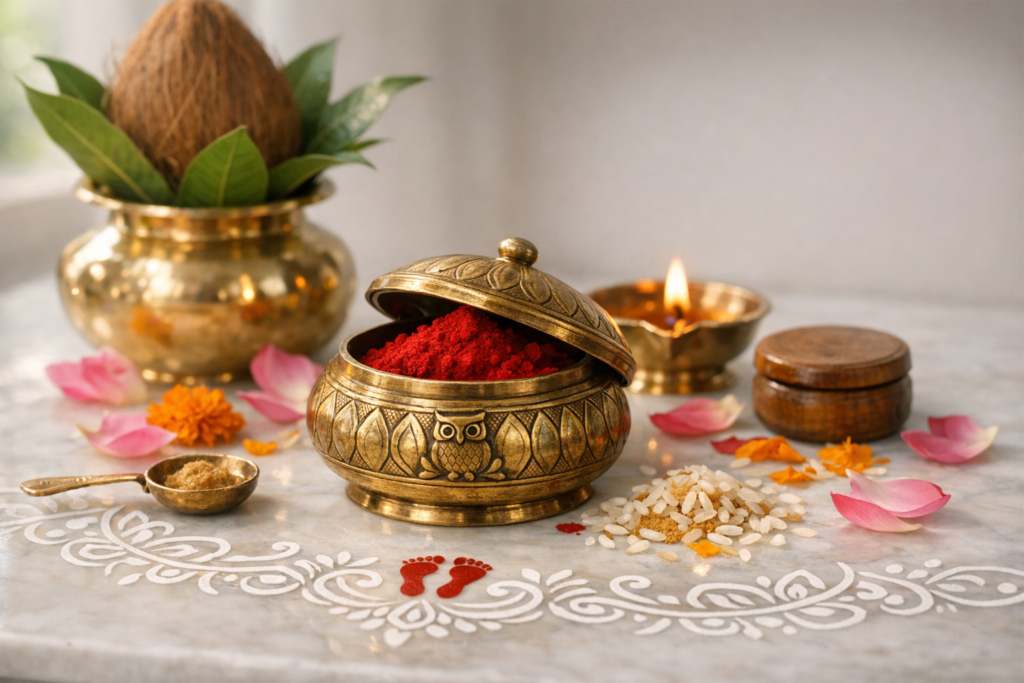
Etymologically, gandham denotes fragrant sandalwood paste and Amavasya denotes the new moon. Within this kshetra, Gandham Amavasya marks the formal commencement of preparing the large volumes of sandal paste required for the festival cycle. Temple archakas undertake sankalpa, Veda parayanam, and supervised gandha-parimardana, initiating the grinding of sandalwood on smooth stone slabs in accordance with Vaishnava agamic prescriptions.
Calendarically, Chaitra Amavasya closes the first lunar month after Mesha Sankranti and is considered auspicious for upacharas to Vishnu. Local panchang computations for Visakhapatnam govern the exact start and end of the Amavasya tithi on 17 April 2026; temple observances align with the tithi prevalent during the scheduled ceremonies.
From Gandham Amavasya through the following two days, sandal preparation continues under controlled conditions so that the paste attains the desired texture, aroma, and sanctity. On Akshaya Tritiya, 20 April 2026, the year-old coating on the moola vigraha is ritually removed, abhishekam is performed, Nijaroopa Darshanam is offered to the public, and fresh sandal paste—prepared since Gandham Amavasya—is applied during Chandanotsavam.
Ritually and theologically, chandan serves as a prasamana upachara, a cooling and pacifying offering appropriate to Ugra-Narasimha. Vaishnava Agamas, whether in the Vaikhanasa or Pancharatra traditions, emphasize gandha-alankara for Vishnu icons, especially during the warmer Vaishakh season, both to express bhakti and to maintain the integrity of the image through a protective, fragrant layer.
From a materials and ayurvedic perspective, sandalwood paste exhibits natural cooling and antimicrobial properties, making it an ideal medium for prolonged alankara. Temple practice generally combines finely ground sandal with water from sacred tirthas and permitted aromatic dravyas, producing a paste that adheres evenly, cures without cracking, and preserves the icon’s surface while diffusing a permeating fragrance through the garbhagriha.
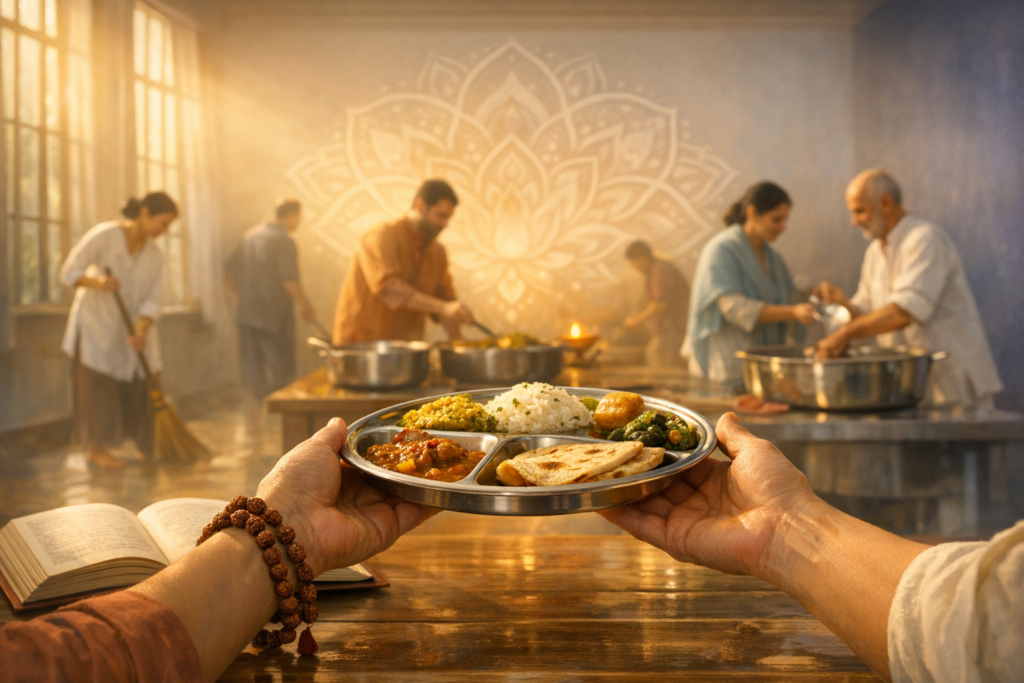
Community memory associates this period with devotion and service. Families often undertake vrata, simple satvik food, and collective seva such as queue assistance and water distribution for fellow pilgrims. Many visitors report a distinctive sense of serenity as the fragrance of chandan mingles with Vedic chant, reinforcing the experiential dimension of darshan beyond the visual.
The festival’s cultural resonance also bridges dharmic traditions. Sandalwood’s sacred use appears across Hindu, Buddhist, and Jain ritual ecologies, and the ethic of seva and shared sanctity finds natural echoes in Sikh practice. Gandham Amavasya at Simhachalam thus embodies a broader Indic ethos of cooling compassion, reverence for the sacred image, and unity in spiritual diversity.
Devotee logistics merit advance planning. Simhachalam lies roughly 16 km from the Visakhapatnam city center, with road access to the temple at the hill’s base and further conveyance up the ghat. Given the large footfall expected on Akshaya Tritiya, early arrival, attention to temple guidelines on dress and offerings, and consultation of official advisories for darshan arrangements are prudent. Heat management during Vaishakh—hydration, head covering, and considerate queuing—enhances the pilgrimage experience.
For those unable to attend on Akshaya Tritiya, Gandham Amavasya offers a meaningful, relatively less crowded window into the festival cycle. Witnessing the initiation of gandha preparation provides insight into the craft, care, and continuity that culminate in Nijaroopa Darshanam. The 2026 sequence—Gandham Amavasya on 17 April followed by Chandanotsavam on 20 April—illustrates how calendrical precision, ritual science, and living devotion converge at Simhachalam.
In summary, Gandham Amavasya functions as the liturgical and logistical foundation for Chandanotsavam. By beginning the sacred labor of sandal preparation on Chaitra Amavasya, the temple ensures that the rare unveiling of Simhachalam Appanna’s Nijaroopa is immediately followed by a meticulously prepared chandan alankara, renewing both the deity’s iconic presence and the devotees’ collective vow of service each year.
Key dates for 2026, local to Visakhapatnam: Chaitra Amavasya Gandham Amavasya — Friday, 17 April 2026; Akshaya Tritiya Chandanotsavam with Nijaroopa Darshanam — Monday, 20 April 2026. Final schedules and darshan windows may be adjusted by the temple administration in accordance with the local Panchang.
Inspired by this post on Hindu Pad.