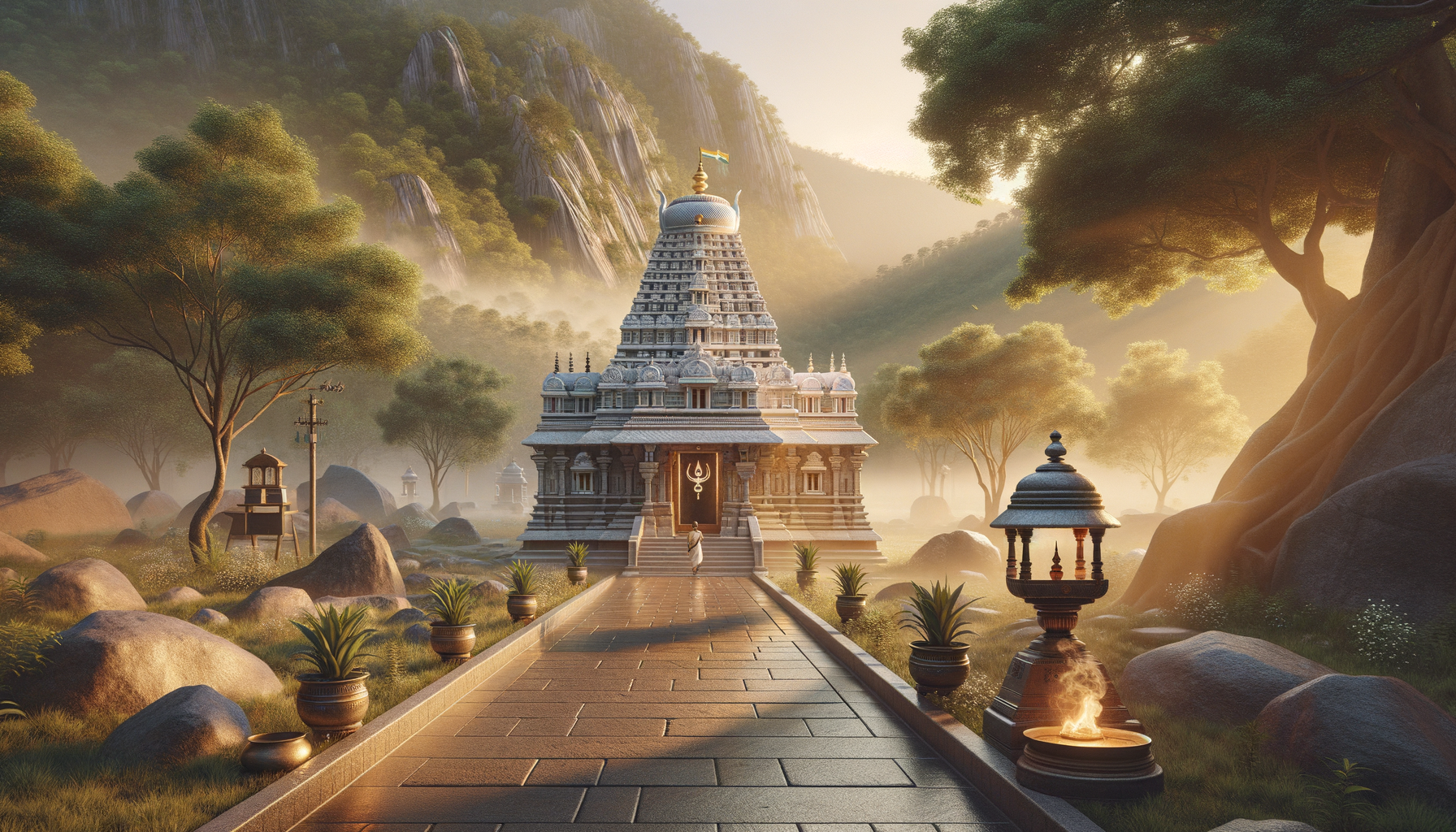
Ananthagiri Temple, widely known as the Ananta Padmanabha Swamy Temple, is a revered Vishnu shrine located at Ananthagiri in the Vikarabad district of Telangana. Recognized among the ancient temples of Telangana, it draws pilgrims and cultural travelers seeking a balanced blend of historical depth, sacred continuity, and natural serenity.
Traditional accounts, referenced in the Skanda Purana, hold that the shrine was consecrated by Rishi Markandeya during the Dwapara Yuga. While such attributions belong to the sacred timeline of Itihasa and Purana rather than modern historiography, they remain central to the temple’s living heritage, shaping devotional memory and regional identity across generations.
The presiding deity, Lord Vishnu as Ananta Padmanabha Swamy, reflects the classical iconography of Vishnu associated with Ananta (the cosmic serpent), emphasizing preservation, protection, and cosmic order. Devotees commonly experience darshan in quiet contemplation, recite stotras such as the Vishnu Sahasranama, and engage in unobtrusive meditation, aligning ritual practice with the temple’s tranquil rhythm.
Set within the gentle landscape of Ananthagiri, the temple’s peaceful ambience is frequently noted by visitors. Temple bells, rustling leaves, and the measured cadence of prayers foster a contemplative atmosphere that appeals to families, pilgrims, and spiritual seekers alike. Many visitors describe a restorative calm that encourages introspection and a renewed sense of purpose.
Beyond its devotional appeal, the shrine contributes to the cultural fabric of Telangana. It stands as a touchpoint for understanding regional temple history, traditional worship patterns, and the enduring influence of Puranic narratives in everyday life. The site also offers a reflective space for unity across dharmic traditionsHinduism, Buddhism, Jainism, and Sikhismby foregrounding shared values of compassion, self-discipline, and reverence for wisdom.
For cultural travelers and pilgrims, the Ananta Padmanabha Swamy Temple in Vikarabad offers a measured, enriching visit: an accessible heritage site, a living center of Vishnu worship, and a serene environment conducive to study, reflection, and mindful practice. Its synthesis of historical memory and spiritual presence continues to inspire those who seek meaning in places where devotion and culture gently converge.
Inspired by this post on Hindu Pad.