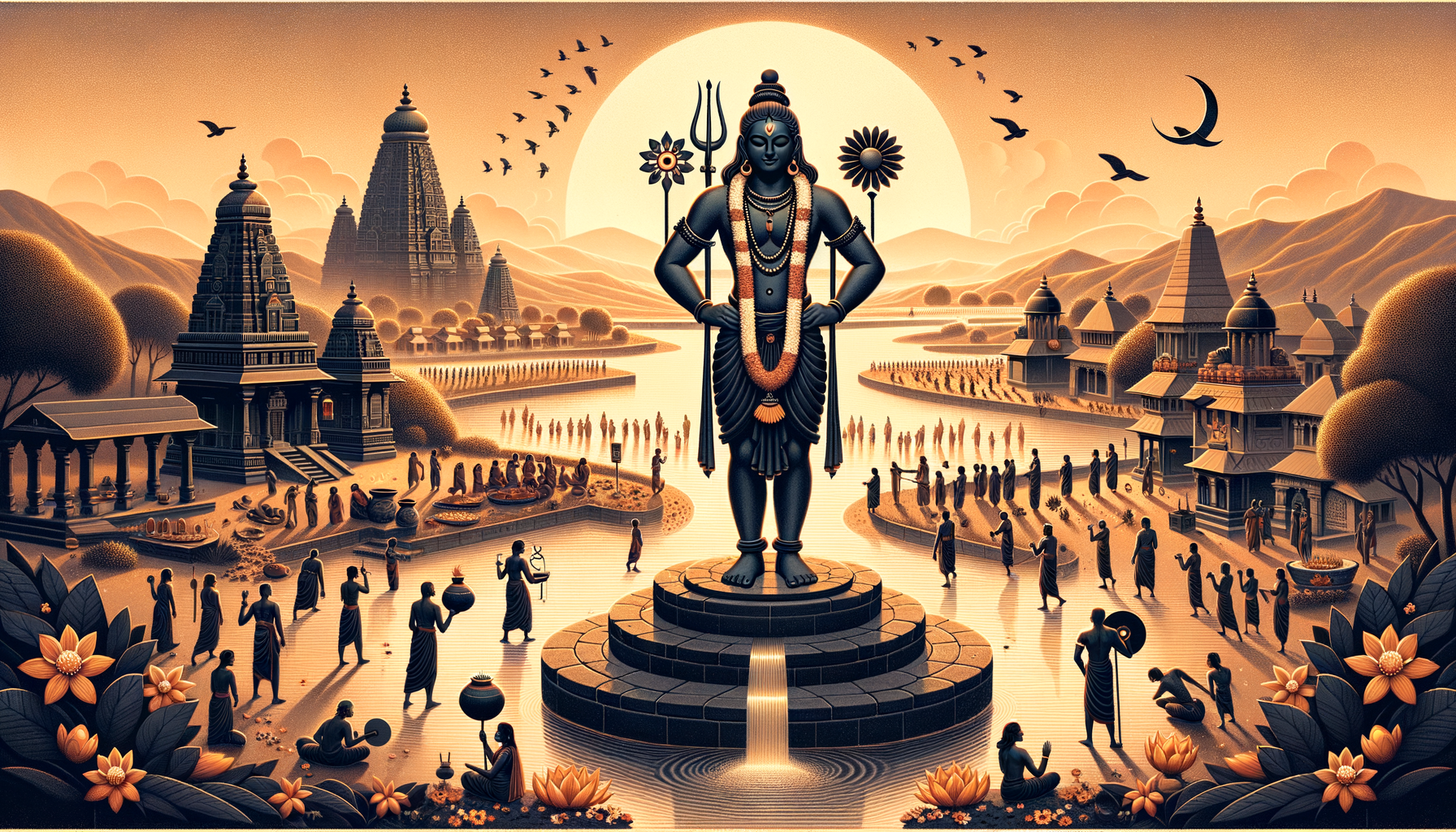
Nestled on the crescent-shaped banks of the Chandrabhaga (Bhīma) in Maharashtra’s Solapur district, Pandharpur is among the subcontinent’s most cherished pilgrimage centers. Millions walk in the Vārī each year to seek darśan of Lord Vithoba. Beyond its temple architecture and ritual life, the town’s very namesand the epithets of its deityencode layers of symbolism that illuminate the heart of the Bhakti tradition and its inclusive ethos.
The name Pandharpur itself is linked to a complex etymological history. Some scholars trace it to regional toponyms and older forms such as Pandhari, while others relate it to devotional usage in Marathi and Kannada sources. In living practice, Pandhari functions as a poetic and intimate name for the sacred kṣetra, signaling the town not merely as a location but as a relational space where community, song, and service converge.
Panduranga, a prominent epithet of the deity, has drawn multiple interpretations. One line of thought relates pāṇḍu (pale/white) with raṅga (hue), suggesting a luminous, compassionate presence; others see the title as bound to the locale and its devotional language. The well-known black-stone mūrti standing with hands on hips at Pandharpur sits in productive tension with the epithet’s chromatic connotationsa paradox beloved by Bhakti poets to convey the deity’s transcendence of form and category.
Vithoba, Vitthal, and Vittala are central names in both Marathi and Kannada traditions. A widely accepted explanation derives Vitthal from vit (brick) and -ba (father), a reference to the deity standing on the brick offered by the devotee Pundalik. The brick symbolizes steadfastness, patient waiting, and divine accessibilitythe God who stands with devotees, not distant from them. The iconic hands-akimbo posture further signifies readiness, guardianship, and an unwavering presence in the everyday struggles of householders.
Pundalikavarada (the boon-giver to Pundalik) underscores the narrative core of the Pandharpur tradition: selfless seva. Pundalik’s devotion to his parents becomes the measure of spiritual maturity, affirming that service in family and society is a path to the divine. This ethic resonates across dharmic traditionsSikh seva, Jain dayā, and Buddhist karuṇādemonstrating a shared commitment to compassion and responsibility within community.
Pandharināth, “the Lord of Pandhari,” reflects the safeguarding dimension of divinity. As the guardian of the kṣetra, Vithoba embodies the cohesion of the Vārkari sampradāya, whose cyclical Wari and Palkhi processions knit together villages, castes, and vocations. Pilgrims often describe a palpable sense of belonging on the Mahādvāra Ghat, where communal singing, shoulder-to-shoulder walking, and shared food transform devotion into social unity.
Rakhumāī-Rāyā (Vitthal with Rukmini as Rakhumāī) highlights divine complementarityŚakti and Śaktimān in harmonious reciprocity. The pair signifies balance, fidelity, and relational devotion, inviting reflection on how spiritual life flourishes through cooperation of energies often personified as feminine and masculine.
Mauli, a tender name frequently used by devotees for Vithoba, literally means “mother.” It conveys sanctuary, protection, and unconditional care, reinforcing the experiential dimension of Pandharpur’s spirituality: the deity is encountered as kin. This maternal intimacy parallels themes of nurturing compassion cherished across Hinduism, Buddhism, Jainism, and Sikhism.
Names such as Hari, Keshava, and Krishna situate Pandharpur within a wider Vaiṣṇava heritage. Across centuries, saint-poets like Dnyaneshwar and Tukaram framed these names in abhangas that continue to guide millions. Their compositions model a living bridge between rigorous philosophical insight and emotionally resonant practiceknowledge and love braided into song.
The Chandrabhaga (Bhīma) river, curving like a crescent moon, is itself a symbolic teacher. Ritual bathing and riverside kīrtan link ecological reverence with spiritual cleansing, gently reminding pilgrims that care for the environment is inseparable from care for the soul. In this landscape, the names of the place and the deity form a continuous liturgy of meaning.
Across dharmic communities, the Pandharpur ethos feels familiar: congregational singing, communal service, and ethical self-discipline are shared practices. Whether in Sikh kīrtan and langar, Buddhist paritta recitations, or Jain stavans and anukampā, the grammar of devotion aligns with a culture of mutual care. Pandharpur’s names, rituals, and stories therefore operate as a unifying vocabulary that honors diversity while cultivating solidarity.
Taken together, the sacred namesPandharpur, Pandhari, Panduranga, Vithoba/Vitthal/Vittala, Pandharināth, Pundalikavarada, Rakhumāī-Rāyā, and Maulimap a complete spiritual journey. They teach accessibility (the God who waits on a brick), responsibility (the devotee who serves at home), complementarity (divine partnership), and compassion (the deity as mother). For pilgrims and readers alike, understanding these names deepens historical awareness, enriches personal contemplation, and strengthens a shared commitment to unity in spiritual diversity.
Inspired by this post on Hindu Blog.