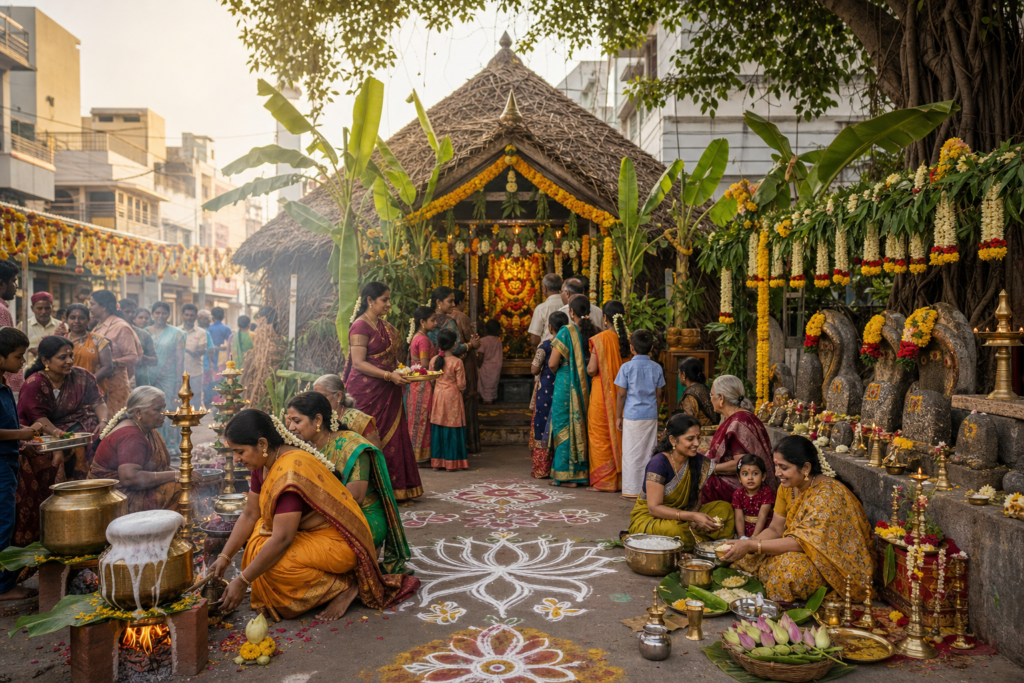
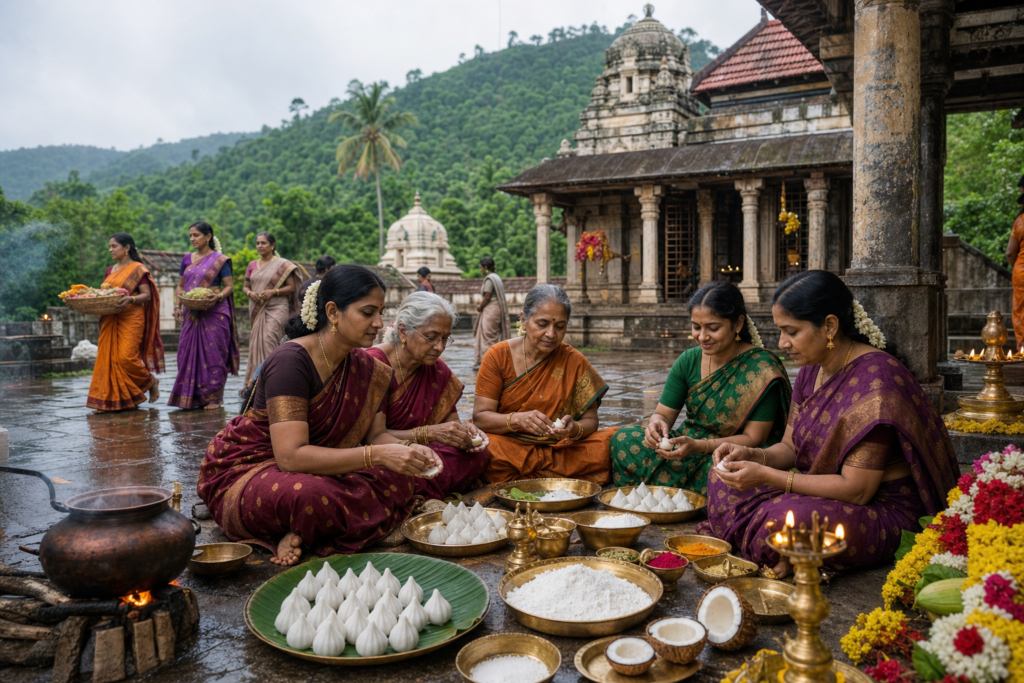
The cornerstone laying for the new temple dedicated to Sri Sri Radha Golokananda unfolded as a solemn and uplifting moment of collective devotion. A senior devotee, respectfully addressed as Maharaj, was guided through the sequence of offerings, while heartfelt exclamations of “Haribol” resonated through the assembly, underscoring a shared spiritual focus and communal joy.
The ritual movements reflected the careful cadence of traditional Hindu rituals associated with Temple Construction. Sacred vessels, including the kalash, and deity plates were arranged methodically, and offerings were presented with measured precision. Invocations and mantras emphasized purity, auspiciousness, and the intention to anchor the project in dharma and service.
References to Ananta Shesha, the cosmic serpent associated with sustaining Lord Vishnu, framed the foundation-laying within Vaishnava symbolism. As a theological motif, Ananta Shesha signifies stability, continuity, and the enduring support of the divinequalities that align closely with the aspirations behind establishing enduring sacred spaces in Hindu Temples.
The presence of Maharaj being gently guided through the offerings highlighted the importance of lineage, mentorship, and scriptural fidelity in Vedic Tradition. This adherence to procedure is not mere formality; it ensures that Temple Construction proceeds with integrity and with due respect for shastra, thereby safeguarding both spiritual and cultural heritage.
Observers noted how the call-and-response of “Haribol,” the rhythm of kirtan, and the shared attention to each offering fostered palpable social cohesion. For many participants, the ceremony evoked memories of earlier gatherings, strengthening intergenerational bonds and reinforcing the Bhakti Tradition’s emphasis on devotion expressed through community life.
Parallels to other dharmic traditions were evident in the ceremony’s spirit: Buddhist consecration rites, Jain pratistha ceremonies, and Sikh Ardas during foundation-laying all affirm reverence for sacred space, ethical responsibility, and humility before the divine. Such resonances underscore a broader dharmic unity that celebrates diversity in practice while upholding shared values of compassion, service, and truth-seeking.
Beyond its immediate spiritual significance, the foundation-laying was also a cultural milestone. It advanced heritage preservation, encouraged learning about ritual symbolismfrom the kalash to the sanctified offeringsand strengthened the community’s ability to serve through education, worship, and outreach grounded in Sanatan Dharma.
In sum, the cornerstone is both literal and symbolic: it anchors a physical structure and, at the same time, affirms a commitment to collective well-being, spiritual growth, and harmony among dharmic traditions. The ceremony’s serene order, sacred invocations, and communal participation offered a compelling portrait of devotion, unity, and hope for the future.
Inspired by this post on Dandavats.