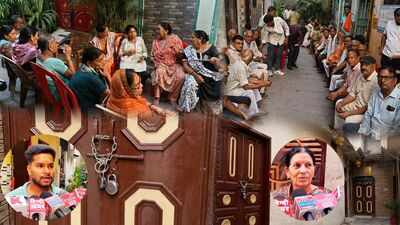
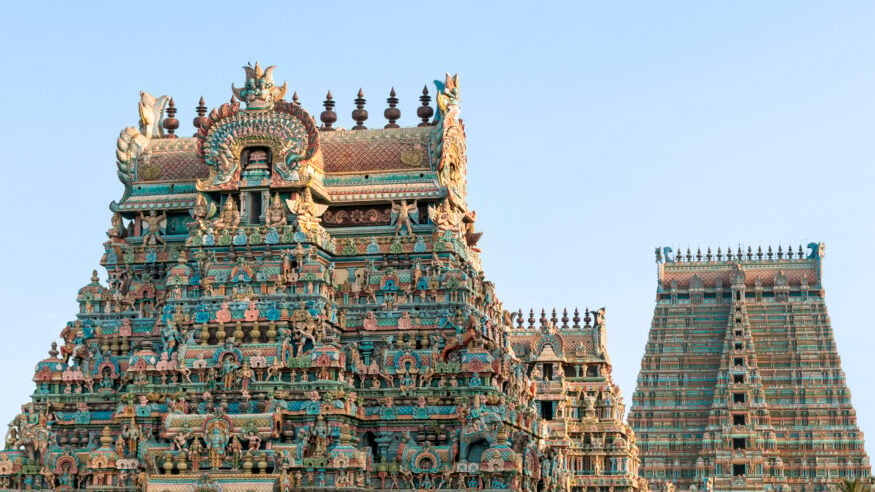
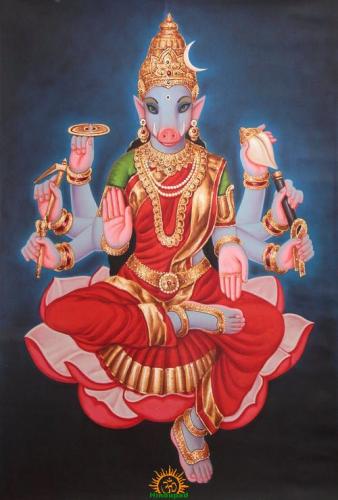
As Char Dham Yatra 2026 approaches, the Gangotri Temple Committee is reported to be considering the ritual use of ‘Panchgavya’ as part of shuddhikaran during the seasonal reopening, even as public debate intensifies over entry norms at the Himalayan shrines. The conversation ranges from dress and behavioral codes to questions about whether identity should play any role in zones closest to the garbhagriha. Situated within India’s constitutional framework and living temple traditions, the moment calls for a careful synthesis: safeguarding sanctity, ensuring safety, and sustaining inclusivity across Hindu, Buddhist, Jain, and Sikh pilgrims who hold the Himalayas in deep reverence.
For many yatris, the ascent to Gangotri is physically exacting and emotionally luminous. Stories shared on the trailfrom Uttarkashi families to visitors from Kolkata or Chennaioften return to the same experiences: the hush of first darshan, the scent of deodar, and the feeling that the Ganga is a maternal presence. Nearby sites such as Gaumukh and the winter seat at Mukhba weave local tradition into a broader pilgrimage fabric. Across the corridorGangotri, Yamunotri, Kedarnath, and Badrinaththis tapestry also touches Sikh devotion at Hemkund Sahib and the broader Dharmic imagination that venerates the Himalayas as a realm of spiritual ascent.
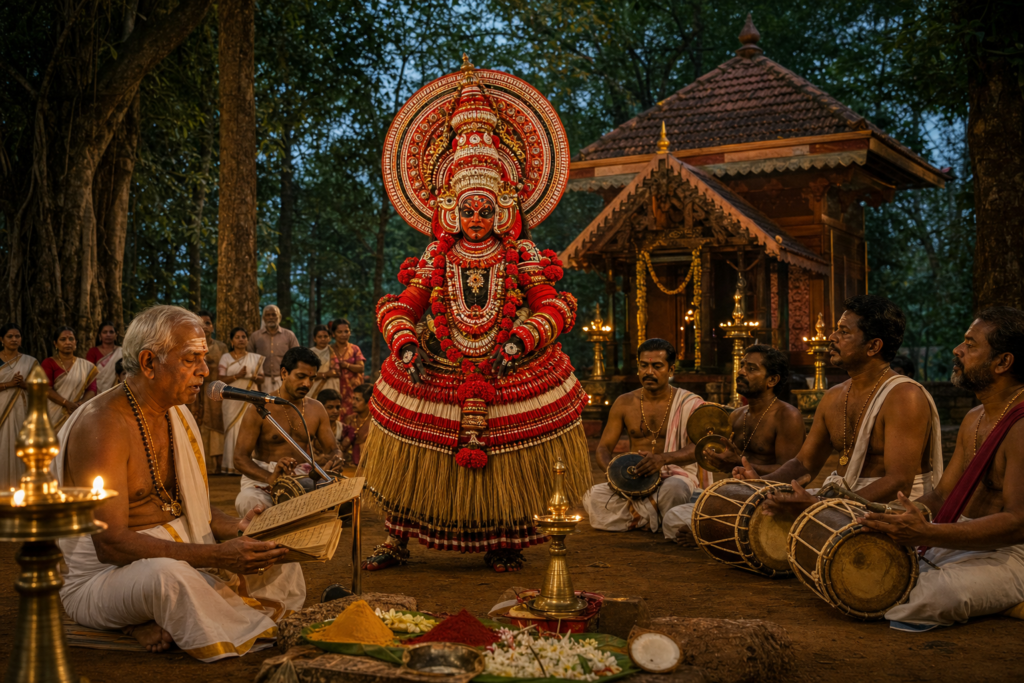
‘Panchgavya’traditionally comprising milk (ksheera), curd (dadhi), ghee (ghrita), gomutra, and gomayaappears across Dharmaśāstra, Purāṇic references, and regional temple paddhatis as a purifier when employed within specific rites. In temple contexts, it is associated with kṣetra-śuddhi, kalasha preparations, and transitions such as seasonal reopening after the winter closure. Symbolically, Panchgavya represents an ecological and ethical covenant that binds go-seva, ahimsa, and the agrarian foundations of Hindu life to the sanctification of sacred space.
Academic discourse cautions against overextending claims about pharmacological efficacy outside ritual contexts; contemporary laboratory studies on components of Panchgavya are emergent, context-specific, and not dispositive. Within the mandir, its primary valence is ritual-symbolic rather than therapeutic or consumptive. Framed in this way, the proposed use at Gangotri aligns with long-standing Hindu ritual logic while inviting modern governance practices that ensure hygiene, transparency, and ecological responsibility.
Ethical sourcing strengthens ritual integrity. Clear guidelines that prioritize local gaushalas, humane care, traceability, and measured quantities can reassure pilgrims who prize environmental stewardship and ahimsa. Communication that explains handling protocols and responsible post-ritual disposalespecially near a glacial river systemhelps visitors understand how sanctity and sustainability can stand together. Sensitivities of Jain, Buddhist, and Sikh pilgrims can also be respected by offering water-only abhisheka viewing spaces for those who prefer non-dairy symbolic participation, without diluting the temple’s core rite.
Himalayan shrines follow a distinctive seasonal cycle. During the winter closure, utsava murtis typically move to protected seatsat Gangotri to Mukhbaand return for the Akshaya Tritiya reopening, which is marked by pūrṇāhuti, kumbhābhiṣeka, and kṣetra-śuddhi. Within this liturgical rhythm, incorporating ‘Panchgavya’ at Gangotri is congruent with practices seen across many Hindu temples in North and South India. Coordination with the Badri-Kedar Temple Committee (BKTC), which oversees Badrinath and Kedarnath, and alignment with local committees at Gangotri and Yamunotri can promote corridor-wide coherence.
Entry norms at Indian temples vary by history, denominational character, and statutory frameworks. Some shrines maintain legacy restrictions rooted in specific traditions, while many others remain broadly accessible with codes focused on decorum. In the Char Dham corridor, public discourse now coalesces around three linked concerns: ensuring sanctity in spaces immediately adjacent to the sanctum, protecting safety through disciplined crowd management, and honoring constitutional principles applicable to public pilgrimage sites.
The Constitution guarantees freedom of conscience and the right to profess, practice, and propagate religion (Article 25) and affirms the autonomy of religious denominations to manage their affairs (Article 26), subject to public order, morality, and health. Jurisprudenceranging from the Shirur Mutt decision (1954) to Sri Venkataramana Devaru (1958) and subsequent case law on essential religious practicesunderscores that where a temple serves the broader public, access policies must be precise and proportionate, balancing denominational concerns with inclusive access norms. For Char Dham’s multi-regional, state-facilitated corridor, this balance is best achieved by focusing on conduct and functional zoning rather than identity-based exclusion.
Stakeholders emphasize different priorities, yet their aspirations overlap. Priests and local committees seek to preserve agamic decorum, avoid leather, tobacco, and alcohol, discourage intrusive photography, and encourage modest attire consistent with mandir-maryada. Administrators highlight safety, disaster preparedness, and queue disciplinelessons seared into memory after the 2013 tragedy and in light of annual footfalls now exceeding five million. Pilgrims across Hindu, Buddhist, Jain, and Sikh backgrounds repeatedly voice a shared desire for an experience that feels sacred, safe, and genuinely welcoming.
Functional zoning offers a constructive middle path consistent with pluralism and sanctity. A universally accessible darshan space can welcome all visitors who abide by behavioral and attire codes. A nearer devotional zone can be available for those who wish to participate in Sanatana Dharma rites and observe associated maryada. The priestly corewhere mantras and arcana proceedremains restricted to authorized sevayats during defined windows. Such concentric access, already practiced in many temples, protects sacred choreography without reducing the pilgrimage corridor to identity vetting.
Technology can make this approach seamless. Mandatory e-registration and staggered time slots smooth peak loads; multilingual signage communicates gentlyexplaining why silence, modest clothing, and the avoidance of intoxicants matter in a high-altitude mandir. QR-linked briefings can present the ethos of Gangotri, the fragility of the glacial ecosystem, and the rationale for codes of conduct. Trained Seva Mitras can assist elders, women, and persons with disabilities through queues, translating dignity and care into the lived reality of darshan.
For ‘Panchgavya’, clarity through written standard operating procedures builds confidence. Protocols can specify gaushala partnerships, hygienic handling, scaled quantities appropriate to the rite, and post-ritual disposal that prevents river contamination. Periodic audits and public summaries strengthen trust, showing that ritual continuity and ecological responsibility are not at odds but mutually reinforcing.
Unity across Dharmic traditions is both a value and a practical asset in the Himalayas. The Ganga’s sanctity resonates with Sikh remembrance near Hemkund Sahib, with Buddhist narratives that honor the Himalayas as a mandala of awakening, and with Jain commitments to ahimsa and restraint. When signage, volunteer training, and public messaging foreground shared respect rather than exclusion, the Yatra itself becomes a living seminar in ‘Unity in spiritual diversity’ and ‘Vasudhaiva Kutumbakam.’
Dialogue-based policy-making earns legitimacy. Structured consultations can bring together the Gangotri Temple Committee, the Badri-Kedar Temple Committee (BKTC), local panchayats, Uttarakhand Tourism, disaster management professionals, gaushala representatives, and delegates from Hindu, Buddhist, Jain, and Sikh communities. The resulting code can be precise on conduct, calibrated in zoning, and inclusive in toneanchored in an ethic of welcome that reflects India’s civilizational capacity to harmonize many paths.
Comparative experience is instructive. Restrictions at specific legacy shrines such as Jagannath Puri exist within distinct legal-religious histories and cannot be transposed wholesale onto the Char Dham corridor, where governance structures, mountain ecology, and multi-site logistics differ. Conversely, inclusive North Indian pilgrimage towns demonstrate that sanctity is best protected through education, volunteer culture, and behavior-focused norms rather than broad-brush identity labels. Char Dham can pioneer a model that other sacred geographies may adapt with confidence.
Visitors preparing for the Yatra often share practical wisdom that advances sanctity without compulsion: warm, modest clothing is both respectful and necessary; carrying personal waste back down honors the Ganga; silence near the garbhagriha deepens the experience; and patient courtesy in the same line with strangers builds the fraternity that the mountains seem to invite. Such lived insights accomplish what rules alone cannot.
In essence, the reported consideration of ‘Panchgavya’ at Gangotri and the wider debate on entry norms converge on one constructive task: to protect sanctity while widening welcome. A calibrated frameworkclear conduct codes, functional zoning, ethical ritual practice, ecological safeguards, and continuous dialoguecan preserve the Himalayan mandirs, support local livelihoods, and renew confidence in India’s plural spiritual inheritance. At Gaumukh and beyond, unity is not a slogan; it is the quiet power through which many paths converge without collision.
Implementation will be the test in 2026. If committees and the state communicate early, train volunteers well, and listen often, the season can be remembered for devotion, safety, and inclusion. That would honor both the ritual logic of Sanatana Dharma and the shared Dharmic aspiration that guides each pilgrim’s first step: to touch the source and return carrying a little more light for all.
Note: This analysis reflects developments reported up to March 28, 2026 and may evolve as official notifications and committee resolutions are published.
Inspired by this post on Struggle for Hindu Existence.