
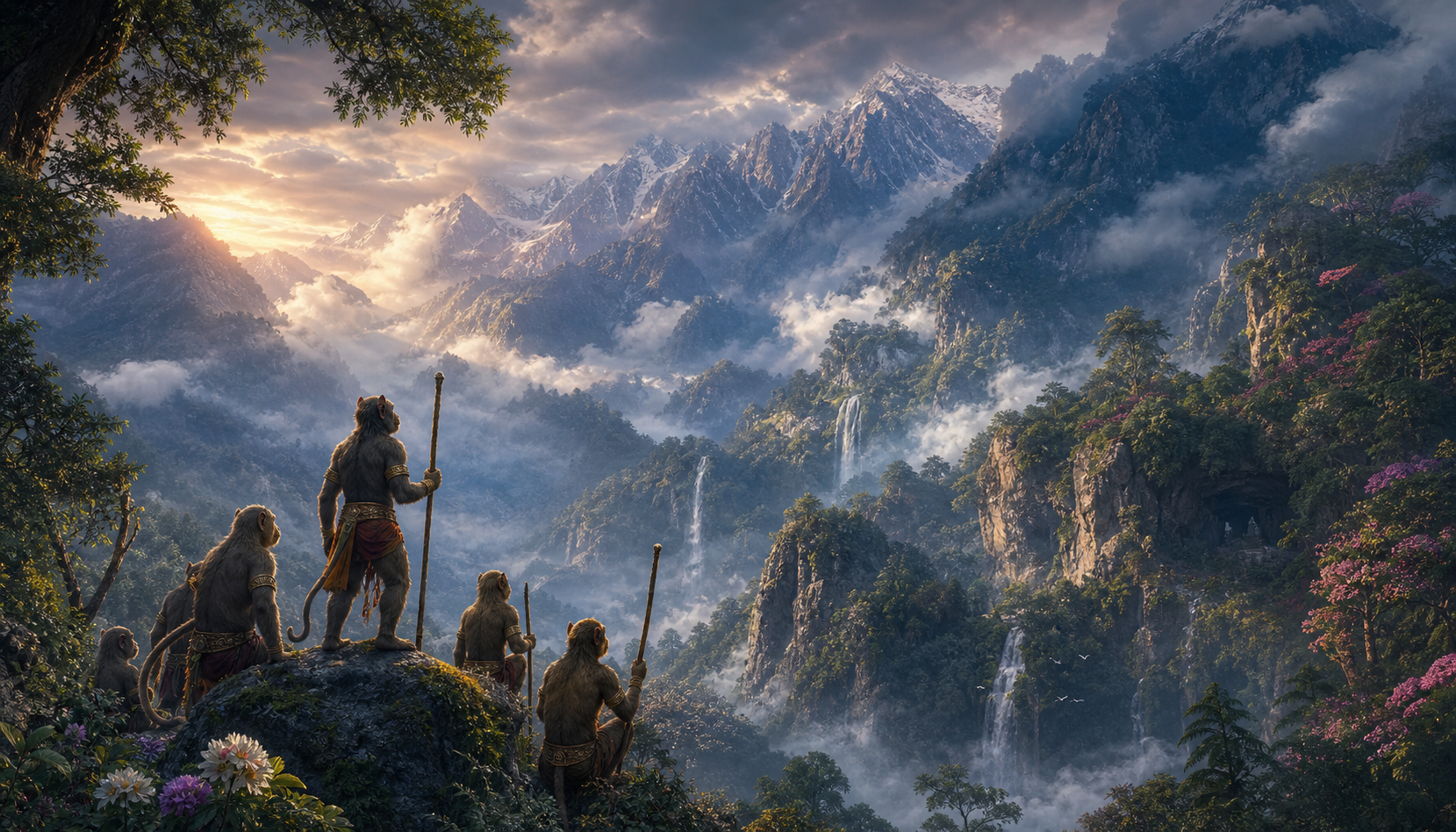
Devasakha receives only a brief mention in the Ramayana, yet its position in Sugriva’s northern search itinerary makes it a useful lens for understanding how the epic joins geography, sacred imagination, ecological detail, and ethical action. Its importance lies less in an event occurring there than in what the vanaras are required to do: enter an unfamiliar landscape, examine its concealed spaces, and continue serving Rama’s cause.
The supplied source material consists of one DharmaRenaissance article rather than several independent reports. The discussion below therefore synthesises that article’s textual, ecological, strategic, and spiritual strands while treating its specific claims as source-reported, not independently corroborated.
Devasakha’s place on the northern route
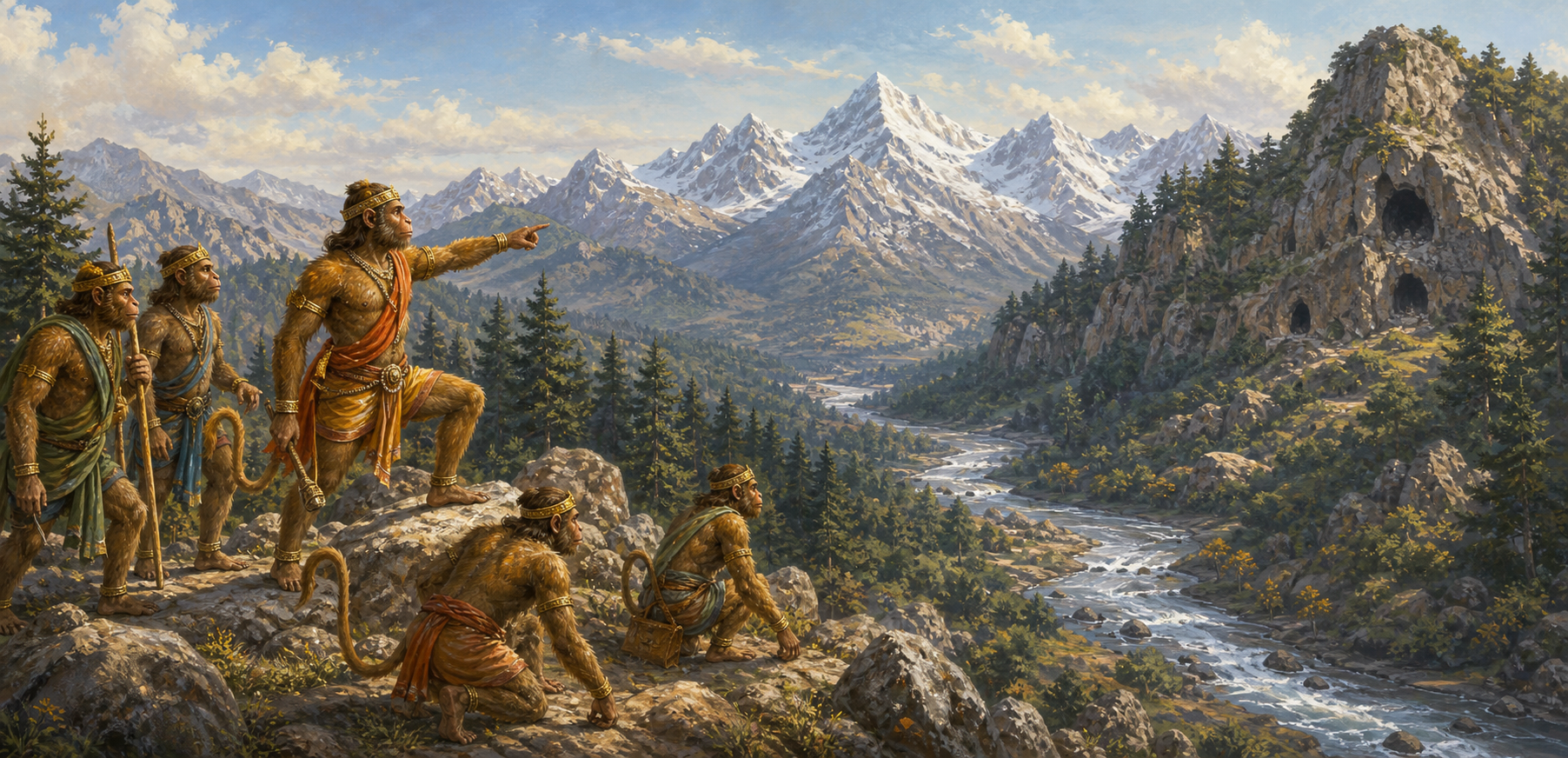
The source article places Devasakha in the Kishkindha Kanda, where Sugriva sends Shatavali and a vanara party northward in search of Sita. It reports that Devasakha appears after Mount Sudarshana and before an immense empty region leading toward Kailasha. That sequence matters: the searchers are moving from inhabited and recognisable territories into increasingly remote spaces associated with ascetics, celestial beings, and sacred mountains.
Devasakha is therefore neither merely another point in a geographical catalogue nor a destination comparable to Lanka. It functions as an intermediate zone. It remains fertile, animated, and searchable, but it also stands close to the point at which the itinerary begins to resemble sacred cosmography rather than ordinary political geography.
This transitional role gives the mountain narrative weight without requiring a separate episode. Sugriva’s instructions turn a passing place-name into part of an ordered mission. Each mountain, cavern, forest, and frontier must be investigated because no one yet knows where Ravana has taken Sita. The cumulative itinerary conveys both the scale of her disappearance and the determination required to find her.
A living mountain rather than an empty landmark
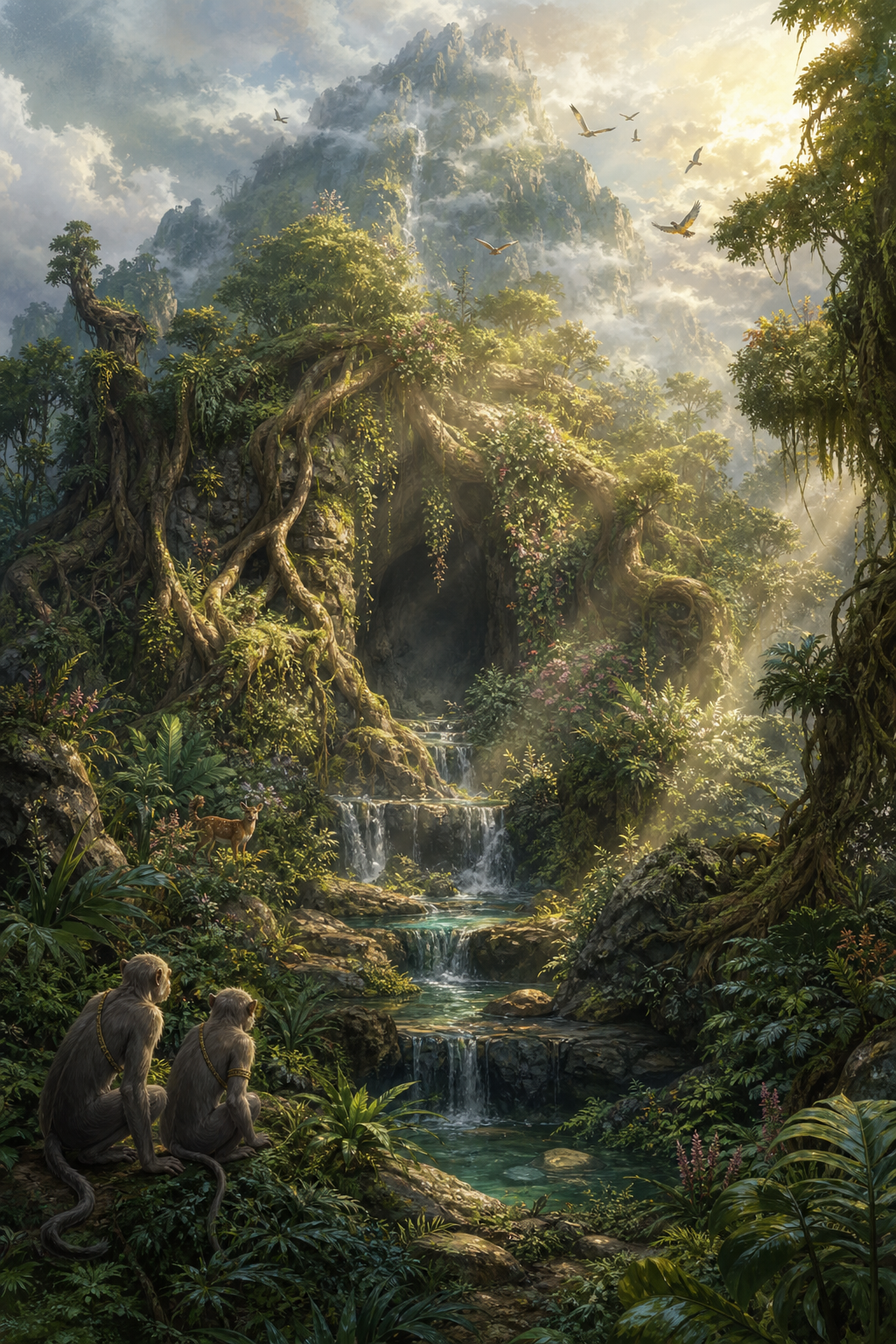
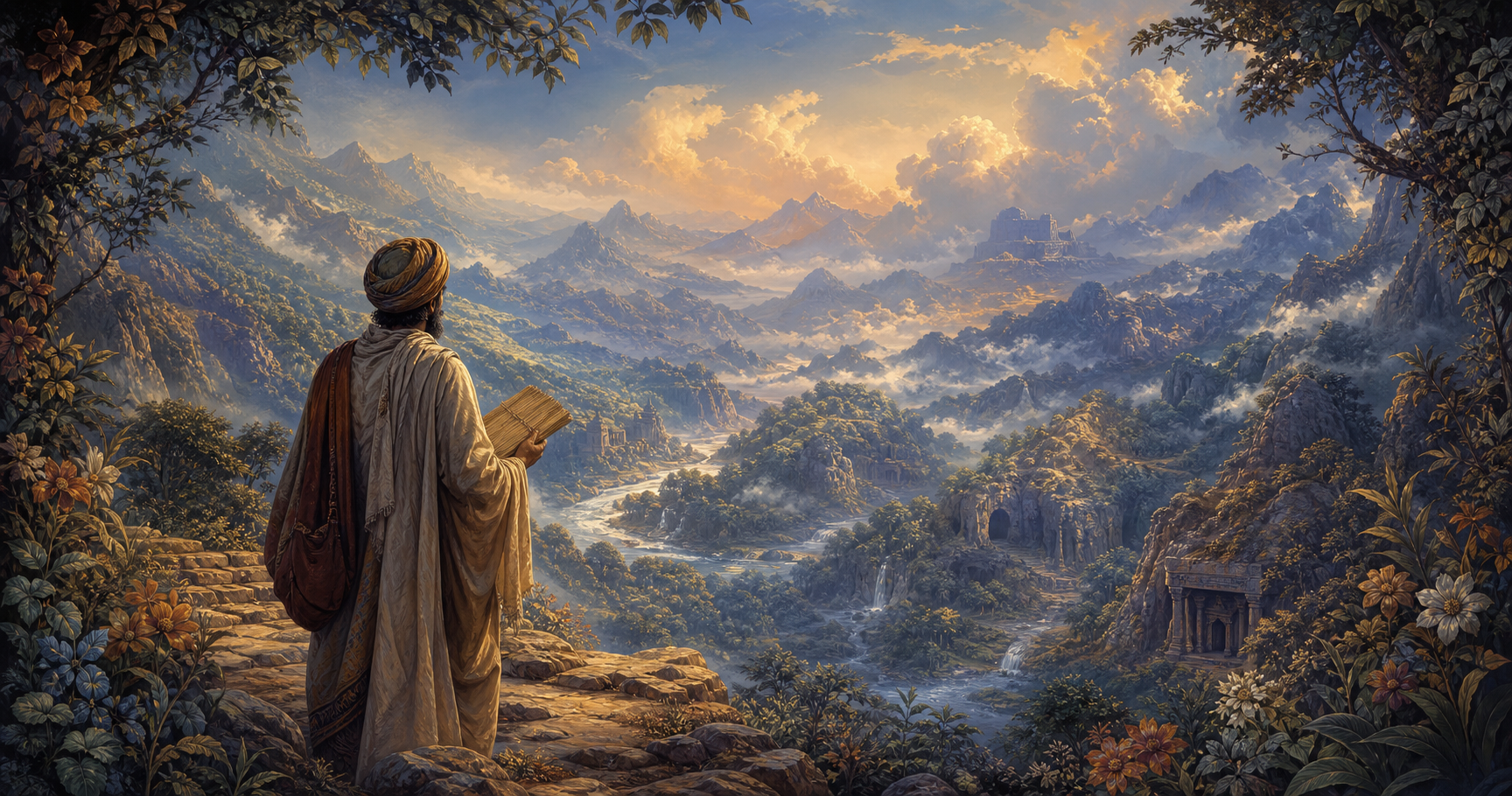
According to the source article, Devasakha is characterised by numerous birds, fragrant trees, golden rocks, springs, and caves. These features combine movement, scent, colour, water, shelter, and concealment. The resulting image is not a flat backdrop but a complete environment that can nourish life while hiding what the searchers seek.
The article interprets the birds in relation to the Ramayana’s wider association between winged beings and far-reaching perception. It points to Jatayu as a witness to Sita’s abduction, Sampati as the figure who discloses her location to the southern searchers, and Hanuman’s later bird-like movement through the sky. On that reading, Devasakha’s bird refuge quietly reinforces a recurring connection between vision, movement, testimony, and the recovery of knowledge.
Its caves create a different kind of meaning. A cave is both a physical hiding place and an image of incomplete knowledge: an exterior can be surveyed quickly, but an interior must be entered and examined. The source connects this feature with other consequential cave settings in the epic, including the pursuit that contributes to the rupture between Vali and Sugriva and the southern party’s encounter with Swayamprabha in Rikshabila. Devasakha belongs to this broader pattern of concealed spaces that may hold danger, misunderstanding, refuge, or revelation.
The golden rocks also require restraint in interpretation. The source contrasts their natural radiance with the deceptive golden deer and the splendour of Lanka. At Devasakha, brilliance is not presented as an object to possess. The vanaras are instructed to search the terrain, not covet it. Beauty remains integrated into the mountain’s living order and subordinate to the purpose of the mission.
Scouting becomes an expression of dharma
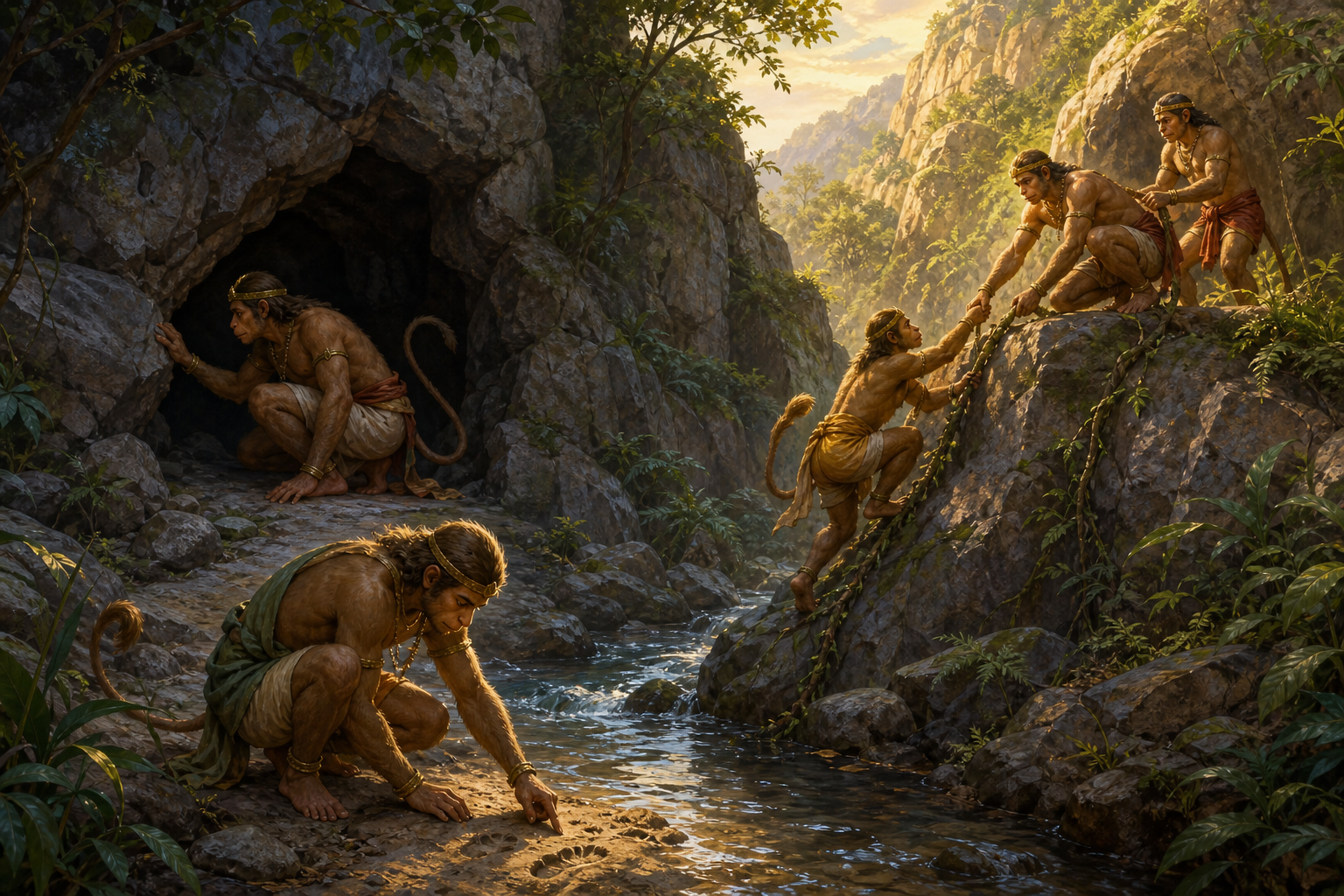
The practical logic of the expedition is straightforward. As reported by the source, Sugriva orders the vanaras to inspect Devasakha’s rocks, caves, and concealed places for signs of Ravana and Sita. The search cannot be limited to cities or obvious routes because Ravana’s movement and powers make inaccessible locations plausible places of concealment within the narrative.
This turns the vanaras into more than an army awaiting battle. They must act as trackers, scouts, observers, and travellers capable of reading varied terrain. Devasakha highlights the attentive phase of service: before heroic confrontation comes disciplined inquiry, including the patient elimination of places where Sita is not found.
The mission also carries an ethical obligation. The source frames Sugriva’s mobilisation as repayment for Rama’s help in restoring him to kingship after the defeat of Vali. Gratitude consequently moves from personal feeling to organised public action. Sugriva must convert friendship into leadership, and the vanaras must convert loyalty into sustained effort across difficult regions.
Devasakha thus illustrates a practical conception of devotion. No success is promised at this particular mountain, and the location does not provide the decisive clue. Searching it still matters because fidelity to a righteous purpose cannot depend on every stage producing a visible reward. The apparently unsuccessful stop remains part of the successful mission.
Reading sacred geography without forcing a modern location
The source cautions against identifying Devasakha with certainty on a present-day map. Its northern context may invite geographical speculation, but the itinerary reportedly moves through recognisable peoples and regions toward Himalayan, trans-Himalayan, divine, and cosmic spaces. Political geography, poetic landscape, and sacred cosmology are therefore layered rather than cleanly separated.
The name can be understood devotionally as "friend of the gods" or "companion of the devas," according to the article. That suggestion should not be mistaken for a conclusive modern identification or an independently established philological argument. Within the supplied account, the mountain’s placement and described qualities carry more interpretive weight than an etymology alone.
A careful reading can consequently preserve two truths at once. Devasakha belongs to the Ramayana’s meaningful representation of the north, and its literary role does not require a definitive coordinate. Treating sacred geography only as cartography can flatten its ethical and poetic functions; treating it only as symbolism can overlook the itinerary’s sustained attention to terrain, travel, and regional difference.
The most responsible approach is to distinguish what the passage reportedly describes, what the source article interprets, and what remains uncertain. That distinction allows Devasakha to be studied as landscape, narrative device, and sacred threshold without turning a suggestive reading into an unsupported historical claim.
Key takeaways
- Devasakha appears in Sugriva’s northern search itinerary between Mount Sudarshana and a more remote route toward Kailasha, according to the source article.
- Birds, fragrant trees, springs, golden rocks, and caves portray it as a fertile but concealed environment rather than an inert landmark.
- The order to inspect the mountain joins practical reconnaissance with loyalty, gratitude, and responsibility toward Rama.
- Its threshold position helps explain why the Ramayana’s geography can operate simultaneously as travelled terrain, poetic landscape, and sacred cosmography.
- No certain modern identification follows from the supplied material, so interpretive significance should not be presented as cartographic proof.
Further study could compare the passage across Sanskrit editions, translations, traditional commentaries, and regional retellings. Such comparison may clarify which features belong to the textual description and which meanings arise through later interpretation, while keeping Devasakha’s unresolved location intellectually productive.