
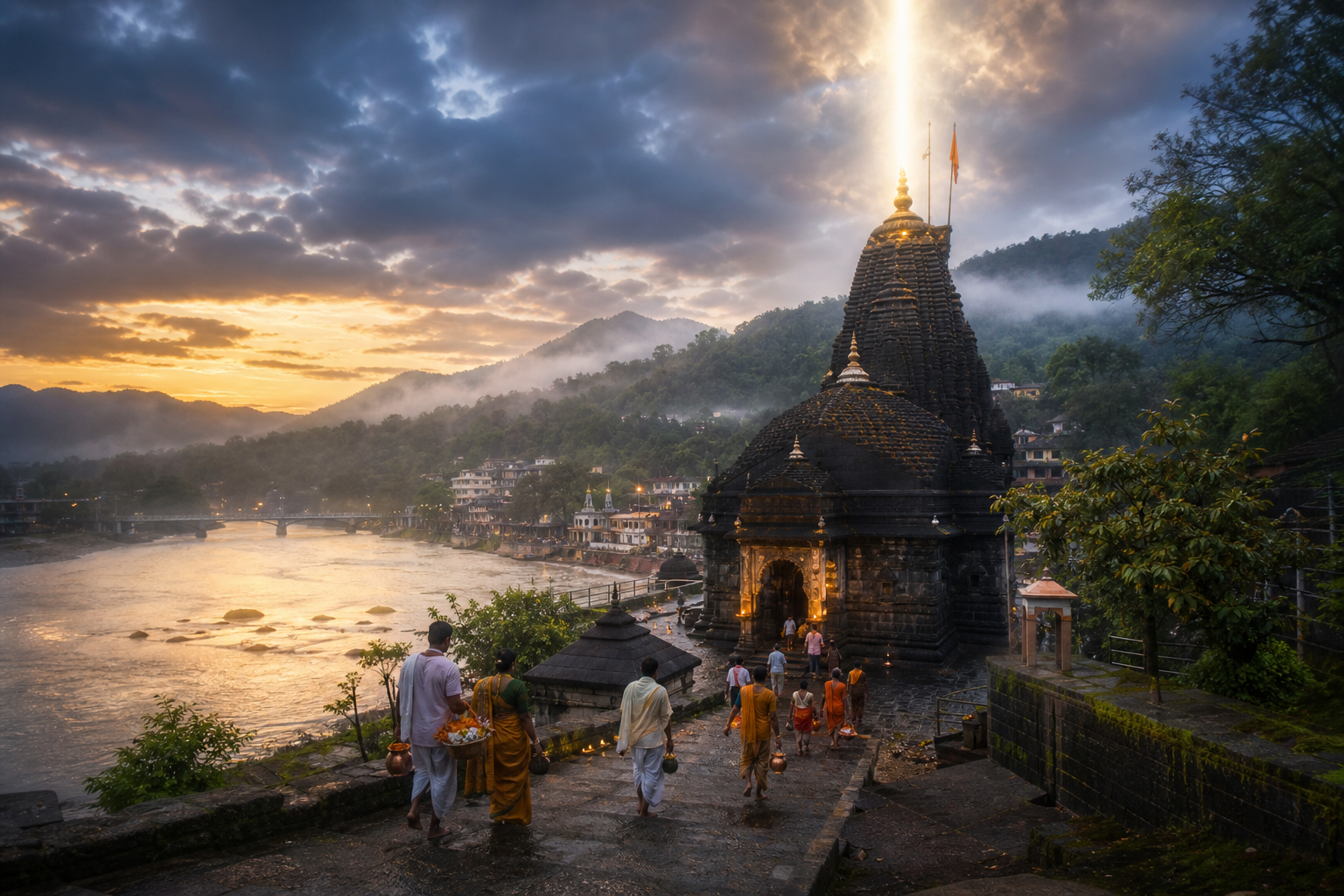
You can arrive at a Jyotirlinga with tickets, offerings, and all twelve names memorized, yet leave with little more than a few hurried seconds before the linga. The missing preparation is usually not another itinerary. It is knowing how to read the place while you are in it.
A Jyotirlinga yatra becomes coherent when you approach it through four connected realities: Shiva as immeasurable light, the land as part of the shrine, the deity as a living presence, and your own conduct as an offering. Then the riverbank, queue, pradakshina, abhishekam, local legend, and final aarti stop feeling like unrelated attractions. They become one discipline.
Read the kshetra, not only the sanctum
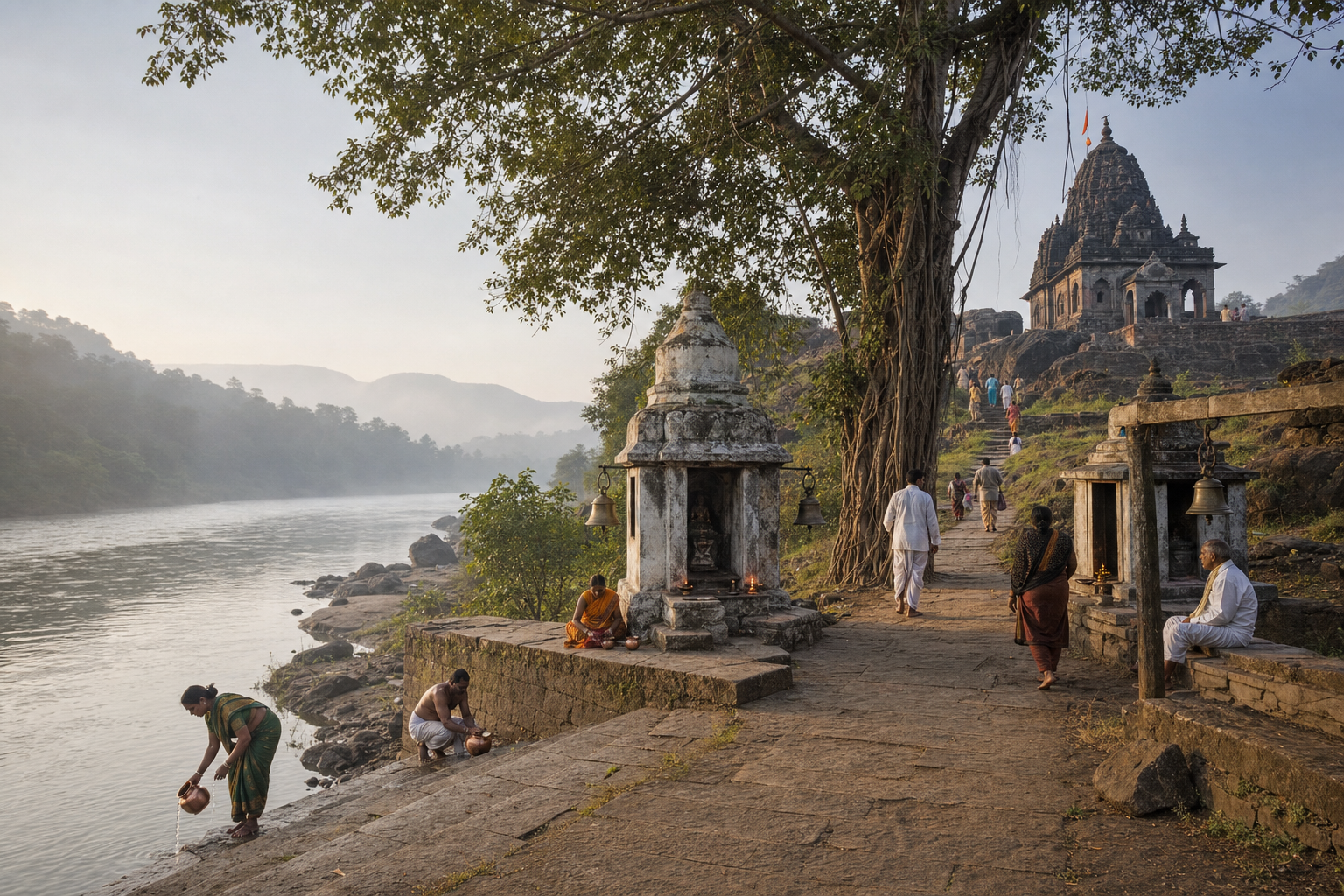
The Jyotirlinga idea begins with Shiva as limitless, self-revealing luminosity: the pillar of light whose beginning and end cannot be measured. The linga in a particular garbhagriha does not imply that the infinite has been confined to stone. It gives you a consecrated place in which to approach what cannot be contained.
This is why the twelve Jyotirlingas are not twelve interchangeable copies. Somnath, Mallikarjuna, Mahakaleshwar, Omkareshwar, Kedarnath, Bhimashankar, Kashi Vishwanath, Trimbakeshwar, Vaidyanath, Nageshwar, Rameshwaram, and Grishneshwar form a pan-Bharatiya network of tirthas, but each kshetra gives the same limitless Shiva a distinct local grammar. A river, hill, island, forest, flower, family narrative, community, architectural path, and daily ritual cycle determine how you meet him there.
Sacred geography is therefore more than scenery around a temple. At Srisailam, the Nallamala Hills, the Krishna River at Pathala Ganga, the hill route, and the fortified temple complex belong to the experience of Mallikarjuna. At Omkareshwar, Mandhata Island, the Narmada, the paired mainland shrine of Mamleshwar, the bridges, and the parikrama route make the landscape itself part of worship. If you photograph these features but never let them change your pace or attention, you have seen the setting without fully entering the kshetra.
Use the approach to a Jyotirlinga as a sequence of thresholds:
- Before entering: identify the river, hill, island, forest, or route that gives the kshetra its physical character.
- At the first threshold: notice how a bridge, ghat, gopuram, prakara, or mandapa separates ordinary movement from ritual movement.
- While waiting: give the mind one task, such as quiet nama-japa, instead of feeding it a stream of photographs and messages.
- After darshan: remain somewhere permitted long enough to notice what the encounter has asked you to change. Do not let the next item on the itinerary erase the first one.
This simple sequence turns unavoidable movement into preparation. The sanctum may allow only a brief darshan, but the kshetra has been teaching you long before you reach it.
Mallikarjuna and Omkareshwar reveal two forms of nearness
Srisailam: effort ripened by wisdom and grace
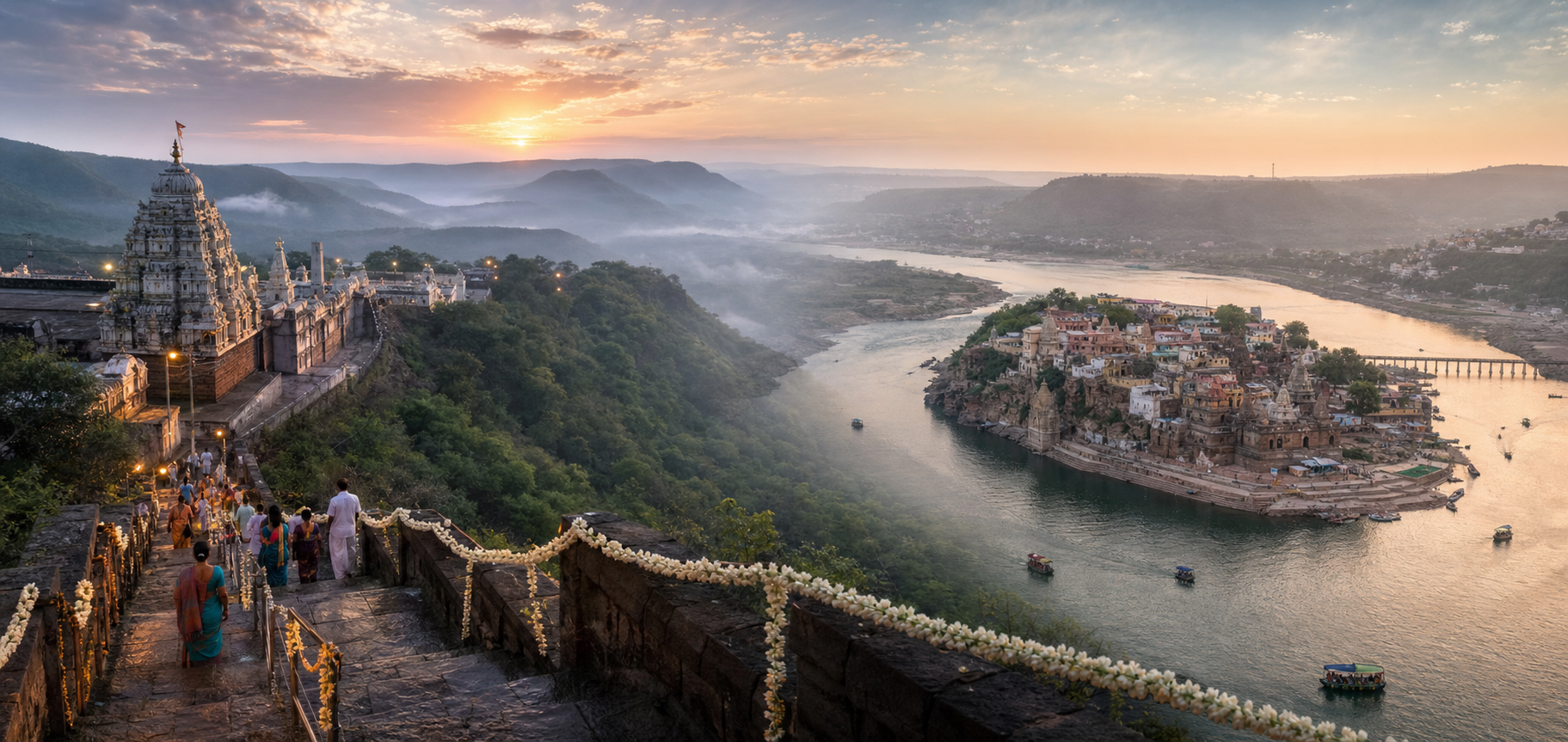
Srisailam rises above the Krishna River in the Nallamala Hills and is revered as Dakshina Kailasa. Its temple complex unites Mallikarjuna Jyotirlinga with Bhramaramba Devi, giving the kshetra a pronounced Shaiva-Shakta character. You do not encounter Shiva here as an isolated abstraction. The maternal presence of the Devi, the memory of Kartikeya, the fragrance of jasmine, the hill, and the river all surround the linga.
The Kartikeya narrative is especially useful if you tend to measure pilgrimage by distance, difficulty, or the number of shrines completed. In the familiar fraternal contest, Kartikeya circles the world while Ganesha recognizes his parents as the cosmos and circumambulates them. Regional traditions associated with Srisailam continue the story through Shiva and Parvati’s compassionate descent toward Kartikeya. Outward striving and inward understanding are not treated as enemies; each must mature through humility.
Apply that teaching to your own yatra. If you are proud of enduring a demanding route, ask whether the effort has made your speech and conduct gentler. If you prefer a purely inward spirituality, ask whether insight has become an excuse to avoid service, discipline, and embodied worship. The story corrects both imbalances.
The name Mallikarjuna is linked with mallika, or jasmine, and Arjuna, an epithet of Shiva. Different transmissions associate the jasmine offering with Parvati or with the devotee Chandravati. You do not need to force these living variations into one modern-style biography. Their shared ritual center is more important: devotion becomes tangible through the repeated offering of fragrance, bilva, sandal paste, mantra, and attention.
The physical kshetra reinforces the same lesson. Pathala Ganga, the forested escarpments, places associated with the 12th-century saint-poet Akka Mahadevi, and giripradakshina connect water, stone, memory, and bodily effort. Decide before arrival whether your observance will include a locally permitted snana, a longer circumambulation, or a quieter pradakshina within the complex. Each choice asks for different time and capacity. Making that decision in advance is better than copying a demanding vow because other pilgrims appear to be doing it.
Inside the fortified Dravidian complex, gopurams, multiple prakaras, granite mandapas, Nandi, the central linga, and numerous subsidiary shrines gradually narrow the field of attention. Let the architecture do its work. Moving from outer enclosure to inner sanctum is not dead time between the entrance and the object you came to see.
Srisailam also carries the living regional memory of Chenchu Mallayya, expressing Shiva’s intimacy with the indigenous Chenchu community. This matters for your conduct. Sacred geography includes the people who have lived with, named, served, and protected the place. Reverence inside the sanctum is incomplete if it is accompanied by contempt for local communities, workers, pilgrims, or the surrounding land.
Omkareshwar: divine play followed by sacred rest
Omkareshwar presents a different rhythm. Mandhata Island lies in the Narmada and is traditionally likened to the form of Om. The Omkareshwar shrine on the island, Mamleshwar on the mainland, the local Kaveri confluence, ghats, bridges, and island parikrama form a connected tirtha-scape rather than a single temple stop. If your schedule allows, seeing the relationship among island, river, paired shrine, and path will teach you more than rushing directly from transport to queue.
The nightly Chausar tradition makes the idea of a living deity unusually intimate. Local memory holds that after the concluding rites Shiva comes to play Chausar or Pachisi, sometimes with Parvati and sometimes with the ganas, before resting in the sanctum. The tradition belongs to priestly and community memory rather than to a dated inscription. That distinction should shape how you speak about it: receive it as living devotional heritage, not as a modern historical claim that has been independently documented.
Neither credulity nor ridicule is necessary. Ask what the tradition causes a community to do. It places divine play within a disciplined daily order and protects the night as a period of sacred repose. Chausar, with counters moved after throws of cowrie shells, evokes contingency and choice; shayana restores stillness after movement. Together they teach that uncertainty need not destroy order, and action need not eliminate rest.
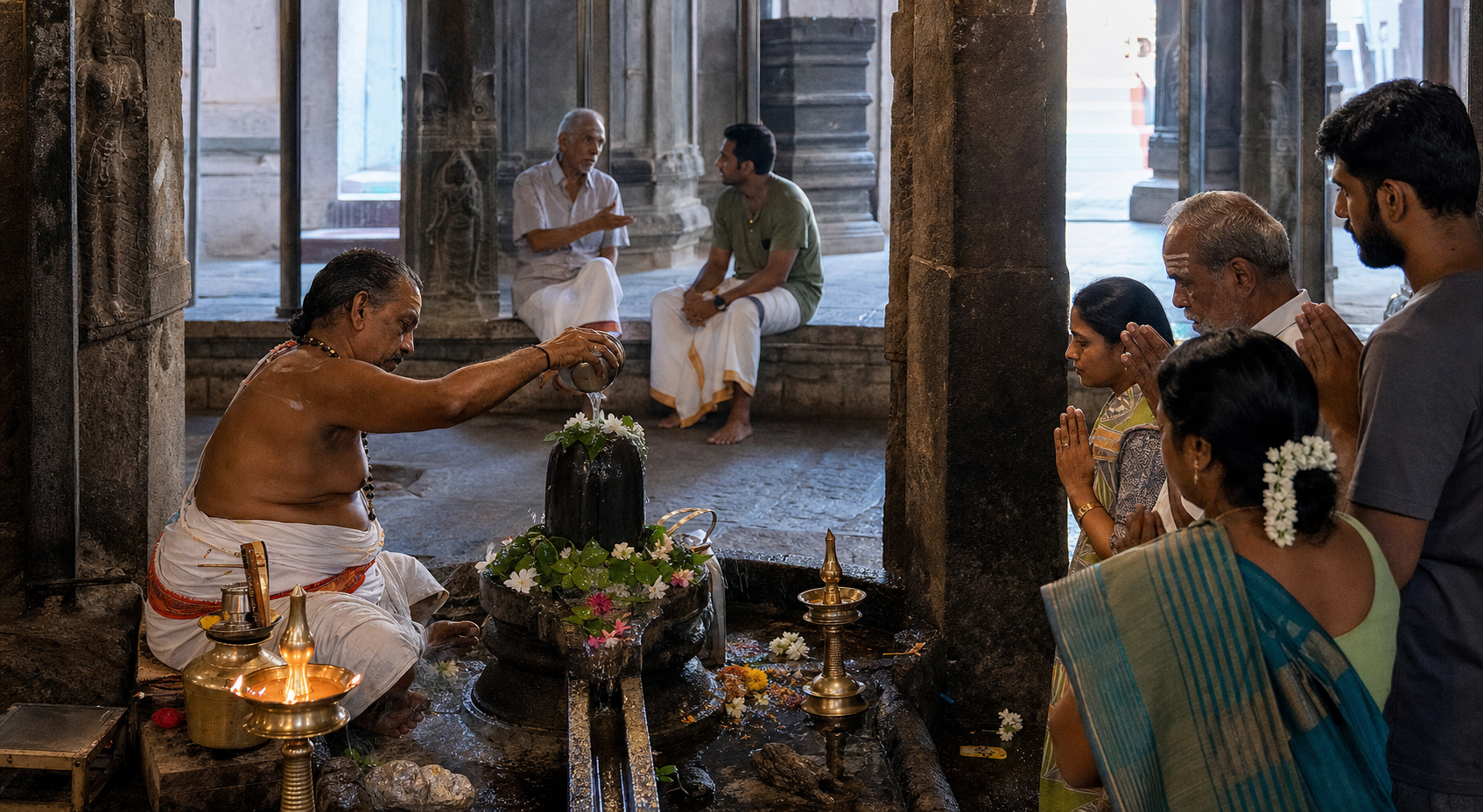
This logic is grounded in temple service. After prana-pratishtha, the murti is approached as a living presence and served through rhythms such as awakening, bathing, adornment, food offerings, aarti, and repose. At Omkareshwar, the shayana aarti marks the transition into rest and gives the Chausar legend its ritual setting. If you hope to attend it, confirm the current schedule and access rules locally; seva and darshan arrangements can vary with the season.
Srisailam emphasizes hill, family, tapas, grace, and the nearness of the Devi. Omkareshwar emphasizes river, island, play, alternation, and repose. The forms differ, but the underlying discipline is the same: Shiva’s presence orders space, time, gesture, and relationship. A living temple is not merely an old building containing a sacred object. It is a community arranging the day around service to the deity.
Build your yatra around seven decisions
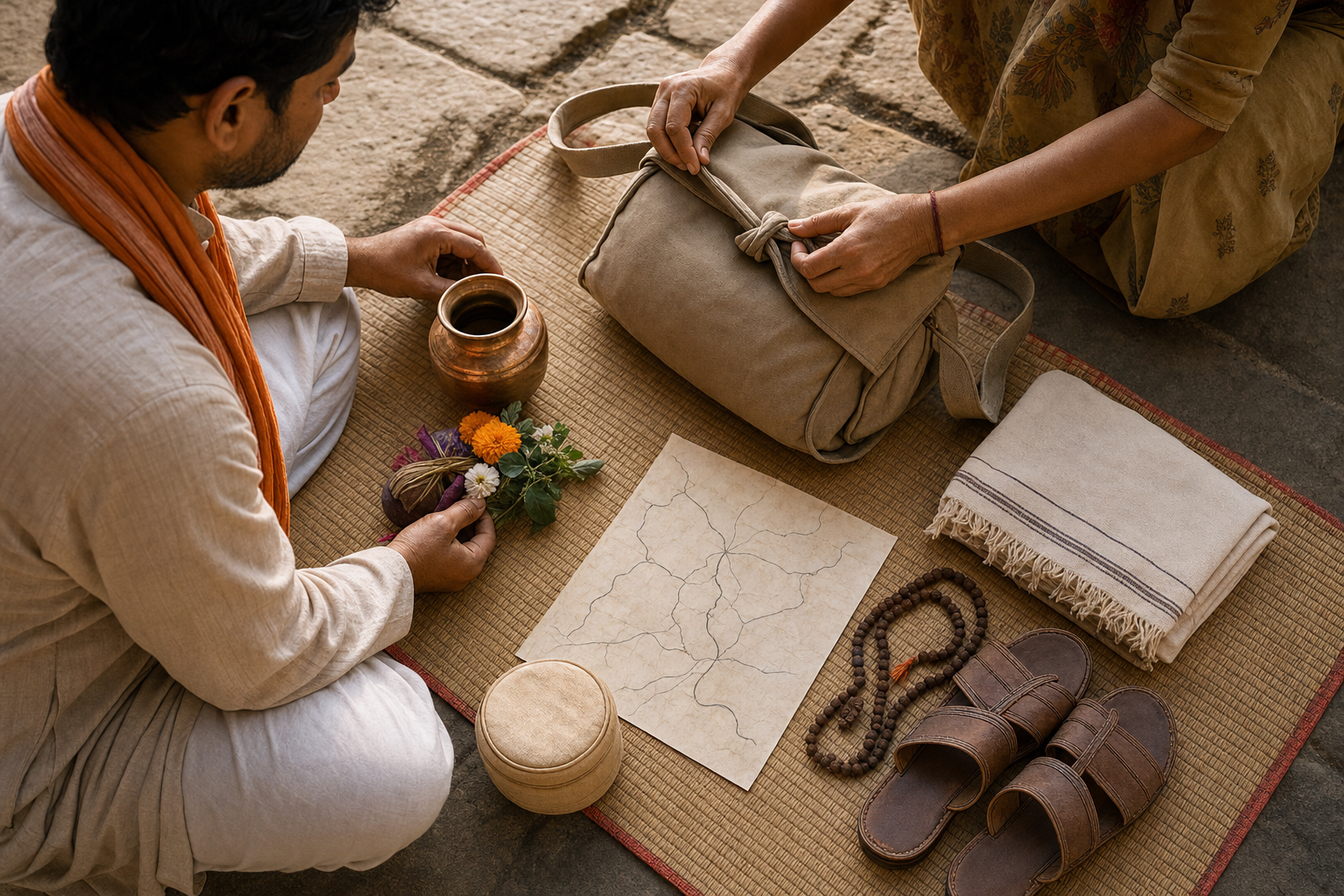
Transport and accommodation matter, but they cannot decide what kind of pilgrim you will be. Make the following decisions before the pressure of crowds, fatigue, and unfamiliar procedures takes over.
- Write one clear sankalpa. Name the discipline you are bringing to Shiva. It might concern restrained speech, reconciliation, steady japa, gratitude, or release from a habit of anger. Keep it concrete enough that you can recognize whether you honored it.
- Choose one principal kshetra practice. At Srisailam this might be attentive darshan followed by pradakshina, participation in an available abhishekam, or a longer landscape observance. At Omkareshwar it might be darshan at the paired shrines, island parikrama, or attendance at a concluding aarti. Trying to perform everything often leaves no room to inhabit anything.
- Confirm the day’s rules locally. Ask the authorized temple administration about darshan flow, abhishekam participation, aarti access, offerings, photography, and whether touching the linga is permitted. Do not treat an old itinerary or another pilgrim’s experience as a permanent rule.
- Keep offerings simple. Water, bilva, and flowers belong naturally to Shaiva worship where the temple accepts them. Follow local instructions, avoid unnecessary packaging, and never assume that carrying an offering entitles you to bypass the ritual order.
- Give waiting a devotional form. Srisailam’s ritual world includes Sri Rudram, Shiva Sahasranama, Tevaram hymns, archana, and manasa-japa. Use a recitation you actually know and understand within your practice. If you do not know a longer text, quiet repetition of Shiva’s name is better than a hurried performance for appearance.
- Protect the inner precinct. Lower your voice, keep the phone away unless photography is expressly allowed, follow the queue, and do not push toward the linga. The distance you traveled does not increase your claim over another devotee’s darshan.
- Close the circuit deliberately. Where available and appropriate, deepa-dana, naivedya, or annadana can extend worship beyond the moment of seeing. After returning home, retain one element of your sankalpa as a defined practice. Otherwise the yatra risks becoming a powerful interruption with no effect on ordinary life.
The order matters. Sankalpa tells you what the journey is for; the kshetra practice gives it bodily form; local rules keep devotion from becoming entitlement; japa protects attention; and the closing act carries worship into conduct.
Festival travel requires one further decision. Karthika masam at Srisailam is marked by lamps, extended recitation, vows, and acts such as annadana, while Maha Shivaratri brings jagarana, special abhishekams, Lingodbhava remembrance, music, mantra, and processions. Choosing a festival means choosing an intensified communal rhythm, not merely a decorated version of an ordinary visit. If you need silence and unhurried observation, a major festival may not serve the purpose of this particular yatra. If you seek shared vigil and concentrated ritual time, the density is part of the practice.
Keep theology, memory, ritual, and history in their proper registers
A mature pilgrim does not have to choose between devotion and careful thinking. You do, however, need to ask what kind of claim you are hearing. Four registers commonly overlap at a Jyotirlinga:
- Theological teaching speaks about ultimate reality: Shiva as the endless jyoti, immanent in the linga without being limited by it. Its primary question is what is true about divinity and consciousness, not what can be dated by an inscription.
- Sthala-purana binds a universal truth to one place. Mallikarjuna’s jasmine traditions and the account of Shiva and Parvati approaching Kartikeya explain why Srisailam is encountered through particular names, relationships, and offerings.
- Living oral memory transmits a community’s intimate understanding of the deity. Omkareshwar’s nightly Chausar belongs here. Variations over who joins the game do not make the tradition useless, but its oral character should not be concealed.
- Material history asks about architecture, inscriptions, patronage, and construction. Srisailam preserves layers associated with Kakatiya, Reddi, and Vijayanagara support. Omkareshwar’s architectural history includes medieval layers, later Maratha patronage, and regional memory of Ahilyabai Holkar’s support for Narmada sacred institutions.
Use a quick test whenever a dramatic claim is repeated: Is this statement explaining ultimate meaning, local identity, ritual conduct, or a datable event? A single tradition may operate in more than one register, but the evidence appropriate to each is different. An inscription can help date patronage; it cannot measure Shiva’s infinitude. A devotional legend can form conduct and protect sacred time; it should not be presented as though it were an excavation report.
This distinction protects faith from fragile pseudo-history and protects history from casual misuse. It also allows you to hear regional variation without treating it as an embarrassment. A living tradition is transmitted through texts, ritual specialists, families, communities, architecture, music, offerings, and remembered stories. Uniform wording is not the only sign of continuity.
The broader Dharmic world offers useful parallels without erasing important distinctions. Jain care for the pratima, Buddhist approaches to stupas and sacred images, and the Sikh practice of sukhasan for the Guru Granth Sahib each show sacred presence being approached through ordered acts of attention and care. These are not interchangeable theologies. They do reveal a shared civilizational refusal to reduce the sacred to an inert exhibit. If you visit with someone from another Dharmic path, begin with that recognizable discipline of care, then explain the specifically Shaiva meanings of linga, jyoti, abhishekam, and darshan.
Key takeaways for your next Jyotirlinga visit
- A Jyotirlinga is not a collectible destination; it is a local encounter with Shiva understood as limitless light.
- Learn the kshetra’s principal landform or waterway, one local name or narrative, and one daily ritual before you arrive.
- Choose one meaningful observance instead of accumulating rites you cannot perform attentively.
- Confirm current schedules, touching rules, photography rules, and seva access with the local temple administration.
- Treat place legends according to their actual register: theological teaching, sthala-purana, oral memory, ritual explanation, or material history.
- Carry one discipline home so that the yatra changes ordinary conduct rather than ending at the temple gate.
Before adding another shrine to your circuit, write four lines about the Jyotirlinga you have chosen: its river or landform, the local form of Shiva, the ritual you hope to attend, and the discipline you will keep. If you cannot yet write those lines, learn that kshetra before expanding the route.
The aim is not to cover the map as quickly as possible. It is to let one consecrated point on that map gather your body, attention, memory, and conduct around Shiva. That is how sacred geography becomes living worship.
References
- DharmaRenaissance Blog – Srisailam’s Mallikarjuna Jyotirlinga: Sacred Legend, Kartikeya’s Devotion, Living Rituals
- DharmaRenaissance Blog – Omkareshwar’s Living Deity: Shiva’s Nightly ‘Chausar’ Legend, Shayana Aarti, and the Sacred Narmada
