
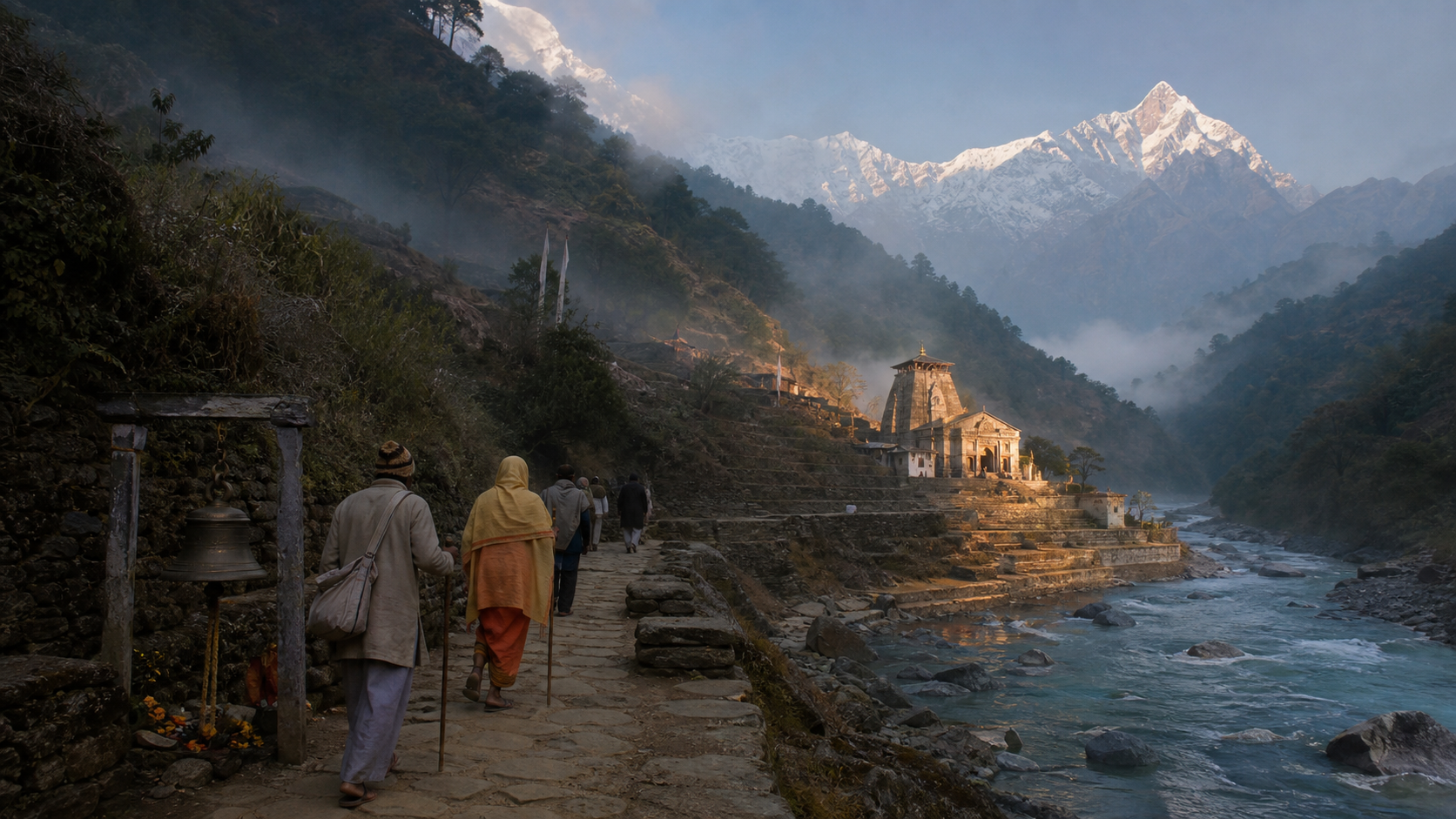
You can reach a famous temple, complete darshan, take photographs, and still miss what the place was asking of you. The problem is usually not a lack of devotion. It is that the shrine was treated as a point on a map, while its approach, terrain, architecture, stories, and living worship were treated as background.
If you are planning a yatra, whether to a Himalayan Shakti Peeth or a historic temple beyond Bharat, sacred geography gives you a better method. It helps you decide where to slow down, what to notice, how to behave, and what discipline to carry home.
Start with the spiritual grammar of the temple
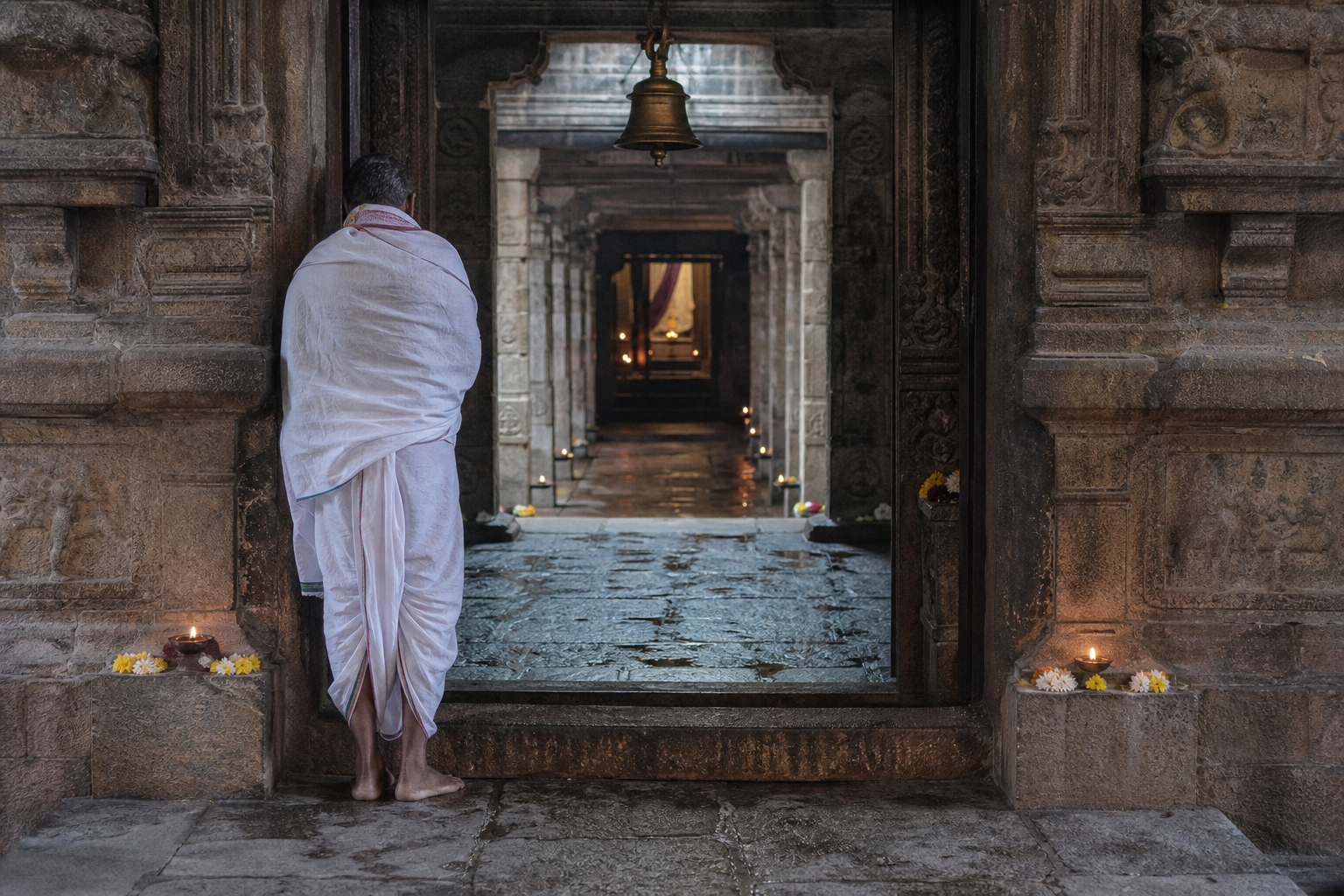
A temple is not a generic spiritual venue. Each place brings a particular divine presence, physical form, history, and mode of approach together. Your first task is therefore not to compile attractions. It is to understand what kind of encounter the place offers.
Purnagiri, traditionally known as Punyagiri, is revered as a Shakti Peeth. The mountain setting, ascent, bells, chants, offerings, and darshan all belong to the encounter with Devi. Geography is not merely the container in which worship happens; it helps shape the pilgrim’s patience, attention, and receptivity.
Angkor Wat teaches through a different grammar. Originally dedicated to Lord Vishnu, its temple-mountain design evokes Mount Meru. Galleries, courtyards, causeways, reflective pools, and lotus-like towers lead the visitor through a cosmic idea expressed in Khmer architecture. You do not read such a place by looking only at its central towers.
Before you travel, answer the following questions in writing:
- Presence: Who is revered here, and through which tradition or form?
- Landscape: Does the mountain, river, forest, approach, or horizon participate in the site’s meaning?
- Form: Does the architecture direct your gaze upward, inward, around a sequence, or toward a particular sanctum?
- Story: Which narrative will help you recognize what you see?
- Living practice: Is the place primarily experienced through darshan, aarti, chanting, offerings, contemplation, or several of these?
- Historical continuity: Has the sacred space served more than one dharmic community or devotional form over time?
Then write a simple sankalpa, or intention, that fits the place. For Purnagiri, it might concern patience, gratitude, or surrender before Devi. At Angkor Wat, it might be to understand how Vaishnava cosmology took monumental form in Cambodia and remained meaningful within later Buddhist veneration. A precise intention protects the pilgrimage from becoming an exercise in collecting images.
Treat the route and terrain as part of the yatra
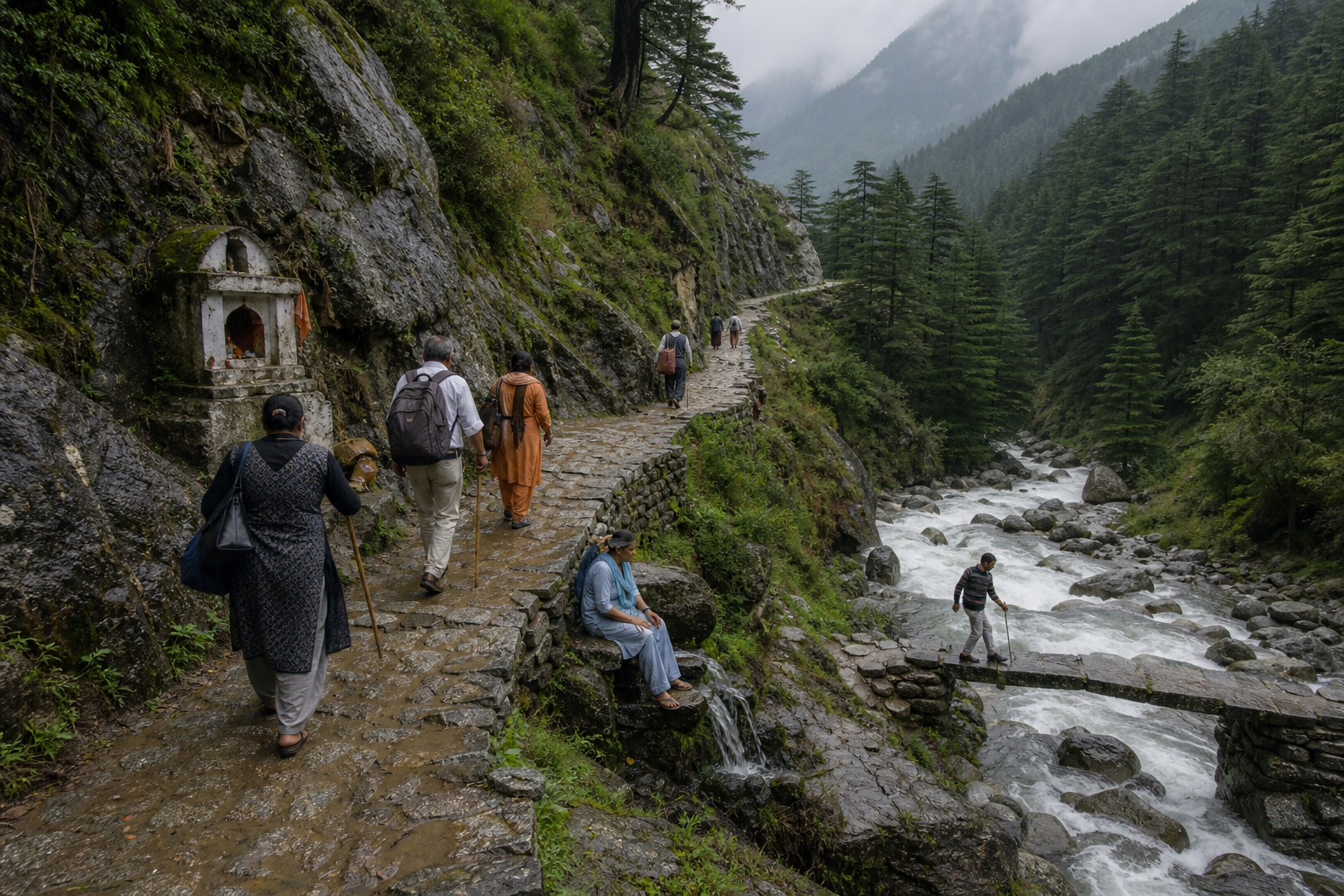
Modern travel planning encourages you to regard everything before arrival as transit. Sacred geography reverses that habit. The approach begins changing your pace before you reach the shrine, and that change is often one of the pilgrimage’s main disciplines.
Purnagiri stands at an elevation of about 3,000 metres and lies approximately 20 kilometres from Tanakpur. Those figures are not incidental travel trivia. They tell you that route conditions, transport, physical effort, weather, and available time can shape your capacity for attentive darshan.
Do not let devotional determination override health or safety at a high-altitude shrine. Check current access conditions through appropriate local channels, assess the physical demands honestly, and seek suitable professional advice if you have a relevant health concern. Arriving exhausted or taking an unsafe route does not make the yatra more sincere.
Timing should follow your purpose. Early morning often permits a quieter darshan at Purnagiri, while Navratri brings larger congregations and heightened devotional energy. Choose the quieter period if you need space for reflection. Choose the festival atmosphere if collective worship is central to your intention, and accept that waiting, proximity to other pilgrims, and patience will become part of the practice.
Scale creates a different demand at Angkor Wat. It is widely recognised as the world’s largest religious monument, so treating it as a quick stop defeats the architecture’s method. Its causeways, galleries, courtyards, reliefs, and towers were made to be encountered through movement. Leave enough margin to walk without racing toward a single photograph.
At each major threshold, pause and notice what has changed. Look for a shift in scale, light, sound, enclosure, elevation, or narrative imagery. Put the phone away for one complete stretch of the approach. This is not an ancient rule or a ritual requirement. It is a practical discipline that allows the spatial sequence to work on your attention.
Read layered sacred inheritance without flattening it
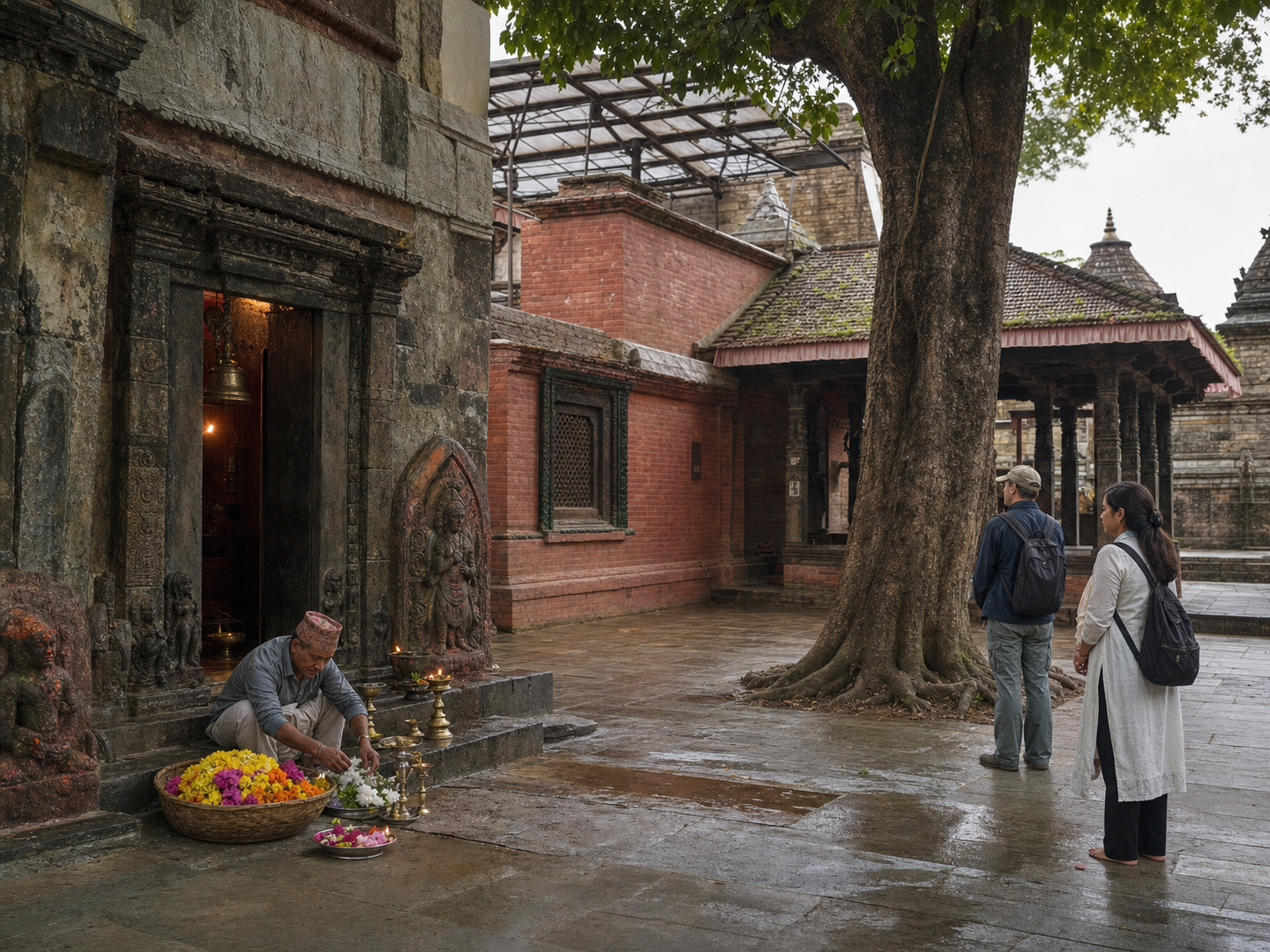
Sacred geography does not stop at the borders of the modern Indian state. It follows routes of devotion, language, art, trade, memory, and civilizational exchange. Angkor Wat makes this visible: Indic cosmology and epic imagery were expressed through a distinctly Khmer architectural achievement that became a national emblem of Cambodia.
This inheritance deserves more care than either denial or triumphalism. Angkor Wat is not adequately described as a detached Indian object placed abroad. Nor should its Vaishnava foundation be erased from its history. The more accurate view holds several truths together: Lord Vishnu was central to its original consecration, Khmer builders gave it its monumental local form, and Buddhist veneration later became part of its sacred continuity.
The famous Samudra Manthan, or Churning of the Ocean, appears among Angkor Wat’s bas-reliefs. Do not treat it as decorative stonework or as a convenient backdrop. Recall the narrative before visiting, then look at how an epic image has been translated into architectural space. The practical question is not simply, “Is this Indian?” Ask instead, “Which dharmic idea travelled, how was it given local form, and how did later communities continue to inhabit the place?”
Shared dharmic inheritance also does not mean that Hinduism, Buddhism, Jainism, and Sikhism are interchangeable. Their doctrines, institutions, disciplines, and ritual forms remain distinct. What can be recognised across them is a recurring respect for sacred places, ethical self-cultivation, disciplined conduct, and inner transformation. Unity is credible when it protects difference rather than dissolving it.
Use the following rules when speaking or writing about a layered temple:
- Name the original dedication when it is known.
- Distinguish architectural origin from later devotional use.
- Credit the local civilisation that built and sustained the monument.
- Describe continuity and adaptation more precisely than a vague claim that every tradition is the same.
- Do not turn a living place of worship into evidence for a modern political slogan.
- Ask local custodians before entering restricted areas, joining a ritual, or photographing worshippers.
Purnagiri offers a complementary lesson. Values such as seva, satya, and ahimsa become tangible through pilgrimage conduct. Cleanliness, truthful dealing, patience in a queue, consideration for elders, and restraint toward the landscape say more about dharmic unity than an abstract declaration does.
Build an itinerary that produces attention, not exhaustion
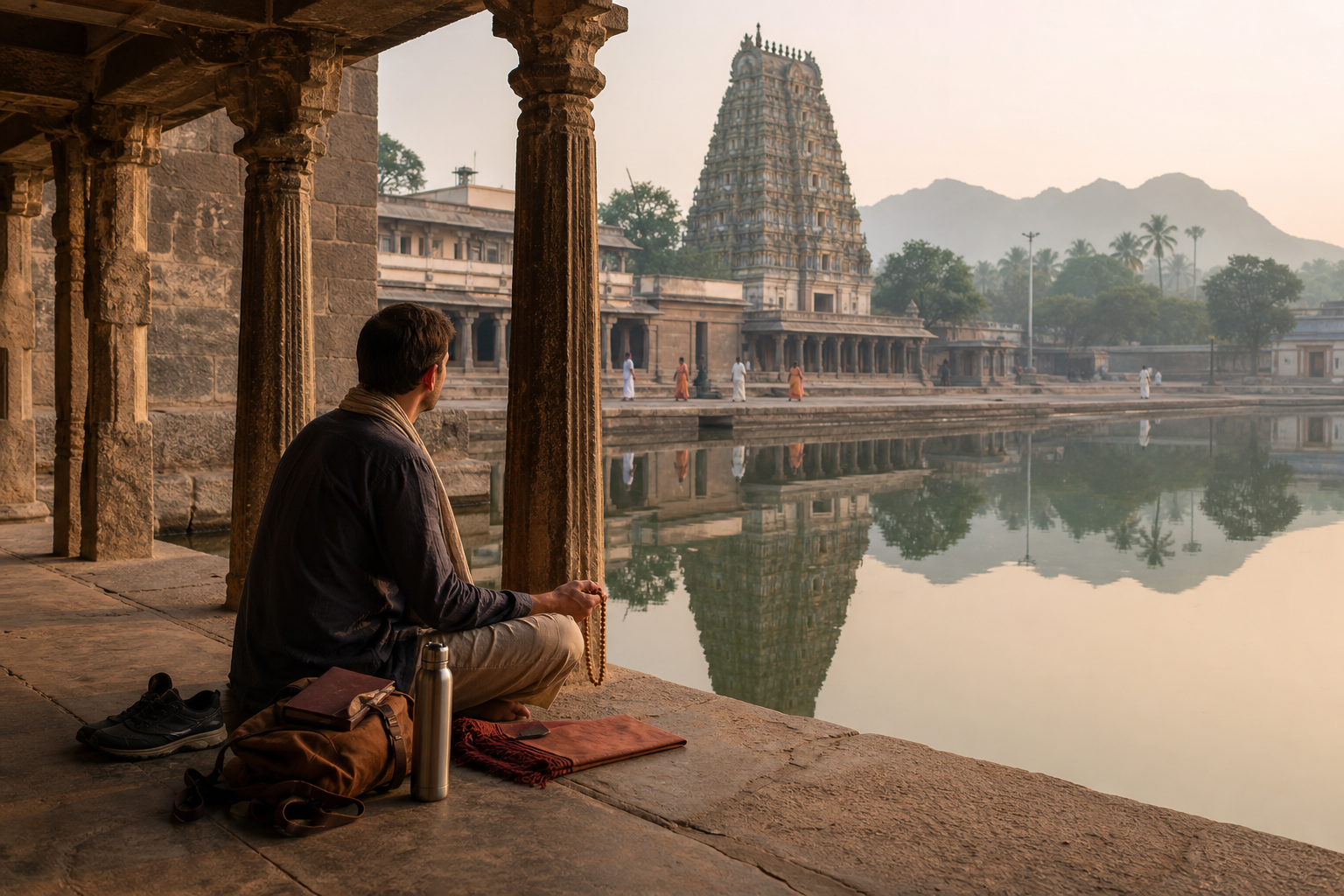
Before departure
Prepare a one-page pilgrimage brief. It should contain the sacred identity of the place, the landscape feature that matters, one essential narrative, the form of living worship you may encounter, current practical information to verify, local etiquette, and the personal restraint you intend to observe. If the page becomes a catalogue of every nearby attraction, your purpose is already becoming diffuse.
Build space into the schedule after darshan. A departure timed for the moment you expect worship to finish creates pressure to hurry, especially when access, queues, or ceremonies do not follow your plan. The useful margin is not empty time. It is where you sit, absorb the place, help a companion, or notice what haste would have concealed.
Learn one theological key rather than attempting to master an entire tradition overnight. For Angkor Wat, Mount Meru and Samudra Manthan are enough to make major features intelligible. For Purnagiri, understanding the shrine as a Shakti Peeth gives the ascent and Devi worship a coherent centre. Depth in one interpretive key is more useful than a list of disconnected facts.
At the sacred site
- Orient yourself before recording anything. Identify the approach, principal sacred focus, surrounding terrain, and movement of worshippers.
- Give darshan or contemplation priority. Do not make companions wait while you perfect a photograph at the moment they came to pray.
- Observe through four lenses. Notice one feature of the landscape, one architectural form, one sacred narrative, and one act of living worship.
- Participate only where participation is welcomed. Follow instructions concerning footwear, offerings, photography, queues, silence, and restricted areas.
- Leave the place cleaner and less burdened. Carry waste out where needed, avoid damaging surfaces or vegetation, and support heritage-friendly practices.
- Record meaning after observation. Write down what a feature did to your attention before searching for a grand interpretation of it.
At Angkor Wat, spend time with the Samudra Manthan relief as a narrative rather than decoration. At Purnagiri, let the mountain air, bells, chants, and aarti register as parts of one devotional environment. In both cases, the discipline is the same: receive the place before making it perform for your camera or argument.
After returning
A pilgrimage is incomplete if its only durable result is a folder of images. Write a short answer to three questions: What did the landscape teach you? Which part of your conduct was tested? What will you now continue through seva, ethical restraint, study, regular worship, or support for preservation?
Choose an action small enough to repeat. You might become more disciplined about keeping sacred spaces clean, study the narrative you encountered, assist someone else’s pilgrimage, or support responsible conservation. The action should arise from the place rather than being an unrelated resolution attached afterward.
Key takeaways
- A temple’s sacred geography includes its route, terrain, spatial sequence, narratives, and living worship, not only its sanctum.
- Begin with the site’s own spiritual grammar: a Himalayan Shakti Peeth asks for a different pace and preparation than a monumental temple-mountain.
- Choose timing according to your intention. Quieter darshan and festival congregation offer different forms of practice.
- At layered sites such as Angkor Wat, hold Vaishnava origins, Khmer achievement, and later Buddhist veneration together without erasing any of them.
- Plan fewer stops, allow time after darshan, and give observation priority over documentation.
- Carry one discipline home through seva, study, ethical conduct, or preservation work.
For your next yatra, do not begin by adding another temple to the itinerary. Begin by choosing the sacred place you are prepared to approach attentively. Learn its central story, respect the demands of its landscape, leave margin around darshan, and decide what part of the journey should remain in your conduct after you return.
References
- DharmaRenaissance Blog — Angkor Wat, Cambodia: Majestic Vishnu Temple, First in a Series on 25 Global Mandirs
- DharmaRenaissance Blog — Mata Purnagiri Devi Temple: A Soul-Stirring Shakti Peeth Above Tanakpur, Uttarakhand
