How to Read Hindu Sacred Landscapes and Temple Iconography
·1 min read
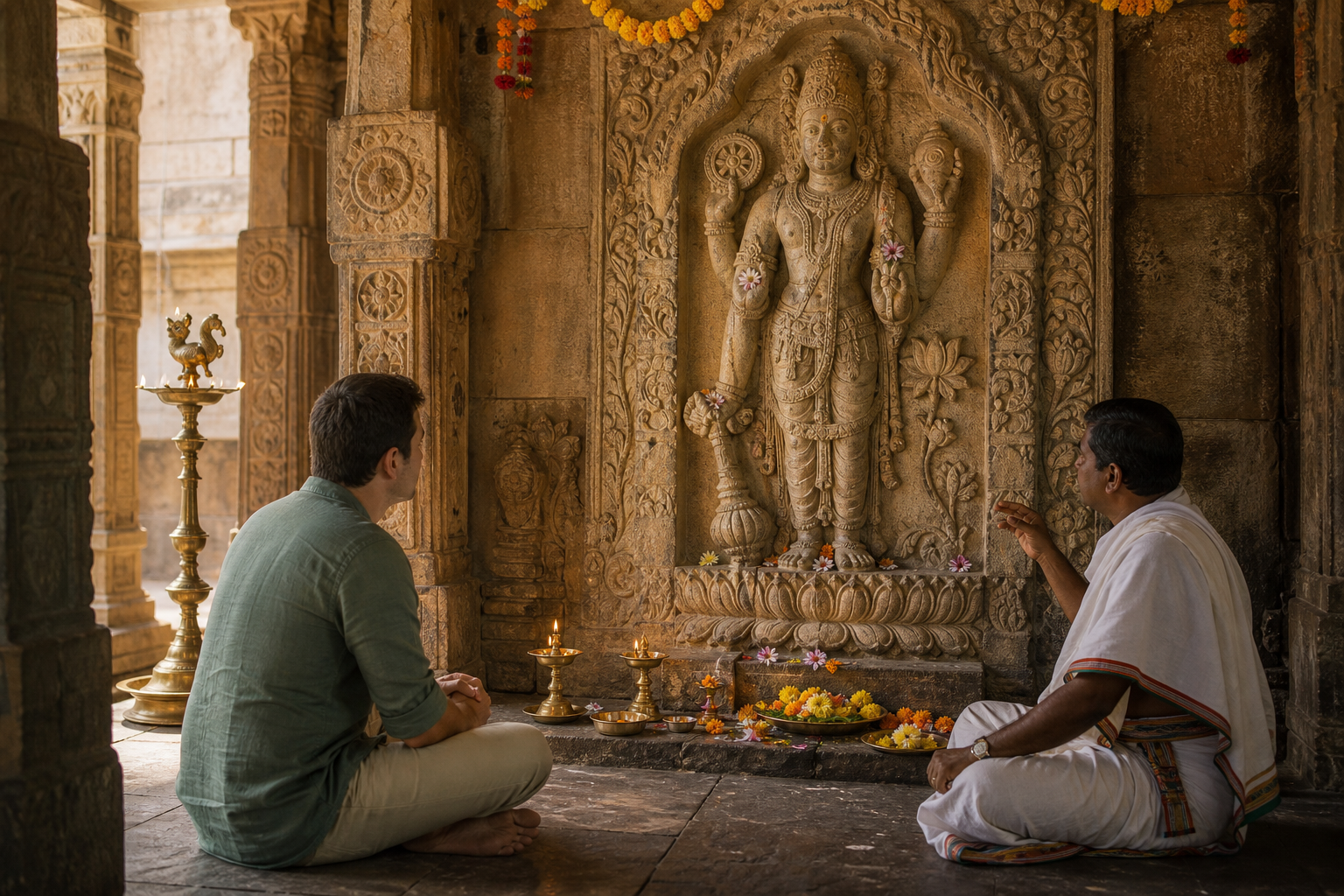
You enter a temple, see several objects in a deity’s hands, and then hear that a nearby river bend, hill, or grove is sacred. The obvious question is also the right one: what exactly are you meant to notice?
You don’t need a catalogue of one-line definitions. You need a way to read place, image, narrative, and worship together. That method will help you distinguish a living symbolic tradition from an attractive but contextless interpretation.
Stop looking for a one-word translation
A Hindu symbol rarely works like a road sign with one approved meaning. A held object may identify the deity, express a divine capacity, recall a narrative, and direct the devotee toward a particular inner disposition. A landscape may be physical terrain, the setting of sacred memory, a destination of pilgrimage, and a map of spiritual transformation at the same time.
This does not mean that every interpretation is equally sound. It means that you should begin with relationships rather than isolated labels. Ask five questions:
<!– wp:list {
FAQs
What should I notice when entering a Hindu temple?
Notice the objects in the deity’s hands as well as nearby features such as a river bend, hill, or grove. Read place, image, narrative, and worship together instead of treating each element as an isolated label.
Why is a one-word definition not enough for Hindu iconography?
A Hindu symbol can carry several related meanings at once. Reducing it to a single approved definition strips away the relationships that make it part of a living symbolic tradition.
What can an object held by a Hindu deity communicate?
A held object may identify the deity, express a divine capacity, recall a narrative, and direct the devotee toward a particular inner disposition.
How can a river, hill, or grove function as a sacred landscape?
A sacred landscape can be physical terrain, the setting of sacred memory, a pilgrimage destination, and a map of spiritual transformation at the same time.
Does symbolism having multiple meanings make every interpretation equally sound?
No. The article recommends testing interpretations through the relationships among place, image, narrative, and worship rather than accepting contextless readings.