Somvati Amavasya is the Amavasya (new moon tithi) that coincides with Somvar (Monday). In the Vedic calendrical tradition, this rare alignment is regarded as particularly auspicious for Shiva Puja, Surya Puja, Vishnu Puja, Durga Puja and Pitru Tharpana Puja, combining the introspective strength of the new moon with the mind-calming, soma-linked quality of Monday.
In 2026, Somvati Amavasya occurs exactly twice: Monday, 15 June 2026 (Jyeshtha Amavasya) and Monday, 9 November 2026 (Kartik Amavasya). As with all tithi-based observances, local panchang and sunrise at one’s location determine the operative date; practitioners should confirm with the regional Amanta or Purnimanta calendar in use to ensure precise observance.
Understanding how the date is fixed clarifies why local verification matters. A tithi is defined by the relative ecliptic longitude between the Moon and the Sun, and Amavasya (tithi 30) occurs when this difference returns to 0°. The Hindu day is reckoned from local sunrise; thus, Somvati Amavasya is observed when the Amavasya tithi is present at sunrise on a Monday (the vaara). Time-zone differences and whether a tithi straddles two civil dates can shift the observed day regionally.
From a panchang perspective, June’s occurrence aligns with Jyeshtha Amavasya and November’s with Kartik Amavasya. These months are widely associated with inner purification (antaranga shuddhi), daana, snana, and rites of remembrance for ancestors. The confluence with Monday further amplifies the soma-related quietude conducive to japa, dhyana, and vrata.
Somvati Amavasya carries layered devotional significance. Shiva Puja on Amavasya is praised for manonigraha (discipline of the mind), Surya Puja enhances vitality and clarity, Vishnu Puja stabilizes sattva and devotion, and Durga Puja supports courage and protection. Together, these practices frame the new moon not as absence, but as a potent ground for renewal, ethical resolve, and spiritual consolidation.
Pitru Tharpana receives special emphasis on Amavasya. Monthly remembrance, as preserved in Dharmashastra and Grihya traditions, offers gratitude to ancestors while cultivating humility and continuity of family dharma. Black sesame (tila), darbha/kusha grass, and clean water are central to the rite; many traditions prefer Aparahna (afternoon) for monthly Amavasya śrāddha, while Tarpana itself is also commonly performed in the morning after snana. Family parampara should guide the exact sequence.
A practical home Puja Vidhi for Somvati Amavasya in 2026 can be approached in a calm, structured manner. After early snana and a simple sattvic setup, practitioners may take a sankalpa specifying the date, location, and intent (śubha sankalpa) for Shiva Puja, Surya Arghya, Vishnu Puja, Durga Archana, and Pitru Tharpana, along with daana and vrata observances appropriate to the household’s sampradaya.
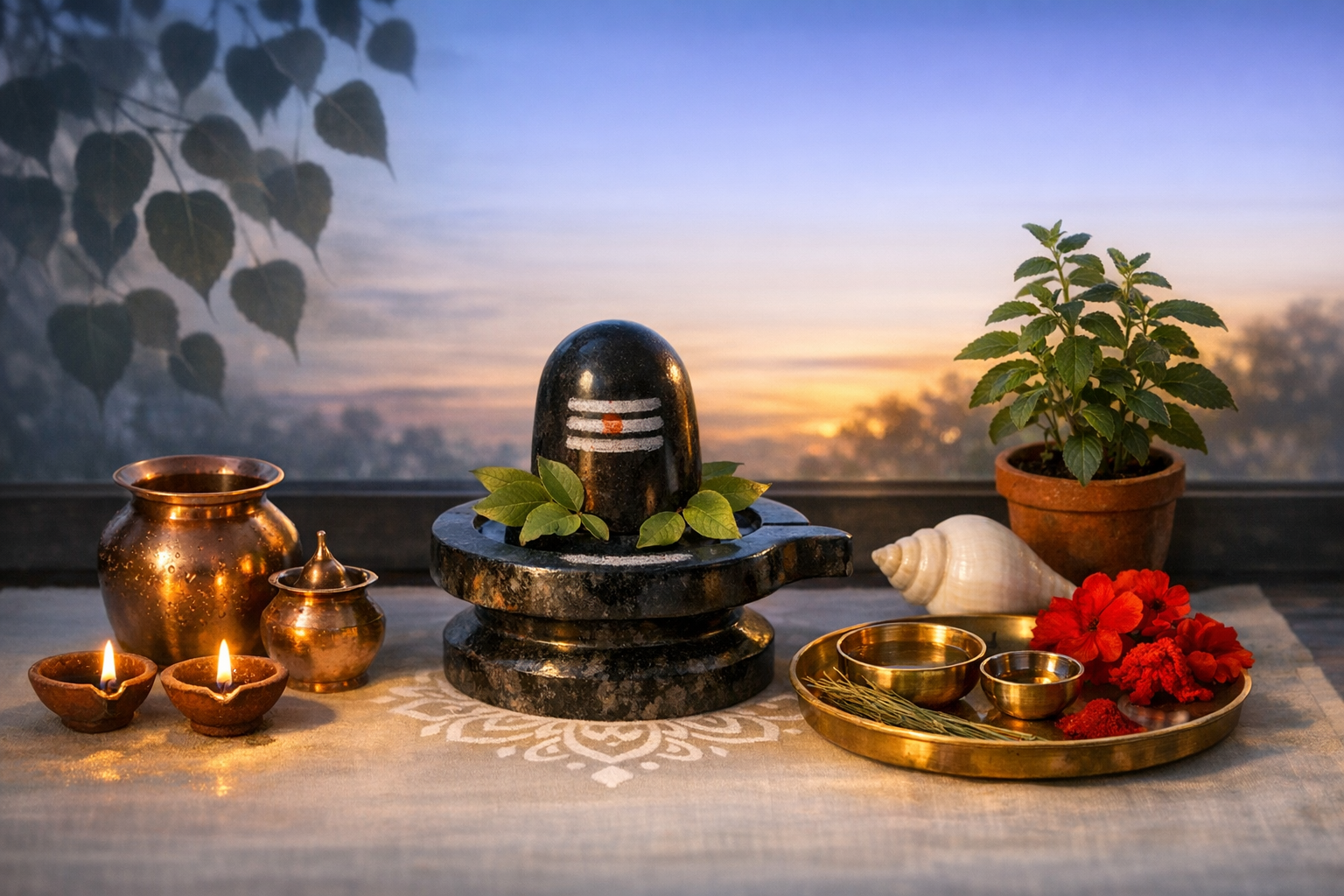
Shivopasana often includes abhisheka with water, milk, or panchamrita, application of vibhuti, and offering of bilva-patra where appropriate. Many recite the Mahamrityunjaya Mantra or Rudram passages for inner steadiness. Surya Puja typically includes Arghya to the rising Sun with gratitude for prana and clarity. In Vaishnava traditions, Vishnu Sahasranama, Tulasi archana, and simple naivedya are common. Durga Archana may include recitation of the Saptashloki Durga or hymnody cherished in the family tradition.
Pitru Tharpana is performed with mindful invocation and offerings poured via the palm with black sesame into water, accompanied by appropriate mantras taught in one’s lineage. Some households also prepare pindika (simple offerings of rice or barley flour) and subsequently engage in anna-dana or feeding birds and cows in a spirit of compassion and continuity.
Vrata on Somvati Amavasya is observed widely, with many choosing a daylong upavasa or phalahara. The emphasis is on sattvic simplicity, ahimsa, and mental steadiness. Individuals with health considerations, elders, and expectant mothers can adapt dietary austerities while retaining the core intention of vratadiscipline, gratitude, and compassionwithout compromising well-being.
Peepal (Ashvattha) worship is a hallmark for many on Somvati Amavasya, especially the Jyeshtha occurrence. Offerings of water, raw milk diluted with water, and pradakshina with quiet japa are common. Beyond ritual, this act reflects an ecological ethic: reverence for living trees, shared air, and the interdependence of all beings, aligning spiritual practice with environmental stewardship.
Daana on Amavasya is traditionally recommended. Practical forms include anna-dana, support for educational needs, medical assistance, and service to gaushalas or community kitchens. The emphasis is not on ritual grandeur but on intentional generosity. Such seva resonates across dharmic pathsHinduism, Buddhism, Jainism, and Sikhismwhere remembrance, compassion, meditation, and service are complementary disciplines fostering harmony and shared uplift.
Regional practices during the 2026 occurrences may include snana at sacred rivers, temple darshan, collective recitation of stotras, and satsanga. In pilgrimage towns such as Kashi, Prayagraj, Nashik, and coastal tirthas, Somvati Amavasya can draw larger gatherings; in the diaspora, households adapt with local panchang, modest home puja, and community meditation or charity initiatives.
Those seeking Shubh Muhurat within the day can follow a simple heuristic: perform snana and sankalpa early; schedule home puja in the morning hours; complete Pitru Tharpana per family guidance in the morning or during Aparahna if performing śrāddha; and keep the evening for deep japa, quiet reading of scripture, and a lamp offering. If Amavasya tithi begins or ends near sunrise, local panchang guidance takes precedence over general rules.
The 2026 calendar lends itself to deliberate preparation. For Monday, 15 June 2026 (Jyeshtha Somvati Amavasya), households can plan a water-conserving snana, a focused Shiva abhisheka, Surya Arghya, and Pitru rites with tila and darbha. For Monday, 9 November 2026 (Kartik Somvati Amavasya), the devotional tone often includes lamps, Vishnu or Lakshmi-Narayana worship in many regions, and resolute daana as the season turns, all anchored by the stillness of the new moon.
Common questions arise each year. If a tithi overlaps two civil dates, Somvati Amavasya is tied to the sunrise criterion; hence a Monday sunrise with Amavasya tithi prevailing will anchor the observance on that Monday. Shaving, travel, or new undertakings are left to family custom; many prefer minimalism and contemplation on Amavasya, turning attention to study, japa, and seva. Children and students can meaningfully participate through simple offerings, mindful silence, and acts of kindness.
Somvati Amavasya 2026, occurring twiceonce in Jyeshtha and again in Kartikinvites a measured, compassionate rhythm: conserve, cleanse, contemplate, and contribute. Across dharmic traditions, the shared ethos of remembrance, meditation, and service unites diverse practices into a single current of wellbeing, wisdom, and mutual respect. With a verified local panchang, thoughtful puja, and inclusive seva, these Monday new moons become luminous thresholds to inner steadiness and collective harmony.
Inspired by this post on Hindu Pad.