Putra Ganapati Vratam is an auspicious Hindu ritual observed with devotion by married couples seeking the blessings of children and family well-being. In 2026, its significance remains especially strong across Andhra Pradesh and Telangana, where it is regarded as a core household observance dedicated to Putra Ganapati—another revered form of Lord Ganapathi (Lord Ganesha), the remover of obstacles and the granter of auspicious beginnings.
Deeply woven into Telugu traditions, this vrata reflects a shared cultural ethos that values family continuity, responsibility, and compassionate living. Its spirit aligns naturally with the broader dharmic fabric that honors prayer, ethical conduct, and service—principles cherished across Hindu, Buddhist, Jain, and Sikh communities. In this way, the observance supports unity among dharmic traditions while focusing on the universal aspiration for nurturing future generations.
Traditionally, Putra Ganapati Vrata is undertaken by married or childless couples who seek progeny, as well as by families praying for the health, protection, and virtuous growth of their children. As the name suggests, worship is directed to Putra Ganapati, honoring the compassionate aspect of Lord Ganesh associated with blessings of offspring and household harmony.
The timing of the vrata in 2026 should be determined using a reliable regional Panchang. Families in Andhra Pradesh and Telangana often consult local temple almanacs and community priests to identify a suitable Chaturthi tithi devoted to Lord Ganesh, ensuring observance aligns with sunrise timings and local muhurta recommendations. Given regional variations, following one’s customary tradition and community guidance helps preserve both accuracy and sanctity.
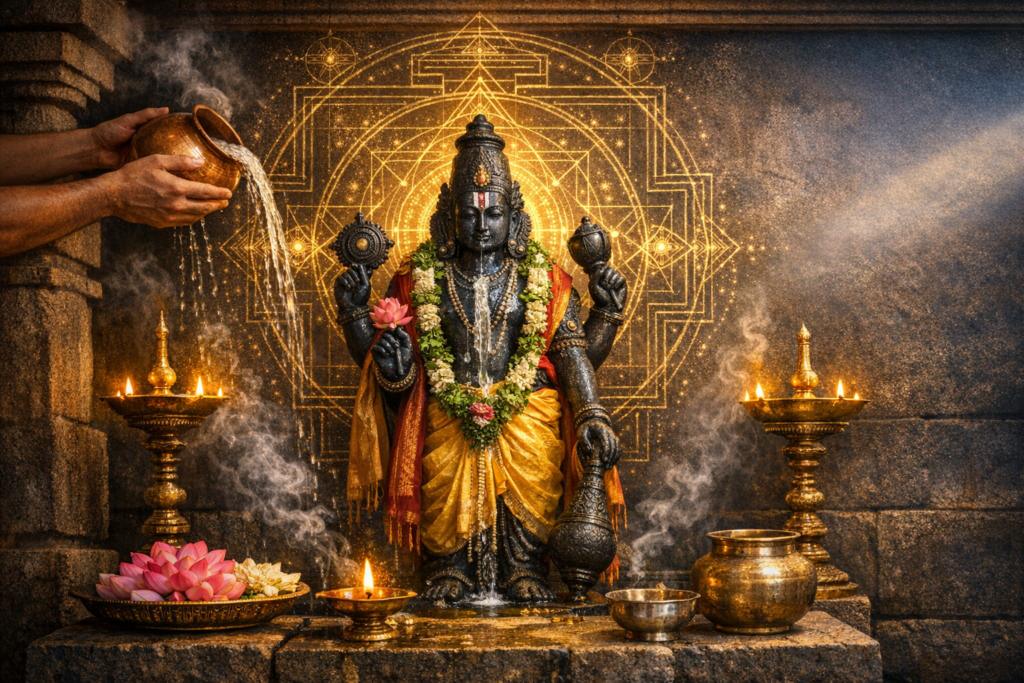
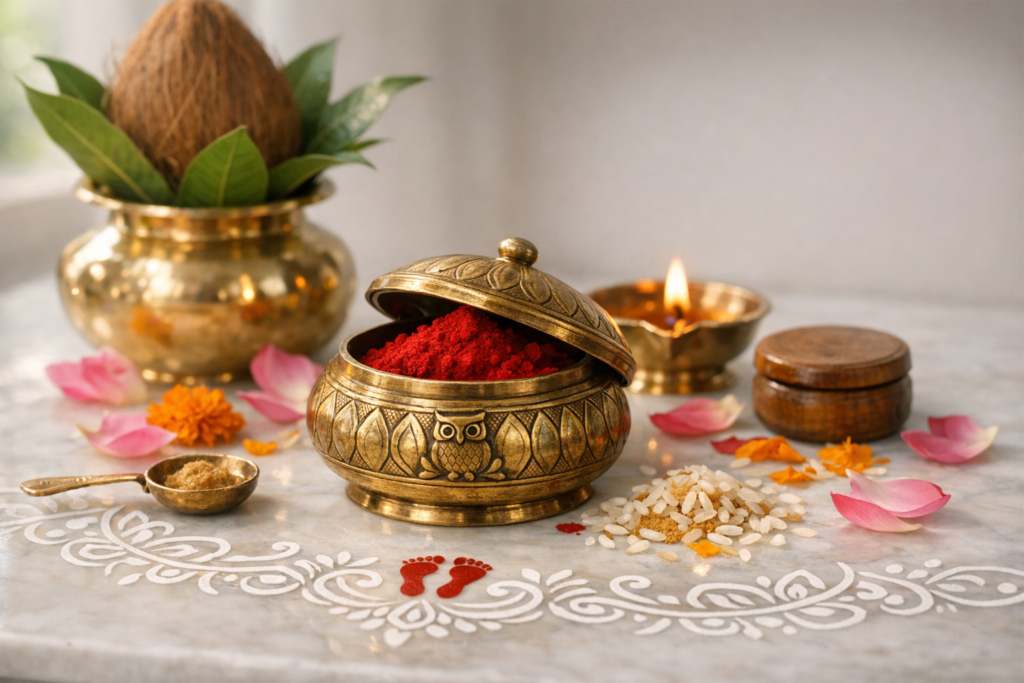
Preparations typically include a vrata sankalpa (solemn vow), observance of cleanliness, and, where appropriate, fasting according to personal capacity and health. A simple altar may be arranged with an image or murti of Lord Ganapathi, a clean red cloth, a lamp, incense, and a kalasha if customary in the household. Participants maintain a sattvic atmosphere marked by calm, truthfulness, and mutual respect.
Offerings commonly include durva grass, modakam, jaggery, coconut, bananas, and red flowers. Many households perform Panchopachara or Shodashopachara puja, beginning with lighting the lamp and invoking Lord Ganesh with dhyana (meditative recollection). The mantra “Om Gam Ganapataye Namah” is chanted with focused intention, followed by Ganesh stotras or Ashtottaras as per family practice. Naivedya is offered reverentially, and the puja concludes with aarti and distribution of prasadam.
Couples often describe this vrata as a shared journey of patient hope and disciplined devotion. They pray together for the grace to welcome children and to raise them in dharma—grounded in compassion, honesty, and service to society. Elders’ blessings, quiet reflection, and small acts of charity (dana) further reinforce the vrata’s intention and contribute to the broader good.
Practitioners emphasize that the transformative strength of Putra Ganapati Vratam lies in consistent prayer, ethical living, and harmony at home. By aligning observance with the 2026 Panchang, honoring localized customs of Andhra Pradesh and Telangana, and sustaining a calm devotional spirit, families approach Lord Ganapathi’s worship with clarity and confidence, seeking blessings for progeny, protection, and enduring household auspiciousness.
Inspired by this post on Hindu Pad.