Bhim Ekadashialso known as Bhima Ekadasi, Bhimseni Ekadashi, Pandava Ekadashi, and the widely revered Nirjala Ekadashiis among the most observed of the twenty-four Ekadashi vratas in the Hindu lunar year. In 2026, this vrata falls on Thursday, 25 June, coinciding with Jyeshtha Shukla Ekadashi in most Indian almanacs. The observance is dedicated to Lord Vishnu and is renowned for its uncompromising discipline, expansive compassion, and enduring cultural resonance across regions and communities.
By tithi, Ekadashi is the eleventh lunar day of the bright fortnight of Jyeshtha, recognized when the Moon–Sun angular separation spans 120–132 degrees. For 2026, the vrata day is Thursday, 25 June, with Dwadashi parana on Friday, 26 June, according to the majority of regional panchangs. Local sunrise, time zones, and sampradaya conventions (Smarta and Vaishnava) can influence parana windows; consulting a regional panchang ensures precision.
The epithets attached to this day encapsulate its layered identity. “Bhimseni” or “Bhima” emphasizes the Pandava connection; “Pandava Ekadashi” memorializes that lineage; “Nirjala” registers its signature disciplinefasting without water; and “Jyeshta Shukla Paksha Ekadashi” situates it precisely within the lunisolar calendar. Each name points to the same sacred commitment of upavasa in the Vaishnava tradition.
In classical understanding, upavasa signifies drawing nearer to the Divine (upa + vasa, “to dwell near”). More than dietary restraint, it is a calibrated practice of pratyahara (sense-withdrawal), dhyana (contemplation), and sattva cultivation, aligned with the devotional center of Vishnu-bhakti. This philosophical core gives Bhim Ekadashi its distinctive spiritual profile and enduring popularity.
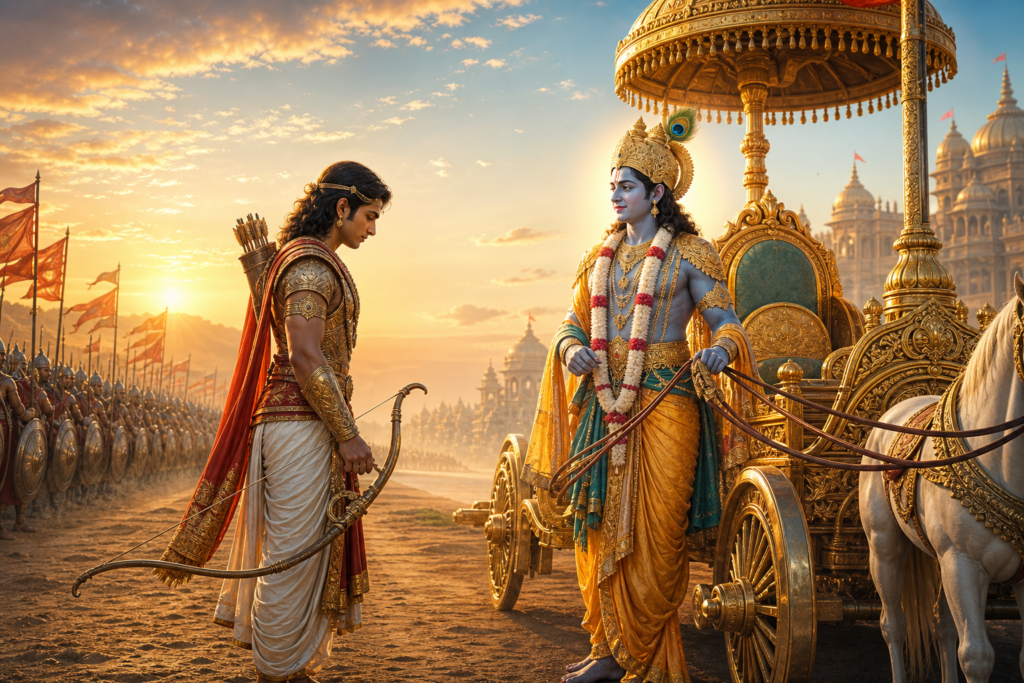
Dharmic narrative associates this observance with Bhima, whose formidable appetite made monthly fasting difficult. Seeking a path that honored dharma without compromising health, he approached Veda Vyasa. The resolution recorded in Vaishnava vrat-katha traditions prescribes one exacting, waterless fast on Jyeshtha Shukla Ekadashi, the merit of which is said to equal all twenty-four Ekadashis of the year. The narrative frames Nirjala not as extremity for its own sake, but as a disciplined synthesis of devotion, resolve, and compassion.
Purana literatureespecially the Padma and Skanda Puranasextols Ekadashi as a preeminent vrata for Vishnu worship, often linking it to purification of past demerits, enhancement of sattva, and growth in bhakti. Devotees engage in nama-japa such as “Om Namo Narayanaya” or the “Hare Krishna” Mahamantra, recitation of Vishnu Sahasranama, and parayana of Bhagavata passages, thereby combining tapas with contemplative insight.
From an astronomical perspective, tithi is defined by the 12-degree increments of the Moon–Sun elongation, with Ekadashi beginning when this angular difference crosses 120 degrees. Because tithi boundaries rarely match civil midnights and vary by location, temple almanacs prioritize sunrise-based reckonings to guide ritual sequencing, including the vital parana on Dwadashi.
Preparation typically begins on Dashami with a light, saatvika evening meal, mental sankalpa for the upcoming vrata, and avoidance of tamasic habits. Many households cleanse the altar, arrange tulasi leaves, and keep ghee lamps ready, creating a calm ritual field. These preparatory actions support the demanding Nirjala discipline and ensure clarity of intent.
On Jyeshtha Shukla Ekadashi, Nirjala vrata is kept from sunrise until Dwadashi parana, abstaining from both food and water. The day is consecrated through Vishnu archana, nama-japa, quiet study, and, when feasible, darshana at nearby Vishnu or Krishna temples. For many, the experiential arc of the day transitions from the physical intensity of abstinence to an inward stillness that supports lucid contemplation by evening.
Worship practices often integrate simple offerings aligned with vaishnava maryada: tulasi leaves, flowers, diyas, and seasonal fruits reserved for parana. A clean, uncluttered altar, the steady glow of a lamp, and unhurried chanting together foster a meditative atmosphere that complements the vrata’s rigor while keeping the heart anchored in bhakti.
Parana is performed on Dwadashi after sunrise and after Hari Vasara has elapsed (the first quarter of Dwadashi). Tradition favors breaking the fast within the prescribed Dwadashi window, customarily with water sanctified by tulasi or charanamrita, followed by light saatvika food. Many also undertake jaladan (water distribution), annadan, or support public water points (pyau) as a compassionate social expression inspired by the waterless fast.
Classical dharma upholds ahimsa toward oneself; therefore, elders, expectant mothers, those engaged in strenuous labor, or individuals with medical conditions may adopt a moderated vrataphalahara, jala-sevana, or manasa upavasa emphasizing nama-japa and seva. The tradition esteems sincerity of sankalpa and steadiness of practice over sheer austerity, aligning discipline with wellbeing.
Practitioners frequently recount an unfolding sense of clarity, lightness, and inward poise by nightfall, especially when the day is framed by kirtan or quiet reading. Communities observe that the shared intention of restraint and kindness generates a palpable atmosphere of upliftan affective dimension as essential to the vrata as its prescriptions.
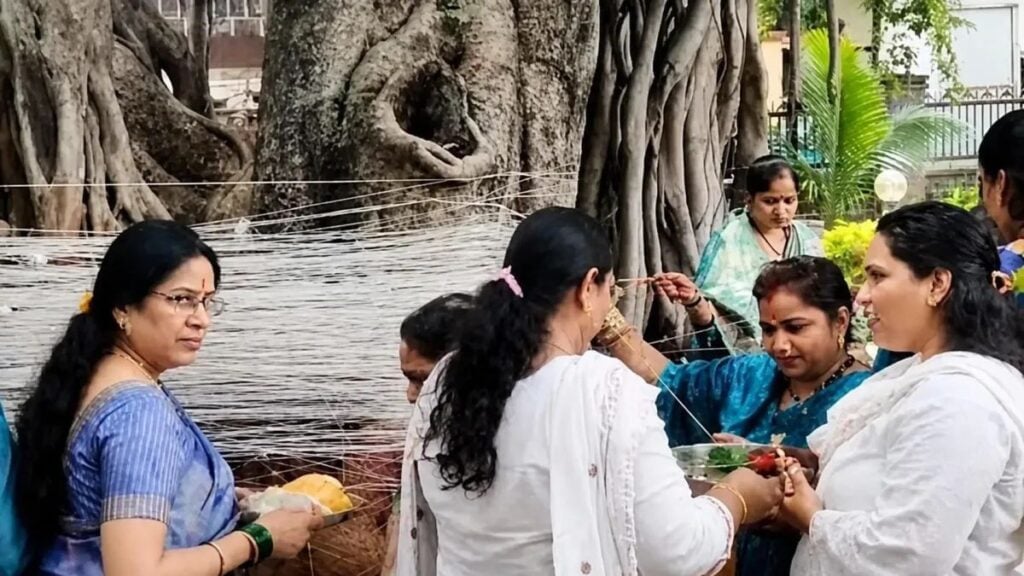
The observance is pan-Indic, prominent in North Indian temple-towns such as Varanasi, Vrindavan, and Haridwar, and vibrant across Vaishnava sampradayasSri, Gaudiya, Madhva, and Vallabha. It is also widely kept in Nepal and in the global diaspora. Public acts of jaladan and volunteer-run pyaus mirror the vrata’s ethic, translating inner tapas into social care during the peak summer heat of Jyeshtha.
In the wider dharmic family, the underlying values of self-restraint, compassion, and contemplative awareness resonate across traditions. Buddhist Uposatha emphasizes ethical renewal and mindfulness; Jain upavasa and anuvrata underscore nonviolence and self-mastery; Sikh seva and simran center active compassion and remembrance of the Divine. While ritual forms differ, Bhim Ekadashi’s spirit harmonizes with this shared civilizational ethos of disciplined compassion and unity.
Nirjala’s waterless character cultivates empathy for all beings contending with heat and thirst in Jyeshtha. This empathy becomes actionable through water distribution, tree-shade initiatives, and support for animals and birds. Such practices exemplify Vasudhaiva Kutumbakamhonoring the living world as an interconnected family.
Calendar practice includes nuanced rules. Smarta almanacs generally prioritize Ekadashi present at sunrise, whereas Vaishnava panchangs often defer to a day when Ekadashi extends with stricter devotional criteria or when Dashami-Ekadashi overlaps. Hari Vasara on Dwadashi is traditionally avoided for parana. These conventions explain occasional regional differences while preserving a common devotional center.
Common questions converge on essentials. Bhim Ekadashi, Nirjala Ekadashi, and Pandava Ekadashi refer to the same vrata held on Jyeshtha Shukla Ekadashi. The vrata enjoins abstention from grains and beans as on all Ekadashis, with the added Nirjala element of water abstention. The day’s merit is traditionally described as equivalent to observing all twenty-four Ekadashis, a teaching meant to guide devotees toward steadfastness, charity, and inner purification rather than numerical accumulation alone.
Anchored in the Pandava legacy and extolled by Vaishnava scriptures, Bhim Ekadashi 2026 invites disciplined devotion, community care, and contemplative clarity. Observed within one’s capacity and guided by local panchang timings, the vrata becomes a powerful synthesis of tapas and dayaan occasion to deepen Vishnu-bhakti while nurturing unity across the dharmic traditions that celebrate self-restraint, remembrance, and compassion.
Inspired by this post on Hindu Pad.