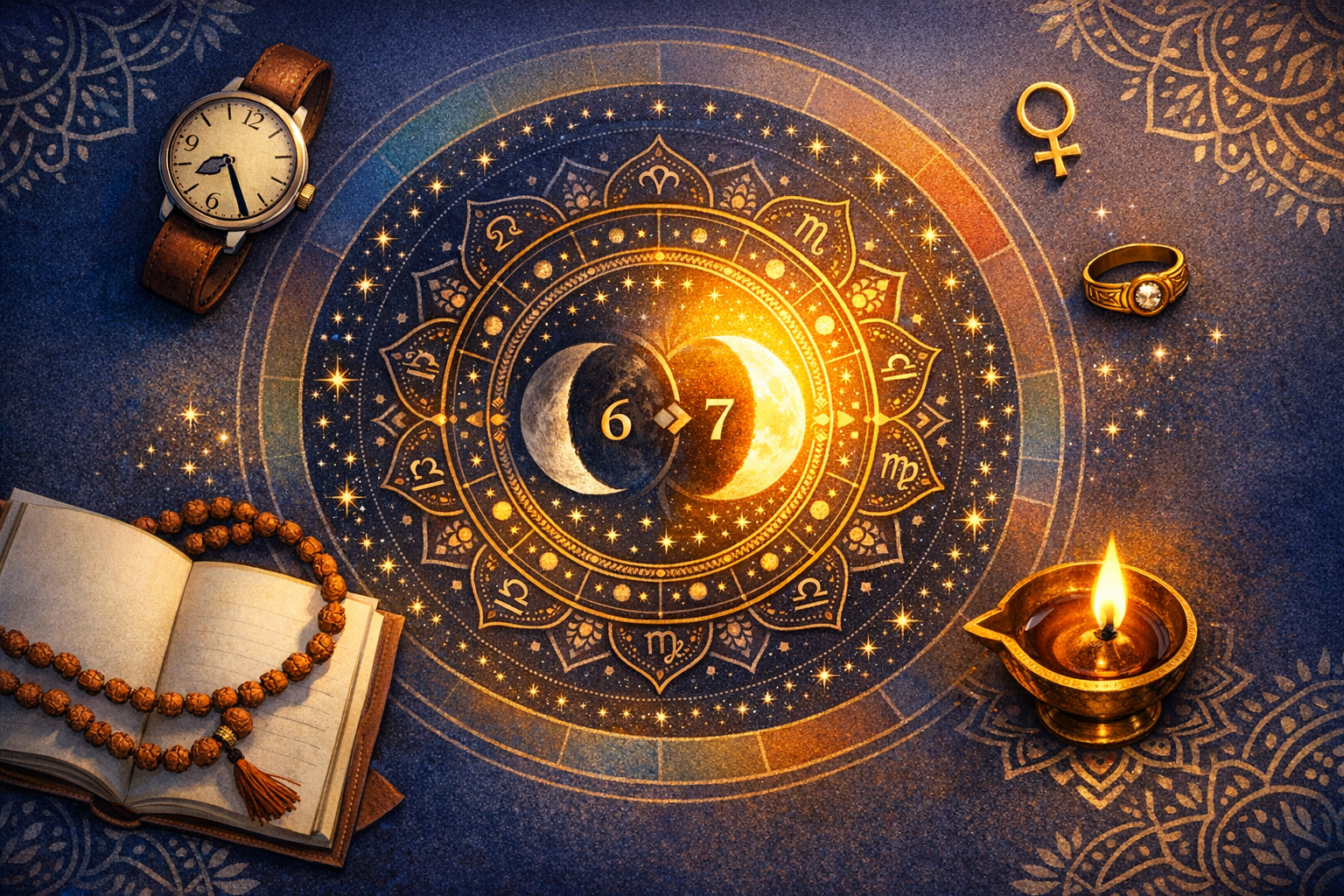
Friday, May 8, 2026, in the Hindu Calendar (Panchang) falls in the waning lunar fortnight, Krishna Paksha. It is Krishna Paksha Sashti tithi (the sixth lunar day of the dark phase) until 8:24 AM on May 8 in most regions. From 8:24 AM onward, it is Krishna Paksha Saptami tithi (the seventh lunar day of the dark phase). This tithi transition shapes the day’s devotional focus, ritual suitability, and auspicious windows.
In Panchang terms, a day is assessed through five limbstithi, vara (weekday), nakshatra (lunar mansion), yoga, and karanaalong with the Moon’s rashi (sign). Together these factors inform shubh muhurat (good time), the avoidance periods such as Rahu Kalam, and the qualitative tone of personal sadhana, family events, and community observances.
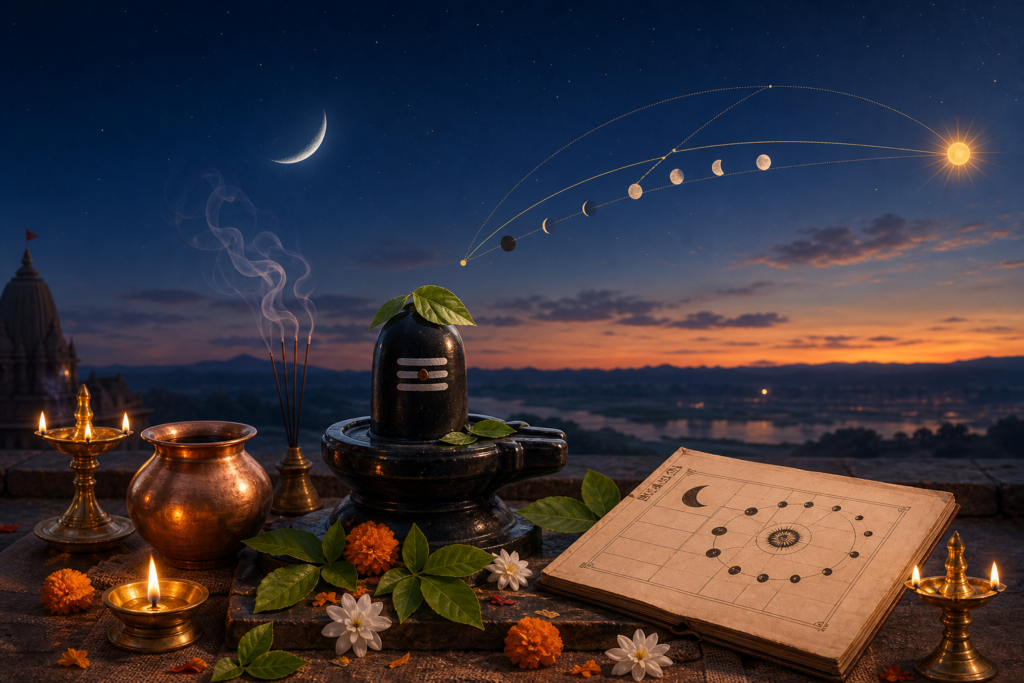
Tithi is defined astronomically by the Moon–Sun angular separation: every 12° of elongation constitutes one tithi. A tithi changes when this separation crosses the next 12° multiple, which is why a tithi may begin or end at any clock time. On May 8, 2026, Sashti persists until 8:24 AM, after which Saptami prevails. Because tithis are universal astronomical events, the stated times can vary slightly by location and ephemeris used; practitioners typically consult a reliable regional Panchang for exact local timings.
Krishna Paksha traditionally supports introspective practicesjapa, svadhyaya (study), pranayama, and quiet seva. Sashti is often associated with focus, restraint, and steadiness, whereas Saptami amplifies clarity, discipline, and momentum. The weekday context matters: as a Shukravar (Friday), the day resonates with Shukra’s aesthetics, harmony, and sukha, leading many households to emphasize cleanliness, hospitality, and simple Lakshmi-oriented offerings while maintaining the contemplative tone of the dark fortnight.
Shubh muhurat on a given date is not a single universal slot but an informed selection that weighs tithi strength, nakshatra quality, weekday lord, prevailing yoga/karana, and practical constraints. For many day-to-day activities, practitioners combine universal anchors (for example, Brahma Muhurta for sadhana and Abhijit Muhurta for urgent undertakings) with local Panchang filters (Choghadiya, Rahu Kalam, Gulika Kalam, and Yamaganda) to form a well-rounded decision.
For daily practice, Brahma Muhurtaapproximately 96 minutes before local sunriseis prized for meditation, japa, and subtle study because mind and prana are more easily gathered. Abhijit Muhurta centers on the local solar noon (madhya-dina), extending roughly 24 minutes on either side; it is widely regarded as a reliable fallback for essential tasks when a custom muhurta is not available. Many traditions avoid employing Abhijit for marriage, yet regard it as serviceable for most critical, time-pressed actions.
Rahu Kalam, Yamaganda, and Gulika Kalam are avoidance periods derived by dividing the daylight interval (sunrise to sunset) into eight equal parts and mapping weekday-specific segments. For Friday, Rahu Kalam falls in the 4th daylight segment, Yamaganda in the 7th, and Gulika Kalam in the 2nd. To convert these into local clock times, compute the daylight span at one’s location, divide by eight, and assign segments accordingly. As an illustrative example only, if sunrise is at 6:00 AM and sunset at 6:30 PM (12.5 hours, or 750 minutes), each segment is about 93 minutes: the 2nd segment runs ~7:33–9:06 AM (Gulika), the 4th ~10:59 AM–12:32 PM (Rahu), and the 7th ~3:58–5:31 PM (Yamaganda). Exact windows must be recalculated for the actual local sunrise and sunset.
Choghadiya offers another practical filter, especially in western and northern India. The day and night are each divided into eight choghadiyas rotating through auspicious (Amrit, Shubh, Labh), neutral (Char), and inauspicious (Rog, Kal, Udveg) qualities. For general-purpose activities, practitioners prefer Amrit, Shubh, and Labh; for high-stakes rites (for example, griha-pravesh), they layer Choghadiya with tithi–nakshatra matching and the avoidance of Rahu Kalam and other doshas for a robust selection.
Nakshatra and the Moon’s rashi on May 8, 2026, determine subtler qualitiescommunication style, social harmony, and emotional tenorand can shift during the day. Because these depend on the Moon’s precise longitude at a given moment, one should check a localized Panchang or ephemeris. Once identified, the nakshatra informs whether the day favors groundwork and stability (typical of earthy influences), analysis and service (airy), leadership and initiatives (fiery), or introspection and healing (watery). The Moon’s rashi further nuances these tendencies; for instance, Vrishabha and Kanya often support steady effort, while Karka and Meena lean toward reflective, devotional tasks.
Yoga and karana fine-tune the day’s suitability. Yogas (27 in classical lists) modulate the mind’s texturesome sharpen initiative, some reward restraint. Karanas divide each tithi into half-units; seven are recurring (Bava, Balava, Kaulava, Taitila, Gara, Vanija, Vishti), and four are fixed (Shakuni, Chatushpad, Naga, Kimstughna). Vishti is also called Bhadra and is typically avoided for auspicious beginnings; if Vishti (Bhadra) is operating, many postpone non-urgent initiations, opting instead for study, planning, or internal practices.
A pragmatic day-plan many households follow blends spiritual cadence with family needs. Early morning Brahma Muhurta supports meditation and sankalpa. Up to 8:24 AM, Sashti encourages focused, disciplined tasks. Post 8:24 AM, Saptami’s clarifying energy pairs well with administrative work, clearing backlogs, and methodical progress. Near local midday, Abhijit Muhurta can host essential sign-offs or communications if superior custom muhurta is not available. As it is Shukravar, simple Lakshmi-oriented worshipcleanliness, lighting a lamp with clarity of intention, and mindful acts of generosityharmonize well with the day.
Across dharmic traditions, shared lunar rhythms cultivate unity in diversity. Hindu Panchang calculations also underpin key observances in Buddhism (for example, Vesak aligned to Vaisakha Purnima), in Jainism (fasting cycles and Pratikraman scheduled by tithi), andhistorically in parts of the communityamong Sikhs adopting Bikrami almanac cues for some commemorations. Recognizing this common lunar logic helps communities appreciate each tradition’s pathways while affirming a shared timekeeping heritage.
Regional almanac conventionsAmanta (month ends on Amavasya) and Purnimanta (month ends on Purnima)do not alter the operative tithi at a given clock moment; they only affect month labeling. Thus, “It is Krishna Paksha Sashti tithi … till 8:24 AM on May 8. Then onward it is Krishna Paksha Saptami tithi …” remains valid across regions, with only minor minute-level differences due to location and computational parameters (ayanamsa, ephemerides).
Key takeaways for May 8, 2026: honor the Sashti-to-Saptami transition at 8:24 AM; prefer Abhijit Muhurta for time-sensitive tasks when a tailored muhurta is not available; avoid Friday’s Rahu Kalam (4th daylight segment), Yamaganda (7th), and Gulika Kalam (2nd); and corroborate nakshatra and the Moon’s rashi with a trusted local Panchang to align activities with the day’s subtler lunar currents.
Inspired by this post on Hindu Blog.