On Wednesday, March 18, 2026 (Budhavara), the Hindu calendar (Panchang) highlights a pivotal lunar transition that guides daily observances, muhurta selection, and devotional focus for households and communities.
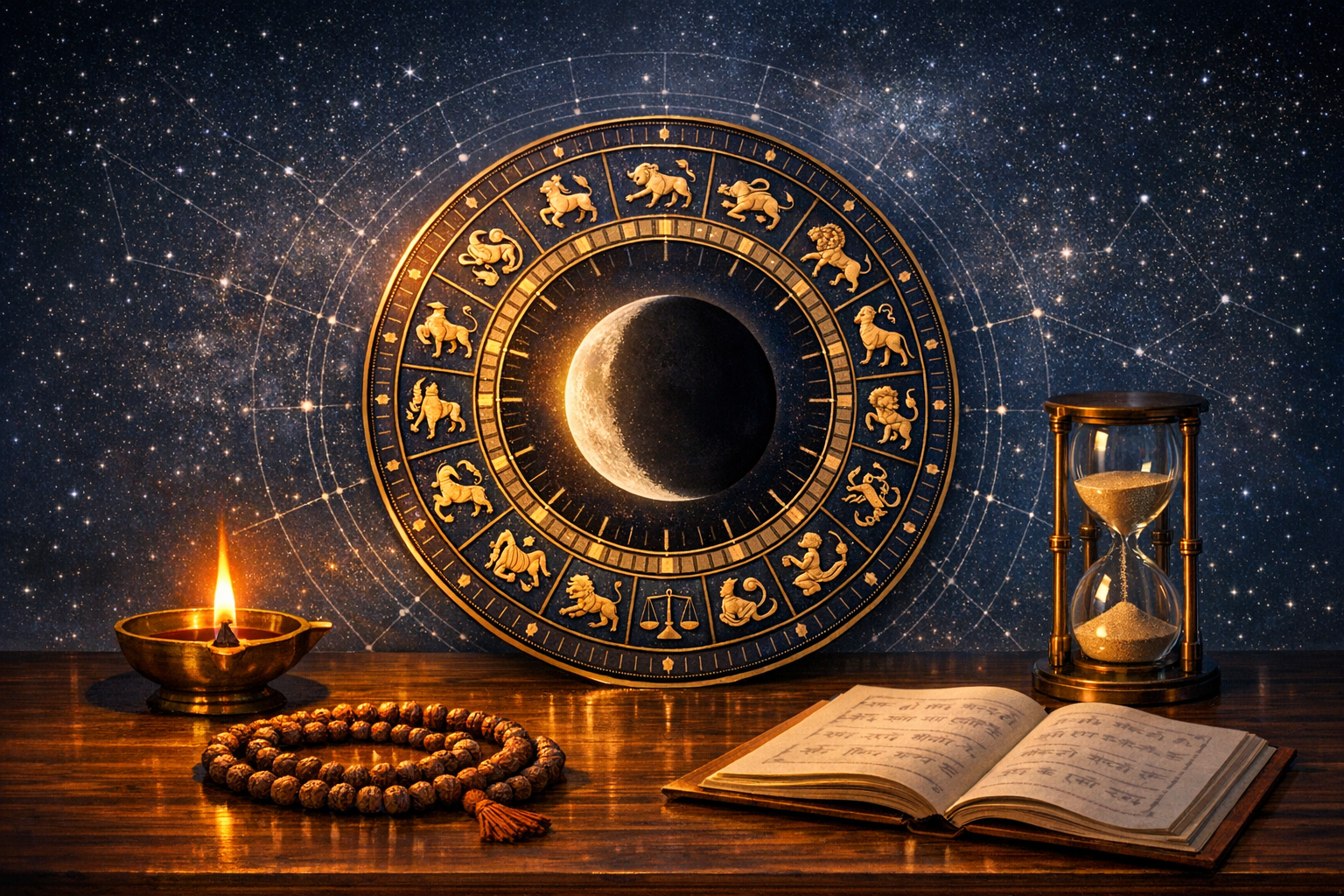
In most regions, the day begins under Krishna Paksha Chaturdashi tithithe fourteenth lunar day of the waning phaseuntil about 07:30 local time. From that point, the tithi changes to Amavasya (the no‑moon day) and continues thereafter, as recorded in regional Panchang computations. Exact end times are location‑dependent and may vary slightly between almanacs.
Technically, a tithi is defined by 12° increments in the Moon–Sun angular separation; because this relative motion is non‑uniform, any tithi can span roughly 19–26 hours and may begin or end between sunrises. This astronomical basis explains why Panchang values (including tithi start/end) can differ by city, observatory, and calculation conventions.
Krishna Paksha Chaturdashi, occurring immediately before Amavasya, is traditionally reserved for introspection, restraint (upavasa/vrata), and worship of Shiva. The monthly Masik Shivaratri also falls on Krishna Paksha Chaturdashi, although the widely celebrated Maha Shivaratri corresponds specifically to Magha Krishna Chaturdashi. On March 18, 2026, the Chaturdashi window is brief in the early morning, favoring pre‑dawn japa, deepa‑pradipana, and quiet meditation before the onset of Amavasya.
Amavasya is revered across Hindu traditions as a time for inward turning, sattvic diet, lamp‑lighting at dusk, and Pitru‑tarpana (ancestral remembrance) where appropriate. Many households combine silence, scriptural reading, and dana (charitysuch as grains, sesame, or clothing) to channel the day’s contemplative quality. While new material undertakings are often deferred to brighter lunar phases, spiritual pursuits and study are especially encouraged.
Good Time (Shubh Muhurat) on this date is determined locally. Abhijit Muhuratcentered on true local noonis generally auspicious, though on Wednesdays it nearly coincides with Rahu Kalam, which many traditions avoid for initiations and signings. A practical rule of thumb is to divide daylight into eight equal parts; on Wednesdays, Rahu Kalam occupies the fifth segment (for example, about 12:00–13:30 if sunrise is 06:00 and sunset is 18:00). Choose muhurta outside Rahu Kalam and outside any local Durmuhurtam for beginnings; reserve Amavasya hours for prayer, reflection, and remedial rites.
Choghadiya may be used alongside muhurta selection. Practitioners gravitate toward Amrit, Shubh, and Labh choghadiyas and typically avoid Rog, Kaal, and Udveg for launches and travel. Because all such periods are computed from local sunrise and sunset, consulting a city‑specific Panchang remains essential for precision.
Nakshatra and Rashi refine the day’s texture in the Panchang. Nakshatra (one of 27 lunar mansions) shapes the qualitative field for tasksfor example, softer constellations suit study and seva, whereas sharper constellations favor decisive actionwhile Rashi (the Moon’s sign, or Chandra Rashi) colors moods and interpersonal dynamics. As these values shift with time and longitude, refer to a regional almanac for the exact Nakshatra and Moon Rashi prevailing on March 18, 2026.
Yoga and Karana complete the five limbs of the Panchang (tithi, vara, nakshatra, yoga, karana). Yogaderived from the combined longitudes of the Sun and Moonhighlights the day’s overarching energy signature; Karanahalf a tithimarks shorter practical windows for starting or concluding tasks. Traditional guidance prefers fixed Karanas for stability‑seeking actions and movable Karanas for travel and trade, though local context and intention matter.
Regional month naming can differ. In the Purnimanta system (common in North India) lunar months end on Purnima, whereas in the Amavasyanta system (common in parts of South India) they end on Amavasya. Consequently, the Amavasya beginning on March 18, 2026 may be associated with different month names across regions while still reflecting the same astronomical moment.
Practical rhythm for the day can be arranged accordingly: early pre‑dawn under Krishna Paksha Chaturdashi for japa and sankalpa; mid‑morning administrative tasks outside Rahu Kalam; and evening Amavasya observances for tarpanam, quiet reading of Bhagavad‑Gita or Upanishads, and reflective meditation. Many families find that a small, steady light at dusk and a brief collective prayer infuse the home with calm and clarity.
Across the broader dharmic spectrum, analogous practices reinforce shared values. Theravada Buddhist communities mark the new‑moon Uposatha with precepts and meditation; Jain practitioners observe pratikramana and dana with emphasis on ahimsa; Sikh households, while not lunar‑calendar bound for core observances, center the day on simran (remembrance), paath, and seva. These complementary expressions demonstrate unity in diversityhonoring truth, compassion, and self‑discipline.
Because Panchang elements are sensitive to location, any published time such as “Krishna Paksha Chaturdashi till about 07:30” should be validated against a trusted, city‑specific almanac. Minor differences can arise from sunrise conventions, time‑zone treatment, and whether mean or apparent longitudes are used in calculation.
In summary, March 18, 2026 begins with Krishna Paksha Chaturdashi and transitions to Amavasya, inviting a day of restraint, learning, remembrance, and unity. Grounding decisions in tithi, Nakshatra, Rashi, and local muhurta yields a balanced schedule, while aligning observances with the shared dharmic ethos strengthens familial harmony and cultural continuity.
Inspired by this post on Hindu Blog.