“Anyone who carries Krishna within himself, constantly, can go anywhere and turn the place into a sacred pilgrimage.” – Letter to Rupanuga, July 03, 1968. This insight frames the way public book tables in the United Kingdom and Ireland have become living altars, where devotion, discipline, and community engagement converge in everyday spaces.
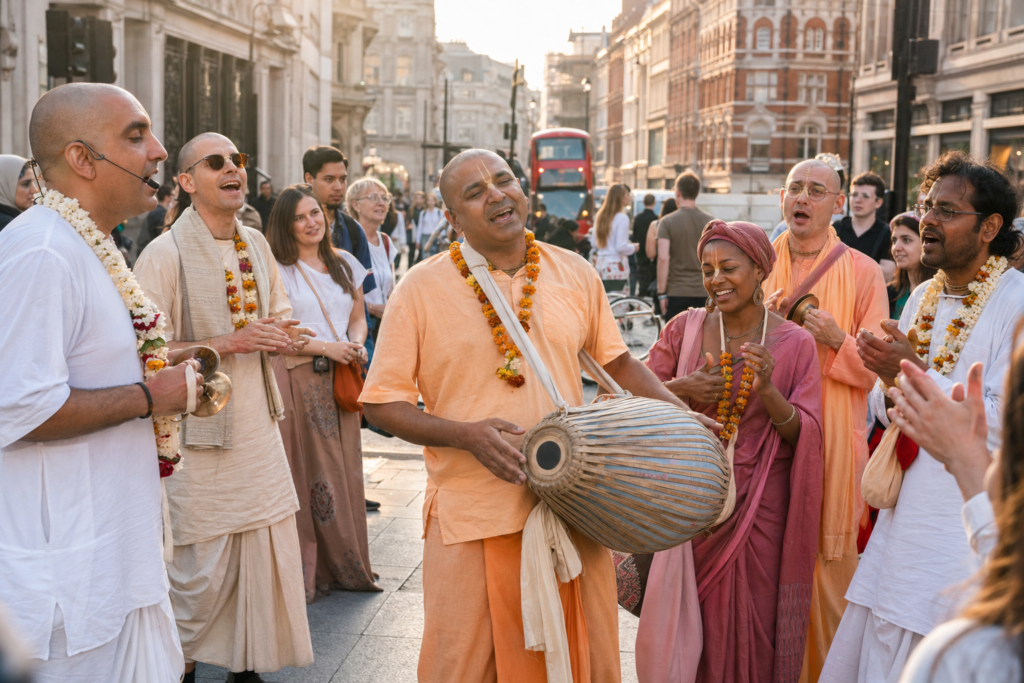
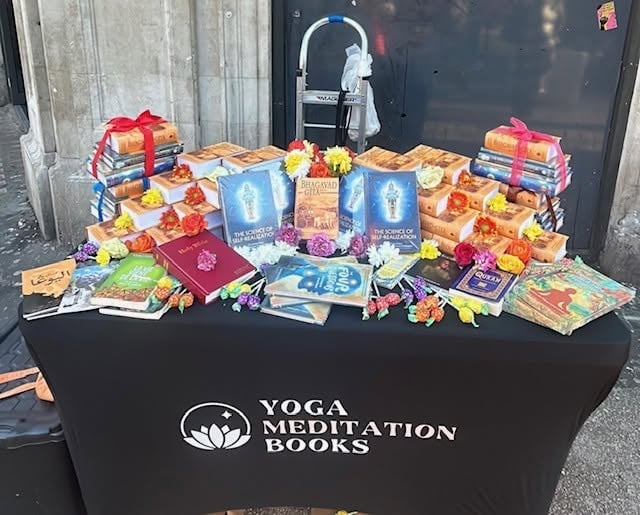
Marathon book distributionoften associated with ISKCON (International Society For Krishna Consciousness)does more than place sacred texts like the Bhagavad Gita into eager hands. It curates an atmosphere of bhakti through orderly displays, incense, kirtan, and respectful dialogue, transforming ordinary sidewalks into sanctified spaces. These temporary altars illustrate how Hindu spirituality and dharma can animate public life with reverence, inclusivity, and service.
Beyond the ritual aesthetics, the practice cultivates meaningful social contact. Passersby pause, inquire, and reflect; volunteers respond with calm, evidence-informed explanations and open-hearted listening. The reverence for sacred texts and the ethic of seva expressed here resonates across the broader dharmic familyHinduism, Buddhism, Jainism, and Sikhismwhere scripture, contemplation, and compassionate action are shared values. This ethos supports unity in spiritual diversity and strengthens religious harmony without proselytizing or exclusion.
Many who encounter these tables describe a subtle shift in the feel of the streetan emergent sense of pilgrimage, even amid the pace of city life. Conversations about karma, mindfulness, and ethical living become accessible and relatable. For diaspora communities, these public moments affirm identity and belonging; for newcomers, they offer an inviting introduction to bhakti tradition, Krishna devotion, and the timeless guidance of texts such as the Bhagavad Gita.
Viewed academically, the “altar” effect is a lived example of embodied spirituality: sacred texts, ritual sound, and orderly presentation reconfigure public space into a forum for reflection and moral imagination. The practice also fosters community cohesion by encouraging gentle dialogue across backgrounds, demonstrating that devotion can be both deeply personal and socially constructive.
In essence, the Marathon Book Tables operationalize the 1968 insight by carrying the sacred inwardly and expressing it outwardlyturning open squares, market corners, and campus paths into temporary sanctuaries. This simple, disciplined service shows how unity, compassion, and wisdom can be shared in a plural society, honoring the dharmic spirit that invites many paths toward the same inner transformation.
Inspired by this post on Dandavats.