Across the long arc of Indian history, Dharmasastra literature offered a pragmatic and principled framework for social reintegration after coercion or rupture. Within this corpus, the Dēvala-Smriti stands out for its early, systematic treatment of Parāvartana (return) and Mlēcchita-śuddhih (purification). Pandurang Vaman Kane’s scholarly appraisal highlights its enduring relevance: composed before the era when mass, forcible conversions became a sustained historical reality, it anticipated future challenges and articulated guidelines that later digest writers and commentators repeatedly cited.
Viewed in a focused lens, the Mlēcchita-śuddhih chapter reads like a self-contained manual whose influence radiates through subsequent Dharmasastra works that incorporated Parāvartana as a normative component of social healing. D. R. Bhandarkar notes that Dēvala’s procedures for the purification of women forcibly violated and impregnated also appear in the Atri-Smriti and Atri-Samhita, indicating a wider juridical and ethical consensus within the tradition.
Evidence of the Dēvala-Smriti’s intellectual longevity appears in Vijnaneshvara’s celebrated commentary on the Yājñavalkya-Smr̥ti (12th century CE). Writing in the court of the Kalyana Chalukya ruler Vikramaditya VIwell before the major Turko-Afghan campaigns extended deep into DakshinapathaVijnaneshvara found it necessary to address Mlēcchita-śuddhih, including the status of women subjected to assault. This early legal vigilance signals a leadership ethos within Hindu society that recognized the need for compassionate reintegration while safeguarding social order.
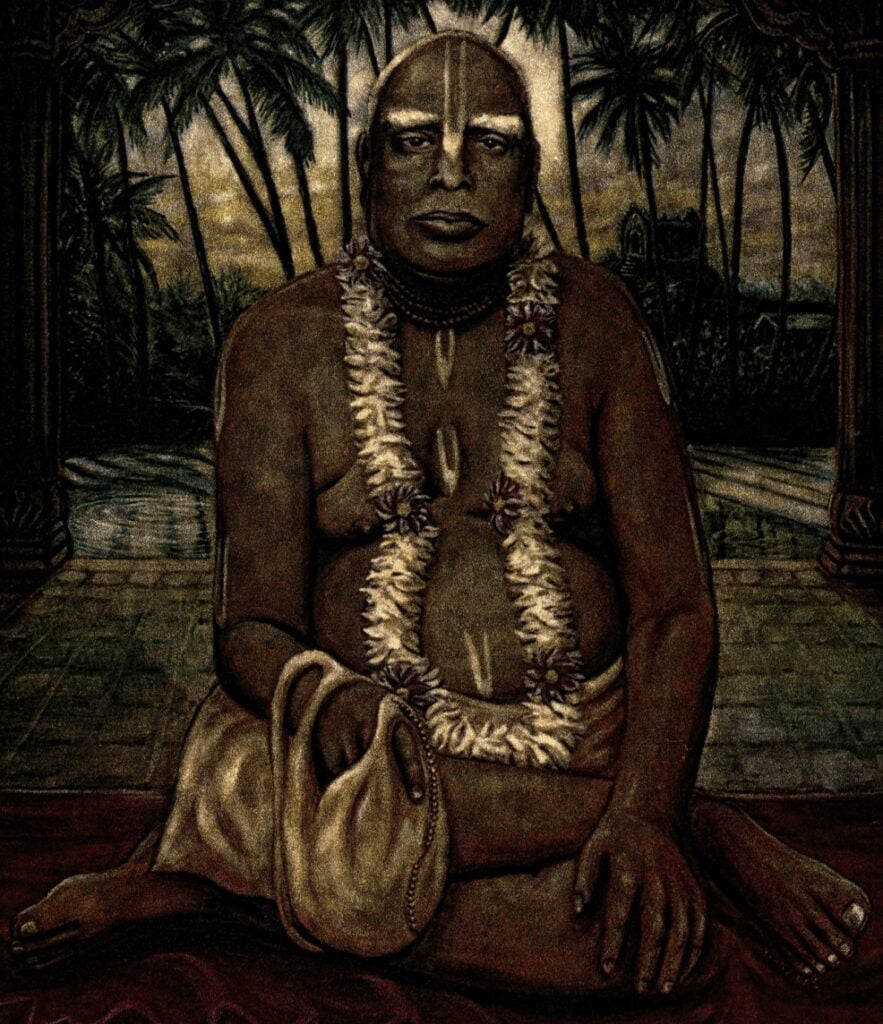
Vidyāranya Swami, spiritual inspiration for the Vijayanagara Empire and author of the Pancadasi, underscores the same principle through a philosophical analogy: “…just as a Brahmana [read: Hindu] seized by Mlecchas and afterwards undergoing the appropriate prāyaścitta does not become confounded with Mlecchas ( but returns to his original status…), so the Atman is not really to be confounded with the body and other material adjuncts.” P. V. Kane aptly observes that this establishes Vidyāranya’s acceptance that a person, though enslaved and degraded by external force, could be ritually and socially restoreda view deeply aligned with the restorative heart of Sanatana Dharma.
From the earliest incursions associated with Muhammad bin Qasim, Parāvartana and Śuddhi efforts manifested periodically across Bharatavarsha. During centuries when raiders lacked the capacity to consolidate durable rule, reintegration was swifter, and community memory remained more intact. The equations changed with the emergence of the Delhi Sultanate. As conquests spread and defensive wars multiplied, Śuddhikaraṇa became steadily harder, and a defensive social mindset took root.
By the time of Akbar, stratification within Hindu society had become intricatean interlaced matrix of varṇas, upavarṇas, jātis, upajātis, upopajātis, and kulaseach keen to preserve internal customs. Additional restrictions, such as prohibitions related to sea voyage, reinforced inwardness. Over time, a later orthodoxy hardened into an exclusionary premise: that one must be born Hindu and that a departurewhether by force, fear, or deceitwas final. This stance, at odds with earlier Dharmasastra provisions, foreclosed paths of return and led to several missed opportunities for social reconciliation.
Two illustrative episodes clarify the consequences. The first concerns the ancient Mewati HindusRajput-affiliated communities across parts of Rajasthan, Haryana, and Delhiwho served at different times under the later Chalukyas, Rashtrakutas, Pratiharas, and Chahamanas. Chroniclers record large-scale killings under Sultan Balban, with figures of heavy casualties near Delhi over a brief period. Despite prolonged resistance, many were eventually converted under duress. In the 20th century, religious reform movements further consolidated new identities. Today, the Meos are predominantly Muslim; the long-term effect has been a fading ancestral memory of their earlier social and ritual frameworks.
The second episode involves the Malkana Rajputs and the modern Śuddhi efforts connected with the Arya Samaj, captured in D. R. Bhandarkar’s 1933 report. “A few years ago, when the celebrated Arya Samaj apostle, Swami Sraddhananda was living, the Hindu world was taken by surprise when the news spread that villages after villages which had been inhabited by the Muhammadan Malkana Rajputs were being reconverted to Hinduism…It is true that the Malkana Rajputs were originally converted to Muhammadanism by compulsion, that they were all along following their original Hindu customs and practices inspite of their outward change of faith, and that they were always willing to come back into the Hindu fold provided they were allowed to do so.”
The initiative provoked resistance from multiple quarters. Bhandarkar continues: “The Sanatanists and the orthodox Hindus began to shake their heads and question whether such a step was in consonance with the scriptures as it certainly was not in consonance with the practice… Although…things were highly in favour of the Malkana Rajputs, their actual reconversion to Hinduism shocked the orthodoxy of the Sanatanists and the High Priests of Hinduism who maintained that a Hindu to be a Hindu must be born a Hindu and that no religious rite could purify the fallen and re-admit them into the Hindu fold…When the Malkana Rajputs were being taken back into the Hindu fold, it created a great furore in the Hindu society.”
These accounts should be read not as invitations to reproach, but as historical prompts to recover inclusive, dharmic pathways already present in the tradition. Dēvala-Smriti, Vijnaneshvara’s exposition of Yājñavalkya-Smr̥ti, and Vidyāranya’s Pancadasi converge on a common principle: a person’s intrinsic dignity remains intact despite external coercion, and structured prāyaścitta and Śuddhi can re-knit social bonds. Such an approach harmonizes with the shared ethical sensibilities of Hinduism, Buddhism, Jainism, and Sikhism, where compassion, non-harm, and the possibility of moral renewal occupy a central place.
Reframing the Śuddhi and Ghar-Wapsi debate through this lens promotes unity among dharmic traditions while fostering respectful interfaith relations. Historically grounded, ethically clear, and socially healing, this orientation resists divisive fatalism. It invites communities to cultivate memory without rancour, to restore without exclusion, and to prioritize human dignity alongside scriptural fidelity. In doing so, it recovers a dharmic confidencerooted in Sanatana Dharma’s own texts and exemplarsthat can guide contemporary dialogue on identity, return, and reconciliation.
Inspired by this post on Dharma Dispatch.