
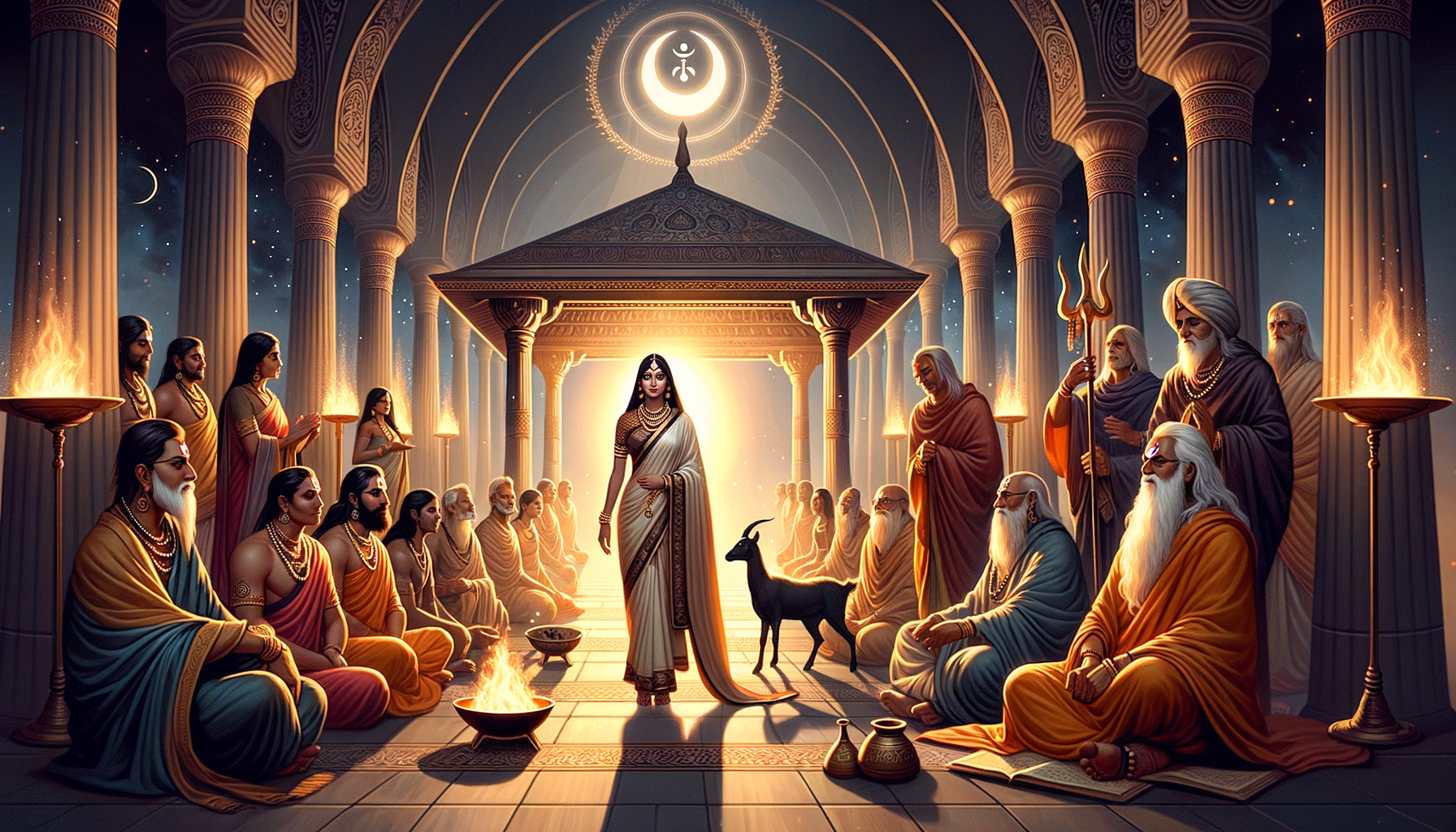
When Bhishma sought to understand why Sati relinquished her life, Sage Pulastya provided a measured account that situates the episode within the ethical and spiritual horizons of the Puranas. The narrative is anchored in a grand yagya convened by Daksha Prajapati, whose deliberate exclusion of Lord Shiva set the stage for a profound exploration of dharma, dignity, and the perils of ahankara.
Daksha Prajapati organized a magnificent yagya, inviting luminaries of the cosmos while pointedly excluding Shiva. The proceedings were presided over by eminent sagesVashishtha, Angika, Brihaspati, and Naradasignaling both ritual grandeur and social authority. The omission of Shiva, however, revealed a deeper fault line: an assertion of status that ignored the unity of the divine and the plurality of worship.
Upon learning of the assembly, Sati expressed a natural desire to visit her paternal home. While Shiva counseled restraint, mindful of Daksha’s hostility, Sati attended nonetheless, guided by filial sentiment and the ethical clarity that belonging should not be conditional on approval. At the venue, Daksha’s disdain and public disparagement of Shiva affronted her dignity and the sanctity of devotion.
Confronted with open insult to her chosen path and her consort, Sati enacted a grave vow, relinquishing her body through yogic resolve in the very context of the yagya. This act, presented in the Puranic literature not as impulsive despair but as a solemn repudiation of adharma, underscored that ritual without reverence empties sacrifice of meaning.
Shiva’s response combined grief with cosmic responsibility. From his matted locks arose Vīrabhadra (and, in several retellings, Bhadrakali), who dismantled the arrogant spectacle, brought the yagya to a halt, and punished those who had shamed dharma; Daksha was beheaded. Yet the narrative does not end in vengeance: moved by intercession and guided by compassion, Shiva restored Daksha to lifenow with the head of a goatallowing the yagya to conclude properly and cosmic balance to be reaffirmed.
Read in an academic light, this account neither advances sectarian triumphalism nor condones violence; rather, it warns against pride and exclusion in matters of faith. The moral center of the episode rests on humility, the recognition of multiple valid paths to the divine, and the imperative that social and ritual order must be grounded in respect. The transformation of Daksha’s head symbolizes the taming of ego so that community rites may serve truth rather than vanity.
Across dharmic traditions, the message resonates with shared ethical touchstones: humility and non-ego in Buddhism, restraint and responsibility in Jainism, seva and truthful living in Sikhism, and reverence for diverse forms of the divine in Hinduism. The story thus becomes a bridge for religious harmonyaffirming unity in diversity, honoring plurality in worship, and advocating dialogue over derision.
On a human level, the situation mirrors experiences of familial estrangement, social exclusion, and the pain of being dishonored for one’s convictions. The narrative invites communities to prefer empathy over humiliation, guidance over grandstanding, and reconciliation over rancor. For contemporary readers, Sati and Daksha Yagya offers a durable lens for conflict resolutionwhere dignity, mutual respect, and ethical accountability safeguard both relationships and the sacred.
In the arc of Hindu scriptures and Puranic storytelling, the Sati and Daksha Yagya episode endures as a touchstone of spiritual insight. Its lessonsspanning devotion, duty, and social ethicsspeak to present needs: building religious harmony, curbing ego in public life, and upholding the unity of a shared dharmic civilizational ethos.
Inspired by this post on Hindu Pad.










