Pingalamatasituated within the Bhairava stream of the Shaiva Agamasemerges as a precise manual of Linga worship and temple consecration, integrating theology, ritual science, and architectural norms. Closely related to the Brahmayamalatantra, it delineates how sacred sound, image, and space are configured to manifest Shiva’s presence in Hindu temples. As a touchstone in the literature of Hindu scriptures, its prescriptions remain central to living Shaiva practice and to the broader Hindu way of life.
Textual and historical analysis places Pingalamata in the early medieval period (circa 7th–10th centuries CE), when tantric innovation and temple construction accelerated across South Asia. The work likely drew upon earlier ritual strata and fed into later compilations, displaying the modular, transmissible style characteristic of Agamic handbooks. Surviving references and manuscript traces suggest circulation among North and South Indian lineages, with localized commentaries tailoring its protocols to regional temple ecologies.
Within the Bhairava tradition, Pingalamata complements allied texts by coordinating mantra, nyasa, mudra, yantra, and mandala into a single operational grammar. This ritual engineering ensures that each elementsound, gesture, visualization, material, and spatial geometrycooperates to render the Linga a charged axis of consciousness. In doing so, the text bridges Vedic liturgical sensibilities with tantric interiorization, embodying the inclusivity and adaptability that mark dharmic traditions.
At its core stands a clear theology of the Linga as the aniconic yet all-containing sign of Shiva, the pivot where creation, sustenance, dissolution, concealment, and grace converge. The Linga functions simultaneously as cosmogram and sanctum-focusing device, aligning the devotee’s awareness with Shiva’s fivefold activity. In practice, this theology is not abstract: devotees routinely attest that the cadence of japa, the cool touch of stone, and the scent of bilva leaves converge into a palpable stillness before the shrine.
Pingalamata pays attention to materials and forms, recognizing stone, metal, crystal, wood, and naturally occurring banalingas, each with distinct ritual affordances. The Linga rests upon a yoni-pitha configured for libations, with Nandi oriented along the temple axis and subsidiary shrines completing the protective circuit. Dimensional canons, orientation, and proportionality anchor these installations so that sanctum (garbhagriha), threshold, and processional paths interlock harmoniously.
The mantra backbone of Linga worship features the Panchakshari Namah Shivaya, Bhairava mantras, and seed syllables that activate the deity’s presence. Nyasa maps these mantras onto the worshipper’s body, mudras seal intention, bhavana guides visualization, and regulated breath steadies attention; together they produce a reliable ritual field. In this respect, Pingalamata demonstrates how contemplative technologies support temple liturgy rather than compete with it.
Daily service (nitya-puja) unfolds as a carefully sequenced protocol: preliminary purification (shuddhi), invocation (avahana), upacharas, and abhishekam with water, milk, curds, honey, and ghee (panchamrita), followed by sandal paste, bilva leaves, incense, lamp, and naivedya. Concluding rites disperse blessings through deepa-aradhana, tirtha, and prasada, ensuring that the sanctum’s concentrated energy nourishes the wider community. The clarity and repeatability of the sequence embody the Agamas’ emphasis on procedural integrity.
Special observances intensify this baseline. On Maha Shivaratri, extended japa, Rudrabhisheka, homa, and nightlong vigil condense practice into a single arc of heightened attention. Naimittika (occasional) and kamya (votive) rites respond to seasonal rhythms and personal intentions, revealing a liturgical calendar where cosmic time and human time synchronize.
A distinctive strength of Pingalamata lies in its instructions for prana-pratishtha, the rite of installing and enlivening images and Lingas. The process begins with site selection and vastu diagnostics, continues through ground-breaking and garbhanyasa (depositing mantric and material seeds), and culminates in installation (sthapana) and protective sealing. The emphasis is on rendering the temple a living organism whose heart is the sanctum and whose breath circulates through corridors, courts, and gateways.
Garbhanyasa typically embeds mantra-inscribed tablets, precious grains, herbs, and metals in a grid that mirrors the vastu-purusha mandala, linking earth energies with the temple’s vertical spine. Astabandhanathe traditional compound used to secure the imageserves both structural and symbolic ends, adhering the Linga to its base while signifying the bond between immanence and transcendence. Through these measures the sanctum is prepared to sustain continuous worship without energetic depletion.
Kumbhabhisheka crowns the consecration. Ritualists charge water-filled kalashas with mantras, carry them in procession, and bathe the temple’s finial, sanctum, and images, distributing sanctity from summit to foundation. Installation of the dhvaja-stambha and bali-pitha, circuit offerings, and community participation make the event both a technical completion and a civic festival, affirming that temple consecration binds people, place, and presence.
Architecturally, Pingalamata’s prescriptions dovetail with Vastu Shastra to determine axis, orientation, and proportional harmonies. The garbhagriha anchors the plan; antarala, mandapa, and prakara extend the experiential gradient from stillness to movement. Sthapatis (architects) and acharyas (ritual specialists) collaborate so that measurement canons, iconographic placement, and liturgical flow produce a coherent sacred environment.
Beyond blueprint and rite, the text articulates a full temple life-cycle: inauguration, daily operation, periodic renovations, and reconsecrations in response to damage or interruption. Safeguards for image movement, fire safety, and ritual purity are framed not as rigidity but as stewardship, aligning spiritual responsibility with practical governance. The outcome is resiliencetemples endure because their care is systematized.
In its conceptual neighborhood, Pingalamata stands close to the Brahmayamalatantra (also known as Picumata), sharing Bhairava-centered mantras, mandalas, and yogini circuits. Comparative reading shows overlapping taxonomies of mantra, consistent visualization templates, and similar methods of sealing the ritual space. Rather than mere borrowing, this reflects a shared ritual research program in which multiple texts refine a common toolkit.
Philosophically, the manual presupposes a Shaiva vision in which consciousness is primary and the world is its scintillation. The Linga condenses this insight into touchable form, directing practice toward recognition rather than external appeasement. In concert with allied Shaiva streams, the text accepts plurality of methodsmantra, meditation, service, studyso that practitioners of diverse dispositions can converge upon the same realization.
Ethically and socially, temple worship is framed as loka-sangrahathe holding together of society through shared rhythms of service and generosity. Kitchens, wells, learning, music, and community assemblies orbit the sanctum, translating metaphysics into mutual care. This integrative vision resonates across dharmic traditions, where spiritual attainment is measured by the welfare it radiates.
Inter-dharmic resonances are noteworthy. Buddhist traditions employ mandala, mantra, and abhisheka in consecratory contexts; Jain communities conduct pratistha of Jina images with precise mantras and architectural care; Sikh practice honors the Guru Granth Sahib through prakash and sukhasan, sound-centered devotion, and deep respect for sanctified space. These parallel grammars affirm unity in diversity without erasing the distinctive gifts of each path.
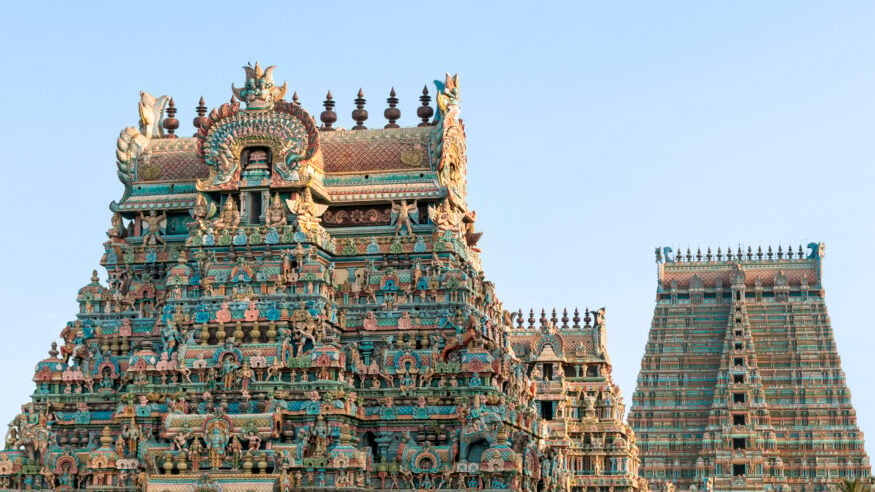
The geographical reach of Agamic paradigms that Pingalamata codifies is visible from the Deccan and Tamil country to Odisha and the Himalayas, and even into Southeast Asia. Monumental ensembles such as Angkor Wat temple Cambodia bear witness to how Shaiva cosmograms and consecration science inspired far-reaching experiments in sacred architecture. Across regions, local idioms adapt the core protocols while maintaining their recognizable spine.
In contemporary practice, prana-pratishtha and kumbhabhisheka continue to anchor temple inaugurations and renewals in India and the global diaspora. Training programs for archakas, collaborative work between sthapatis and conservators, and the digitization of Sanskrit manuscripts strengthen the transmission chain. Sustainability initiativeswater stewardship for abhishekam, responsible sourcing of materials, and inclusive accessdemonstrate how ancient wisdom meets present needs.
Methodologically, careful study of Pingalamata benefits from triangulation: philological reading, observation of living rites, and conversations with hereditary lineages. Such an approach respects both text and practice, recognizing that Agamas are designed for enactment. Ritual commentaries, temple manuals, and oral instructions preserve nuances that bare translations can miss.
For ritual planners and trustees, the manual suggests a pragmatic checklist: assess site and orientation; align dimensions to the chosen canon; ensure garbhanyasa integrity; plan abhishekam logistics and water recycling; schedule nitya-puja staffing; and map community engagement. For scholars, it offers a window into the interplay of metaphysics and materiality, where theology is tested in the laboratory of liturgy. For devotees, it provides a repeatable path to inward quietude amid communal belonging.
The aesthetic power of the system is immediate. Stepping into a garbhagriha cooled by stone, hearing the steady cadence of bell and mantra, and receiving the cool stream of abhishekam water upon the Linga, many experience a calibrated descent into stillness. Such sensory orchestration is not incidental; it is the intended outcome of aligning form, sound, and space according to Agamic science.
By emphasizing precise procedure while welcoming multiple temperaments, Pingalamata embodies a dharmic pluralism that sees difference as resource rather than threat. Its alliance with the Brahmayamalatantra extends this inclusivity, presenting a shared ritual language legible across Hinduism’s Shaiva, Shakta, and Smarta modalities and resonant with sister traditions of Buddhism, Jainism, and Sikhism. The result is a culture of reverence that sustains both inner transformation and social cohesion.
In sum, Pingalamata endures because it unites vision with method. It teaches how to build, enliven, and care for temples so that the presence of Shiva is not a matter of chance but of repeatable craft, ethical service, and contemplative depth. Through this union of knowledge and practice, the text continues to guide Linga worship and temple consecration as living pillars of the Hindu way of life.
Inspired by this post on Hindu Blog.