

Vraj Vihari dasa’s morning Bhagavatam class on Nirjala Ekadashi presents more than a devotional lecture connected to a sacred fasting day. It becomes a study in disciplined remembrance, scriptural hearing, Vaishnava practice, and the way sacred observances can transform ordinary time into a field of spiritual inquiry. The original class, shared through The Temple at Bhakti Center, centers on a day that is especially significant within the broader Ekadashi tradition and within the devotional culture shaped by the Srimad Bhagavatham, Bhagavata Purana, Krishna consciousness, and bhakti.
Nirjala Ekadashi is traditionally observed on the Ekadashi tithi of the Shukla Paksha, the waxing lunar fortnight, in the month of Jyeshtha. The word Nirjala literally indicates an observance without water, and this has made the vrata famous as one of the most demanding forms of Ekadashi fasting. In Vaishnava communities, it is also remembered as Pandava Ekadashi, Bhima Ekadashi, or Bhimaseni Ekadashi, because the traditional narrative connects it with Bhima, the powerful Pandava who found regular fasting difficult and was instructed to observe this one austere fast with seriousness and devotion.
The theological importance of Nirjala Ekadashi does not rest merely on the physical difficulty of abstaining from food and water. Its deeper meaning lies in the reorientation of the senses. Ekadashi, in the Vaishnava understanding, is a discipline that gathers the mind away from habitual consumption and directs it toward hearing, chanting, worship, remembrance, charity, and service. The fast is therefore not a performance of denial for its own sake. It is a practical method for placing the body, speech, and mind under the guidance of dharma.
A morning Bhagavatam class is especially appropriate on such a day because the Srimad Bhagavatham repeatedly emphasizes śravaṇam, sacred hearing, as a foundational discipline. In the well-known teaching of Prahlāda Mahārāja, devotional life is described through nine processes: śravaṇam, kīrtanam, smaraṇam, pāda-sevanam, arcanam, vandanam, dāsyam, sakhyam, and ātma-nivedanam. These terms refer to hearing, chanting, remembering, serving the Lord’s feet, worshiping, offering prayers, serving, cultivating divine friendship, and surrendering the self. A Bhagavatam class brings these principles into lived practice because it turns listening into a devotional act.
The class also demonstrates why the Bhagavata Purana remains central to Hindu spirituality and Sanatana Dharma. It is not only a narrative scripture; it is a theological, ethical, and contemplative text. It examines devotion through stories of kings, sages, householders, renunciants, children, warriors, and seekers. This range matters because bhakti is not confined to a single social location or temperament. It can be practiced by the scholar, the worker, the parent, the ascetic, the artist, the administrator, and the ordinary person attempting to live with sincerity in a distracted age.
Nirjala Ekadashi is often described as granting the spiritual merit of observing all Ekadashis in the year, but this should be understood with care. The point is not mechanical arithmetic, as though austerity automatically produces spiritual realization. The tradition places emphasis on intention, remembrance, humility, and devotion to Lord Vishnu and Lord Krishna. A severe fast without humility can become pride. A modest observance performed with sincerity can become spiritually meaningful. This distinction is essential for a balanced understanding of Hindu fasting traditions.
The story of Bhima gives the observance an unusually relatable character. Bhima is not portrayed as weak; he is one of the strongest figures in the Mahabharata. Yet his difficulty with fasting makes him recognizably human. His example suggests that spiritual life does not demand pretending to have no limitations. Instead, it asks that limitations be acknowledged honestly and brought under wise guidance. Vyasa’s instruction to Bhima shows that dharma often works through tailored discipline rather than abstract severity.
This makes Nirjala Ekadashi both demanding and compassionate. Its austerity is real, but the story behind it recognizes that people have different capacities. In contemporary life, this point has practical importance. Some devotees may observe a full nirjala fast; others may adjust due to age, health, medical needs, climate, pregnancy, work demands, or other responsible considerations. The spirit of Ekadashi is not lost when care, medical prudence, and humility guide practice. Dharma is not recklessness; it is disciplined alignment with truth, responsibility, and devotion.
The technical structure of Ekadashi practice also deserves attention. Ekadashi falls twice each lunar month, once in Krishna Paksha and once in Shukla Paksha. Traditional observance often includes preparation on Dashami, fasting or simplified eating on Ekadashi, and parana, the regulated breaking of the fast, on Dwadashi. The details vary by sampradaya, region, family practice, temple calendar, and local sunrise calculations. This is why serious practitioners often consult a reliable panchang or temple calendar rather than relying only on a generic civil date.
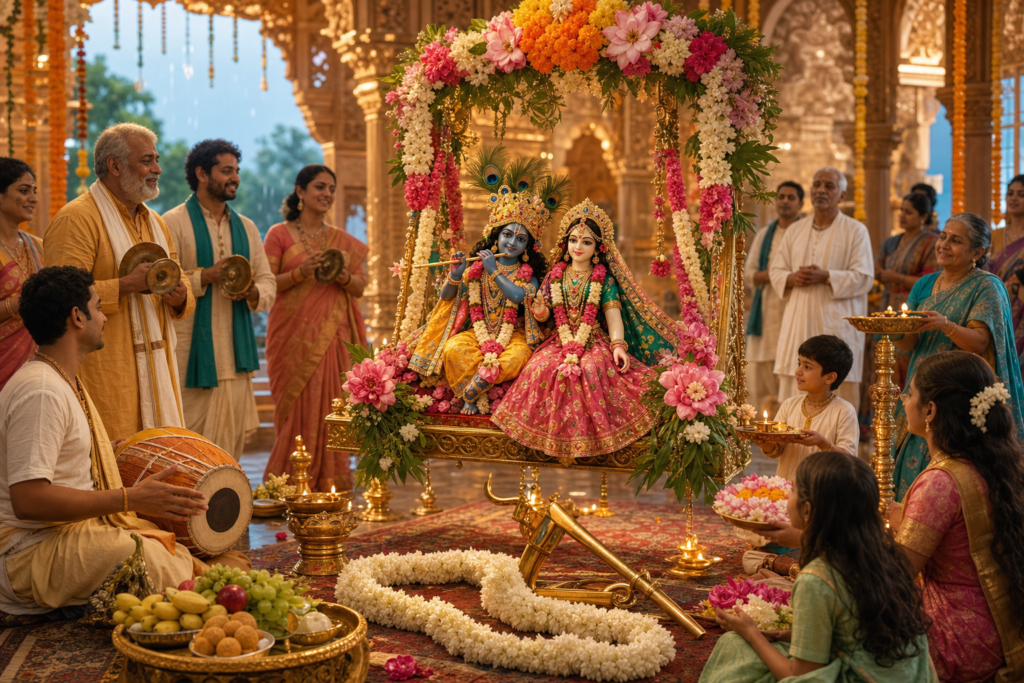
Within Vaishnava practice, Ekadashi is commonly associated with abstaining from grains and beans, increased japa, kirtan, study of scripture, temple worship, and acts of charity. Nirjala Ekadashi intensifies this pattern by placing water itself at the center of renunciation. In a hot season, this is not a trivial act. It confronts the practitioner with dependence, thirst, impatience, and the fragility of bodily comfort. Properly understood, such discomfort is not meant to produce harshness. It is meant to produce awareness.
This is where the Bhagavatam class becomes pedagogically valuable. Hearing scripture while fasting changes the inner texture of the observance. The fast empties space; the Bhagavatam fills that space with meaning. Without hearing and remembrance, austerity can become silent strain. With hearing, it becomes disciplined receptivity. The devotee is reminded that the goal is not merely to complete a difficult day but to cultivate a more refined relationship with the senses, with time, with community, and with the Divine.
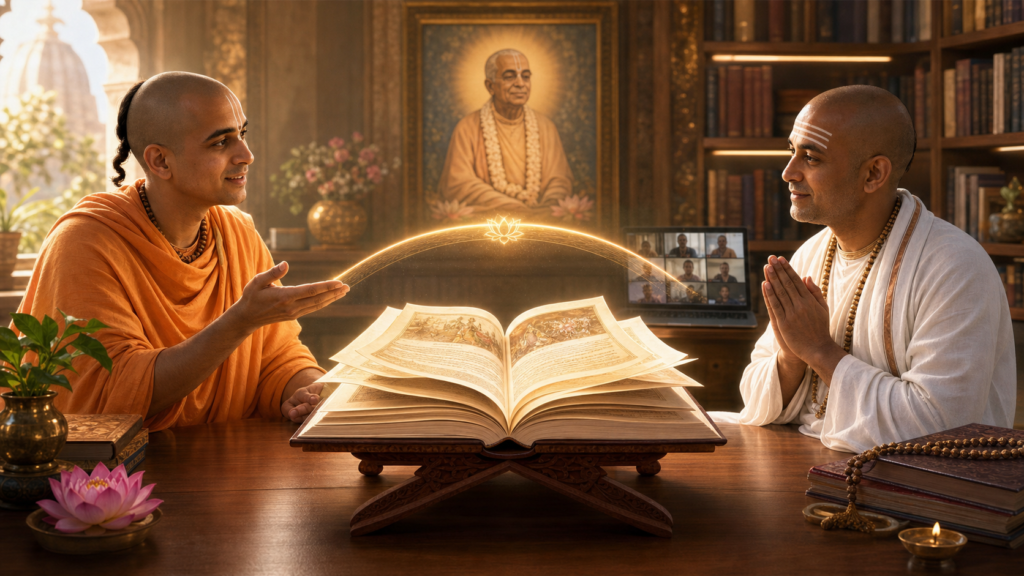
Vraj Vihari dasa’s role as a teacher in this setting is significant because the oral class is a living extension of the guru-shishya tradition. Hindu scriptures were never meant to remain only as printed objects or isolated quotations. They are studied, heard, questioned, remembered, sung, and applied. A morning Bhagavatam class preserves this oral and communal dimension. It allows scripture to enter the day before ordinary mental noise takes over, making the morning a time of orientation rather than reaction.
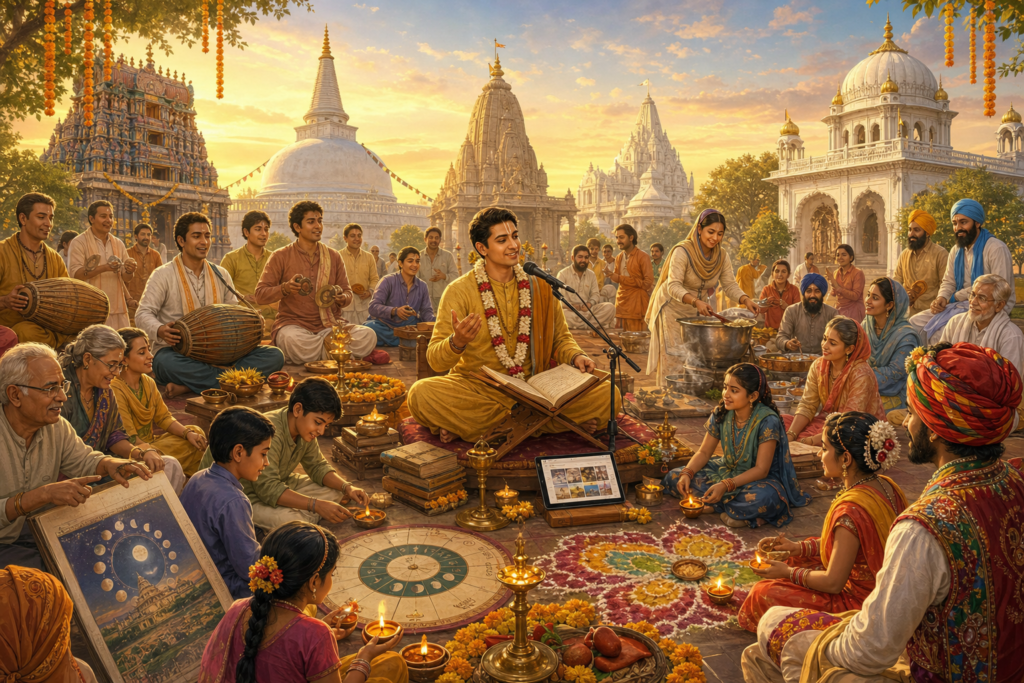
The emotional force of such a class comes from its simplicity. Devotees gather, listen, reflect, and bring the ancient text into the immediate challenges of modern life. The themes are old, but the anxieties are contemporary: distraction, overconsumption, loneliness, spiritual inconsistency, ethical fatigue, and the difficulty of maintaining discipline. Ekadashi speaks directly to these conditions because it asks the practitioner to pause patterns that usually run automatically.
From an academic perspective, Nirjala Ekadashi also illustrates how ritual creates embodied knowledge. A person may intellectually agree that the senses are difficult to control, yet fasting makes that truth immediate. A person may accept that water is precious, yet abstaining from it briefly can deepen gratitude for it. A person may believe that spiritual attention matters, yet a day organized around prayer and scripture reveals how often attention is normally scattered. Ritual, in this sense, is a disciplined form of learning.
The observance also carries an important ethical dimension through charity. Traditional accounts often associate Nirjala Ekadashi with giving water, food, clothing, fans, or other useful items. This may appear paradoxical: the devotee renounces water while giving water to others. Yet the symbolism is precise. Spiritual discipline should not narrow the heart. It should increase sensitivity to the needs of others. Fasting becomes incomplete if it produces self-absorption rather than compassion.
This point is valuable for the unity of dharmic traditions. Hinduism, Buddhism, Jainism, and Sikhism all preserve forms of discipline, remembrance, compassion, self-restraint, and service, even though their theologies and practices differ. Nirjala Ekadashi is specifically Vaishnava and Hindu in its ritual form, but its broader ethical lessons are intelligible across dharmic paths: the senses require training, consumption should be examined, humility matters, and spiritual practice should deepen concern for living beings.
The Bhagavatam tradition is especially rich in this regard because it does not reduce devotion to sentiment alone. Bhakti includes emotion, but it is also disciplined knowledge, ethical refinement, philosophical clarity, and community practice. The devotee is invited to love Krishna, but that love is educated through scripture, tested through conduct, and refined through service. A Bhagavatam class on Nirjala Ekadashi therefore brings together feeling and reason, ritual and theology, personal longing and collective memory.
The video associated with the class may be viewed as a contemporary form of śravaṇam. Digital media cannot replace the full experience of temple community, but it can extend access to those who are distant, ill, traveling, working irregular hours, or newly approaching the tradition. When used thoughtfully, a recorded Bhagavatam class can become part of a daily sādhana routine. It allows sacred teaching to travel beyond the temple room while still pointing listeners back toward disciplined practice and community life.
There is also a caution. Online spiritual content can easily become passive consumption. The value of a class is not fulfilled by clicking play. It becomes meaningful when the listener hears attentively, reflects, chants, studies, asks questions, and makes even a small adjustment in conduct. The Bhagavatam repeatedly challenges superficial religiosity. Its teachings call for transformation of the heart, not mere accumulation of religious information.
Nirjala Ekadashi, then, should not be interpreted as an isolated annual event. It functions as a concentrated lesson in the whole architecture of Vaishnava life. It points toward the regulation of appetite, the sanctification of time, the authority of scripture, the guidance of teachers, the centrality of Lord Vishnu and Lord Krishna, and the communal practice of devotion. Its difficulty gives it gravity, but its purpose is grace.
For contemporary practitioners, the most enduring lesson may be that spiritual seriousness is built through small, repeated acts of remembrance. A single fast can be powerful, but the deeper aim is a life gradually shaped by sacred priorities. Ekadashi interrupts routine so that routine can be rebuilt. The morning Bhagavatam class gives language, context, and philosophical depth to that interruption.
The class titled Morning Bhagavatam Class with Vraj Vihari dasa – Nirjala Ekadasi is therefore best understood as an invitation to study and practice together. It connects the austerity of Nirjala Ekadashi with the sweetness of bhakti, the discipline of fasting with the nourishment of sacred hearing, and the inherited wisdom of the Bhagavata Purana with the lived needs of modern seekers. In that synthesis, the observance becomes not merely a test of endurance, but a powerful opportunity for devotion, humility, and inner clarity.
Inspired by this post on Dandavats.







Leave a Reply
You must be logged in to post a comment.