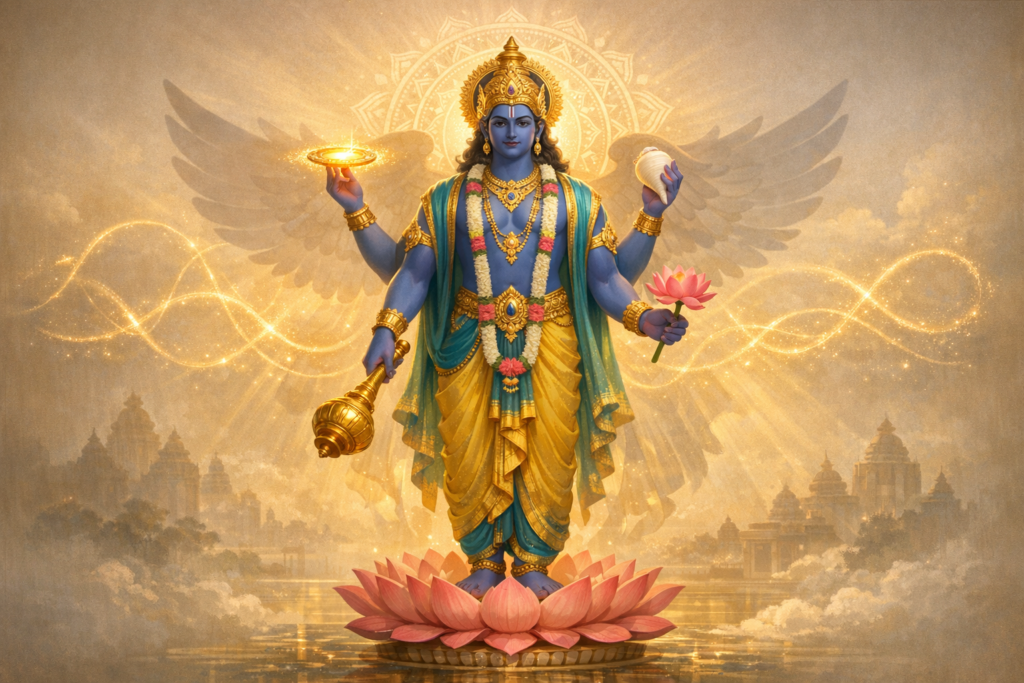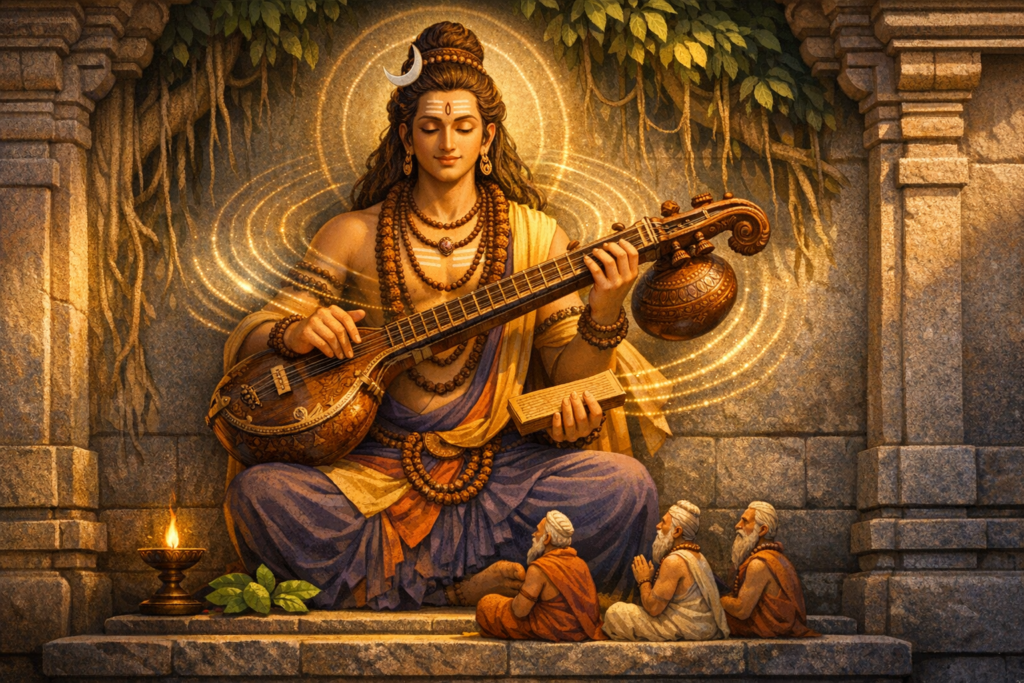
Nilasukta (Nila Sukta) occupies a meaningful niche within the Vedic tradition as a hymn transmitted in the Krishna Yajurveda and often cited in relation to the Taittiriya Samhita (4.4.12). It venerates Nila Devi, celebrated across Vaishnava theology as a compassionate and grace-bestowing consort of Vishnu. In devotional memory and practice, the hymn highlights how her presence pervades the cosmic luminaires—Surya (the Sun), Chandra (the Moon), and Agni (Fire)—bridging metaphysics and lived religion through a vocabulary of karuna (compassion), protection, and auspicious well-being.
Textually, Nilasukta is associated with the Taittiriya recension and circulates in liturgical anthologies alongside Sri Sukta and Bhu Sukta. The precise placement and verse count vary by manuscript lineage and regional paddhati (ritual handbooks), a reminder that the Vedic corpus has always been a living tradition of recitation rather than a static canon. In many South Indian Vaishnava settings, Nilasukta is preserved as part of daily or festival worship, reflecting the wide embrace of Vedic mantras within temple and household practice.
Within Vaishnava theology, Nila Devi is presented together with Sri (Lakshmi) and Bhu (Earth) as a triad of divine energies accompanying Vishnu. While Sri connotes auspiciousness and abundance and Bhu anchors nourishment and patient support, Nila Devi distinctly embodies karuna—tender compassion that engages the world without condition. This triadic lens, recognized by both Pancharatra and Vaikhanasa ritual systems to varying degrees, clarifies how Nilasukta functions: as a hymn that invites a compassionate presence to suffuse cognition, relationships, and the shared world.
The name “Nila” (blue, deep, or dark) signals layered symbolism. It evokes the depth of the night sky and oceanic expanses, images that suggest immeasurable capacity and quiet strength. In Vedic poetics, such color imagery does more than decorate; it encodes philosophical insight. The hymn’s address to Nila Devi conveys not only reverence but an ontology in which compassion is neither peripheral nor sentimental—it is a structuring power that holds together the rhythms of time, the arc of moral life, and the warmth of community.
As a Vedic hymn (sukta), Nilasukta typically combines invocatory praise with ethical aspiration. The language seeks both adhyatmic (inner) and adhibhautic (outer) alignment, calling on Nila Devi’s grace to illumine discernment, steady emotions, and sanctify action. The association—explicit in many recitational lineages—of Nila Devi with Surya, Chandra, and Agni situates compassion at the heart of cosmic order: insight (Surya), calm luminosity (Chandra), and transformative warmth (Agni) are not disparate forces but interdependent expressions of a single compassionate ground.
Through the lens of Surya, Nilasukta is read as a hymn to ethical clarity. Surya in the Vedic horizon signifies sustained illumination, the power that exposes illusion and animates right conduct. When Nila Devi’s compassion is said to permeate Surya, the claim is that true insight is inseparable from care; vision without tenderness calcifies into judgment, while compassion without insight drifts into confusion. The hymn therefore orients vision toward responsibility, guiding dharmic judgment by softening the heart even as it steadies the mind.
Chandra opens a complementary register. The Moon in Vedic thought is linked to soma, restfulness, and the cadence of tides and time. To say Nila Devi pervades Chandra is to insist that serenity is not detachment from life but a disciplined kindness that cools reactivity and nourishes resilience. Within this Chandra frame, Nilasukta becomes a sadhana of emotional poise—cultivating equanimity that can sustain long-term commitments to family, society, and the inward journey without exhaustion or cynicism.
Agni introduces the idiom of transformation. As both sacrificial fire and domestic hearth, Agni binds ritual and daily life. Read with Nilasukta, Agni’s heat is harnessed by compassion, converting passion into purposeful energy. In household and temple alike, this implies a discipline: power must be guided by care to become creative rather than destructive. Compassion, in this view, does not reduce intensity; it refines it—directing tejas (radiance) toward service, healing, and shared flourishing.
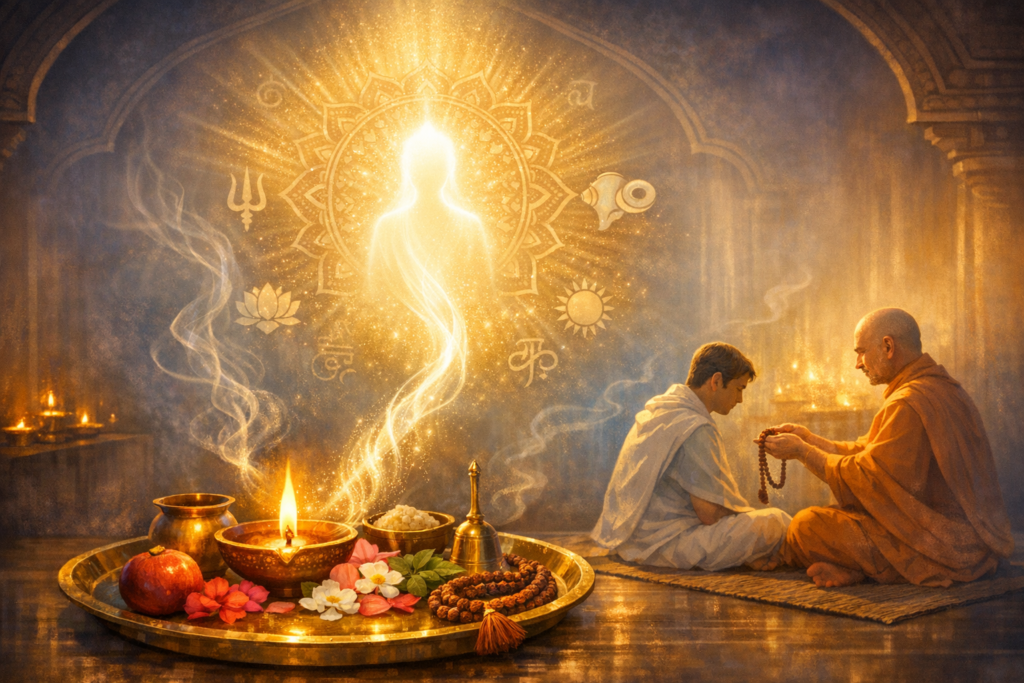
Ritually, Nilasukta is recited in combination with Sri Sukta and Bhu Sukta for consecrations, Friday worship of Lakshmi-Narayana, and during certain abhishekam routines in Vaishnava temples and home shrines. Practitioners frequently note that the measured cadence of the Krishna Yajurveda chant, when coupled with focused breath and attention, engenders a felt shift toward calm clarity. This experiential dimension—widely reported by householders and priests—confirms a central insight of the Hindu scriptures: mantra recitation is an embodied discipline that harmonizes intention (bhava), sound, and action.
Agamic frameworks lend further depth. The Vaikhanasa and Pancharatra traditions, two principal currents of Vaishnava temple theology, articulate the presence of Sri, Bhu, and Nila as distinct yet integrally related powers of Vishnu. Many temples enshrine Sri and Bhu as flanking icons, while Nila Devi is invoked liturgically even when not represented iconically. This liturgical inclusion underscores a theological conviction: compassion is indispensable to the fullness of divine sovereignty, and thus to the integrity of ritual life.
Regional idioms enrich this picture. In Tamil Vaishnava memory, Nila Devi is often identified with Nappinnai, a beloved figure in early Tamil devotional literature and later Sri Vaishnava exegesis. This association aligns Nilasukta’s themes with the emotionally textured bhakti of the Alvar corpus, where divine love and compassion are not abstractions but relational bonds experienced through song, festival, and shared devotion. Far from fragmenting doctrine, such regional voices demonstrate how the Vedic hymn breathes within living cultures.
Text-critical observations are in order. Because Vedic transmission is recitational, Nilasukta appears with variant openings, verse counts, and closures across manuscripts and printed paddhatis. Some traditions position it in proximity to Taittiriya Samhita (4.4.12); others circulate versions affiliated with the broader Taittiriya corpus and temple anthologies. This plurality does not diminish authority; rather, it illustrates how Vedic mantras endure by accommodating custodial lineages, while retaining a recognizable semantic and theological core.
As with other Vedic hymns, metrical patterns in Nilasukta commonly include tristubh and anushtubh lines, though specifics shift by recension. Correct accentuation (svara) and pacing enhance the hymn’s integrative effect. When taught in gurukula settings or by family preceptors, learning typically proceeds through pada (word) and krama (stepwise) methods, reflecting the Vedic priority of sound precision. This attention to sonic fidelity supports the text’s purpose: to embed compassion into awareness at the level of breath, tone, and rhythm.
Nilasukta’s occasional linkage of Nila Devi with Aditi, the expansive mother figure of early Vedic imagination, rests on a semantic kinship rather than strict theological identity. Aditi signifies boundlessness and maternal protection; those qualities naturally converge with Nilasukta’s emphasis on compassionate shelter. Sri Vaishnava doctrinal expositions, however, generally retain Nila Devi as a distinct consort within the Sri–Bhu–Nila triad. The two views can be read as complementary emphases across the longue durée of Hindu philosophy: one foregrounding a shared maternal archetype, the other preserving a triadic specificity within Vishnu’s shakti.
As a practical sadhana, the hymn invites disciplined application. Many householders recite Nilasukta at sunrise or dusk, synchronizing the chant with unforced, even breathing. Pairing the recitation with a brief contemplation—recalling a situation in need of compassion—translates the hymn from text to transformative habit. In community settings, congregational chanting situates individual intention within a collective field, reinforcing the insight that compassion is relational and participatory.
Nilasukta also resonates across dharmic traditions. Buddhism elevates karuna alongside wisdom (prajna) as the twin pillars of awakening; Jain thought extols daya and ahimsa as ethical absolute; the Sikh vocabulary of nadar (grace) and seva (service) centers compassionate action in community life. Read in this wider civilizational light, Nilasukta contributes to a shared grammar of care, encouraging mutual recognition across Hinduism, Buddhism, Jainism, and Sikhism. Such resonance strengthens social harmony while honoring each tradition’s integrity.
In ethical terms, the hymn reframes prosperity and success. Instead of valorizing acquisition, it privileges right relation: to time (Surya), emotion (Chandra), and energy (Agni). The fruit of such alignment is not merely external fortune but inner spaciousness, translated into patience with family, fairness in commerce, and attentiveness to those at the margins. Compassion, Nilasukta implies, is not an accessory virtue; it is the atmosphere in which wisdom, courage, and joy can reliably arise.
For students of Hindu scriptures, Nilasukta is a compact study in Vedic theology, poetic symbol, and ritual efficacy. It rewards philological curiosity (about its recensional variants), theological inquiry (into the Sri–Bhu–Nila framework), and practical experimentation (within daily worship). The hymn’s durability in Krishna Yajurveda liturgies testifies to a deep trust: that carefully tended sound can reshape perception, and that reshaped perception can reconfigure the moral life.
In contemporary life—often marked by informational overload and social strain—Nilasukta’s focus on compassionate clarity offers a steadying countercurrent. Its triadic cosmology encourages balanced living: lucid but gentle (Surya), serene yet engaged (Chandra), strong and warm rather than harsh (Agni). Whether chanted in a temple, at a home altar, or quietly remembered before a challenging conversation, the hymn provides a method to hold firmness and tenderness together.
In sum, Nilasukta (Nila Sukta) venerates Nila Devi as a compassionate presence inseparable from the cosmos and daily life. Its place in the Taittiriya Samhita tradition, its theological articulation within Sri Vaishnavism, and its enduring ritual usage together present a compelling invitation: cultivate karuna as a disciplined strength. Read in concert with Sri Sukta and Bhu Sukta, and in respectful dialogue with sister dharmic traditions, the hymn becomes a shared resource for inner transformation and social concord—an ancient voice with immediate relevance.
Inspired by this post on Hindu Blog.