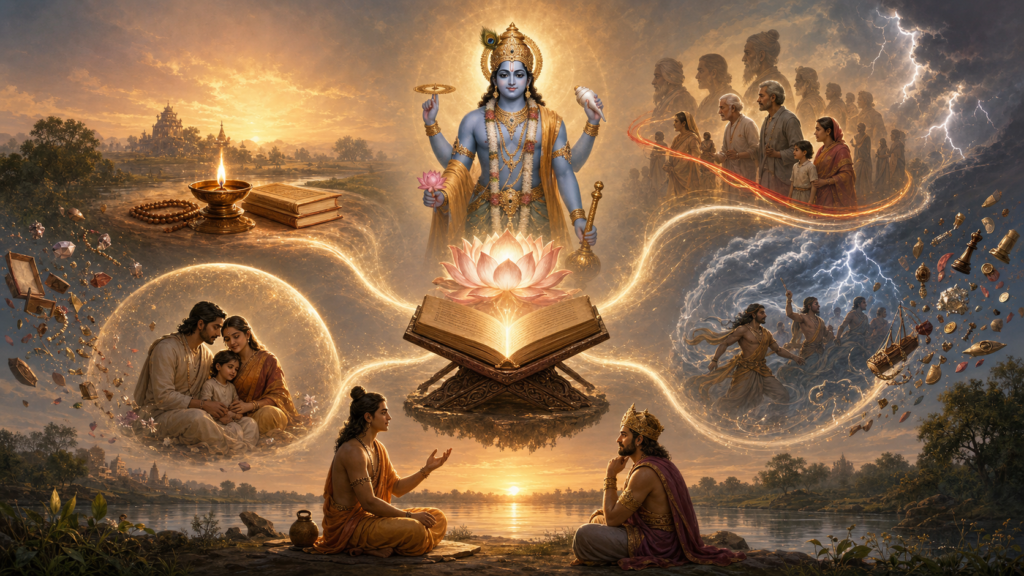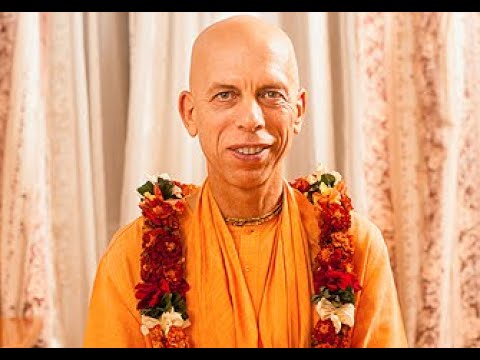
HH Prahlādānanda Swami’s lecture on Śrīmad-Bhāgavatam, Canto 4, Chapter 12, Verses 1–3, delivered at ISKCON NYC, examines the nature of time (kāla) as a manifestation of the Supreme and as a guiding force in creation, maintenance, and dissolution. The discourse clarifies how kāla operates as an impartial, divine agency that frames every eventauspicious or challengingwithout diminishing human responsibility or the ethical imperatives of dharma.
Presenting kāla as an aspect of the Supreme Lord, the lecture explains that phenomena such as death, anger, and even conflict occur within the lawful orbit of time. This is not an argument for fatalism; rather, it is a call to discernment. Recognizing time as a neutral divine instrument supports thoughtful action, humility, and accountability. Such understanding refines how duty is performedencouraging steadiness in service (seva), compassion in relationships, and clarity in decision-making.
The theme resonates across dharmic traditions that prize unity in spiritual diversity. In Buddhism, impermanence (anicca) invites equanimity; in Jainism, kāla as a dravya (substance) contextualizes moral discipline and ahiṃsā; in Sikhism, divine order (Hukam) includes the workings of time; and in Hinduism, kāla binds and liberates depending on one’s alignment with dharma. This shared philosophical substratum fosters mutual respect among Hindu, Buddhist, Jain, and Sikh communities and underscores the practical ethics of patience, non-violence, and service.
These verses occur in the narrative of Dhruva Mahārāja’s final ascent, where cosmic order reflects his unwavering devotion. Within this context, time is neither enemy nor ally; it is a precise, sacred measure through which the fruit of sādhanā matures. The lecture situates Dhruva’s attainment within the larger Vedic philosophy of time, illustrating how spiritual perseverance aligns individual effort with the rhythm of the cosmos.
Listeners often report that contemplating kāla through these verses transforms anxiety into purposeful focus. It encourages engaging the present moment fully, honoring daily practices, and meeting adversity with sobriety and hope. Practically, this means organizing life around meaningful sādhanā, cultivating gratitude for fleeting opportunities, and embracing restraint during turbulent periods, all while remaining grounded in scriptural wisdom.
In contemporary life, this perspective offers a balanced path: serenity without passivity and resolve without aggression. By seeing kāla as a sacred framework for ethical action, individuals can harmonize inner intention with outer duty. The result is a more integrated approach to spiritual growth that honors the Śrīmad-Bhāgavatam’s insights and supports unity among dharmic traditions through shared principles of compassion, responsibility, and spiritual discipline.
Inspired by this post on Dandavats.