Kamyeshti, also spelled Kameshti, denotes desire-motivated sacrifices within Hinduism’s Vedic tradition. The term unites the Sanskrit roots “Kamya” (desired object) and “Ishti” (sacrifice), indicating rituals intentionally designed to support specific material or spiritual aims that ordinary effort alone may not achieve. Within the broader taxonomy of yajna, kamya rites are distinct from nitya (obligatory) and naimittika (occasional) offerings, focusing on well-defined intentions while remaining grounded in dharma.
Rooted in the Vedic ritual system and elaborated in the Brahmanas and later Shrauta literature, Kamyeshti has enduring cultural visibility through narratives such as the Putrakameshti performed by King Daśaratha in the Ramayana. These textual anchors situate Kamyeshti within Hindu scriptures while illustrating how intention, procedure, and ethical framing converge in practice. In this way, Kamyeshti functions as both a ritual technology and a contemplative framework for aligning personal aspirations with cosmic order (ṛta).
Classical sources describe Kamyeshti for aims such as progeny, health, prosperity, clarity of mind, and spiritual progress. The ethical horizon remains pivotal: desires are to be harmonized with dharma, with the welfare of family and society in view (lokasangraha). Later Smriti traditions and contemporary observance frequently emphasize ahimsa-aligned offerings, underscoring the preference for plant-based oblations and sattvic intent. This ethical emphasis reflects Hinduism’s capacity for renewal within its Vedic heritage.
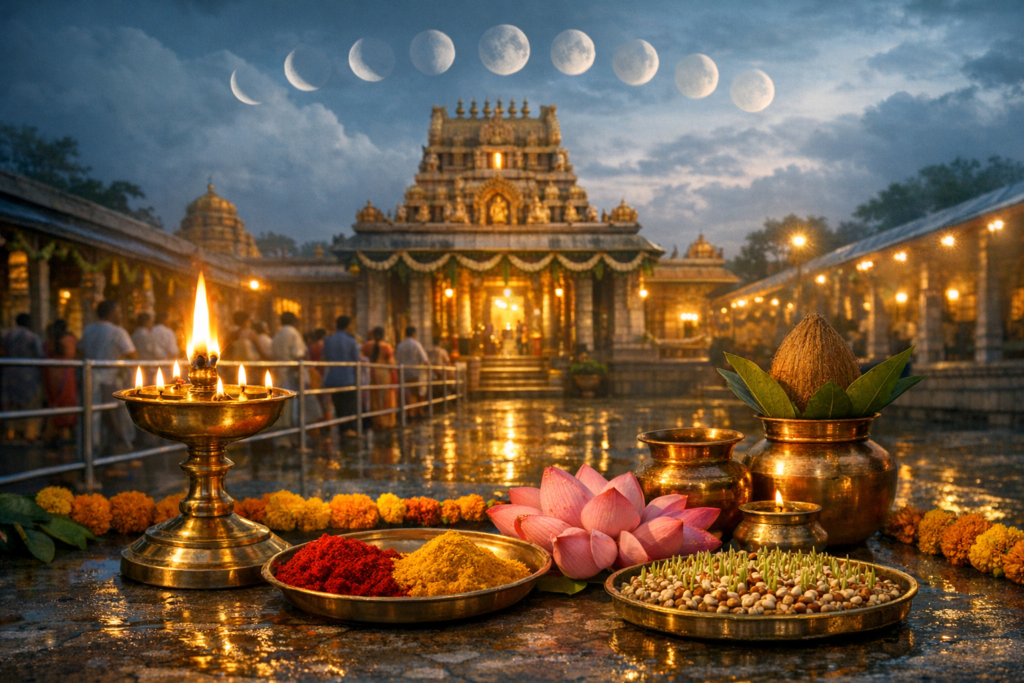
While procedural details vary by lineage, region, and Shrauta or Gṛhya context, a recognizable sequence often includes sankalpa (formal statement of intent), purification rites, mantra recitation, offerings into the Havan Kund, and dakṣiṇā to officiating ritviks. Oblations commonly include ghee, grains, and herbs; the ritual atmosphere is composed, precise, and reverent. The structure supports one-pointedness, guiding the mind from scattered desire toward disciplined aspiration.
Practitioners commonly report experiential dimensions that extend beyond the altar: a deepened sense of clarity, humility before the sacred, and renewed responsibility in daily life. Families describe the solemn warmth of Vedic mantras, the glow of the Havan Kund, and the quiet gratitude that follows the final oblation. Communities highlight how such Hindu rituals foster cohesion, intergenerational learning, and continuity with Vedic traditions preserved in scriptures and Puranas.
Kamyeshti’s spirit resonates across dharmic traditions, affirming unity without erasing diversity. In Buddhism, intention-setting and puja cultivate merit and compassion; in Jainism, vrata and pratikraman refine ethical resolve; in Sikhism, ardas aligns personal needs with seva and the Guru’s hukam. Each stream interprets desire and fulfillment through its own doctrine, yet all elevate compassion, non-violence, and the welfare of all beings. This shared ethos affirms a civilizational kinship that values plural paths and inner transformation.
In contemporary practice, many households integrate Kamyeshti’s core principles with sustainable and socially conscious action: eco-friendly offerings, charity (dāna) linked to the vow, and service (seva) that extends ritual intent into public good. Such adaptations echo the Vedic insight that inner disposition and outer action co-create merit. Read with the Bhagavad Gita’s emphasis on disciplined action and the Upanishadic call to inner knowledge, Kamyeshti becomes a bridge between aspiration and responsibility.
Philosophically, Kamyeshti invites discernment about desire itself. The ritual formalizes intention, subjects it to sacred order, and tests it against dharma. When desires are refined by wisdom, their pursuit can become an instrument of growth rather than attachment, supporting both household well-being and spiritual maturation. In this synthesis, Kamyeshti preserves Vedic continuity while remaining relevant to contemporary seekers who value ethical clarity, cultural rootedness, and inner steadiness.
Viewed holistically, Kamyeshti (Kameshti) in Hinduism is more than a procedure; it is a disciplined dialogue between the human and the sacred. By uniting precise ritual with ethical responsibility and a plural, dharmic outlook, it offers a path where personal aims are acknowledged, refined, and aligned with a larger vision of harmony—within oneself, within society, and within the ever-living Vedic Tradition.
Inspired by this post on Hindu Blog.