Ghanapatha is a cornerstone of the oral tradition that safeguarded the VedasHinduism’s foundational scripturesacross millennia. Rooted in the Shiksha Vedanga (the science of phonetics), this advanced method of Vedic chanting was designed to protect exact sound, sequence, and meaning, long before written manuscripts became common. Through rigorous patterns of recitation and cross-verification, Ghanapatha ensured fidelity so high that scholars today recognize it as one of the most sophisticated memory technologies in human history.
Within the broader system of Vedic recitation (patha), Ghanapatha emerges as the peak of precision. The curriculum traditionally proceeds through multiple layers: Samhita (continuous text), Pada (word-by-word analysis), Krama (pairing sequential words), Jata (braided recitation), and finally Ghana (the densest weave of repetition and reversal). Each ascending layer increases redundancy and error-detection, creating a self-correcting framework that keeps every syllable intact.
In practice, Ghanapatha arranges words in carefully structured permutations that expand and reverse the flow of a passage. A simplified representation for three consecutive words A–B–C is often illustrated as ABC–CBA–ABC. Extended sequences apply similar logic over larger spans, binding the text through rhythmic loops and mirrored patterns. This algorithmic redundancy is not merely mnemonic; it is a mechanism of verification that prevents drift, ensuring the Vedas remain consistent across geographies and generations.
The discipline depends on accurate Sanskrit phonetics and intonation. Vedic chanting marks and preserves pitch accentsudātta (raised), anudātta (unraised), and svarita (falling)so that meaning, meter, and sonic profile remain inseparable. In Ghanapatha, the sonic architecture is heightened; intonation, timing, breath, and pause are trained with unwavering attention so that both linguistic and spiritual integrity are maintained.
Pedagogically, Ghanapatha unfolds in the Guru–Shishya Tradition, where sustained, embodied learning takes place through direct transmission. Repetition, call-and-response, breath control, and daily practice build both cognitive endurance and refined listening. Over time, practitioners develop a deep sensitivity to micro-differences in sound and accentan expertise comparable to advanced musicianship, yet governed by the textual canons of the Vedas.
This oral science resonates with the broader dharmic world’s reverence for sound and memory. Buddhist lineages maintained canonical recitations across councils and monasteries; Jain communities nurtured Agama transmission through disciplined memorization; Sikh traditions sustain continuous Gurbani recitation (such as Akhand Paath) and melodic kirtan. These living practicesdistinct yet harmoniousaffirm a shared civilizational insight: sacred knowledge flourishes when sound, meaning, and community are held together with devotion and rigor.
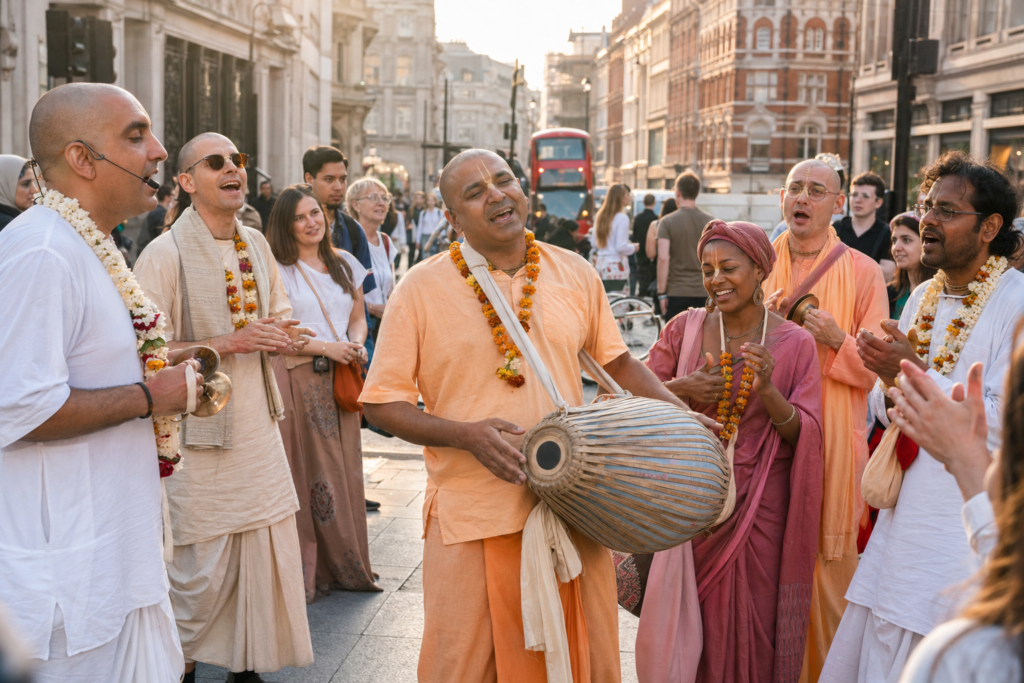
Listeners often describe Ghanapatha recitation as both intellectually compelling and emotionally stirring. The braided cadence produces a palpable sense of order, rhythm, and serenity, turning a textual exercise into a meditative experience. In temples, study circles, and cultural gatherings, such chanting fosters cohesion, intergenerational learning, and a felt connection to ancestral wisdoman enduring source of unity across dharmic traditions.
Modern scholarship and cognitive science illuminate why Ghanapatha is so robust. Its layered redundancies mirror error-correcting codes; its auditory feedback loops enhance working memory; and its strict phonetic rules reduce ambiguity. As digital humanities map Vedic recitation patterns and diaspora communities revive oral classes, Ghanapatha offers a model for preserving intangible heritage while cultivating focus, discipline, and collective identity.
Ultimately, Ghanapatha exemplifies how an oral civilization engineered reliability without writingby treating sound as scripture and recitation as verification. It remains a living testament to the Vedic tradition’s scholarly rigor and spiritual depth, and it reinforces a unifying insight shared across Hinduism, Buddhism, Jainism, and Sikhism: when knowledge is rooted in truth, practice, and community, it endures with clarity and grace.
Inspired by this post on Hindu Blog.