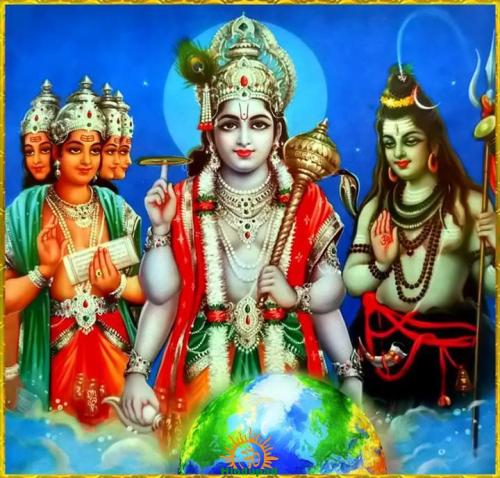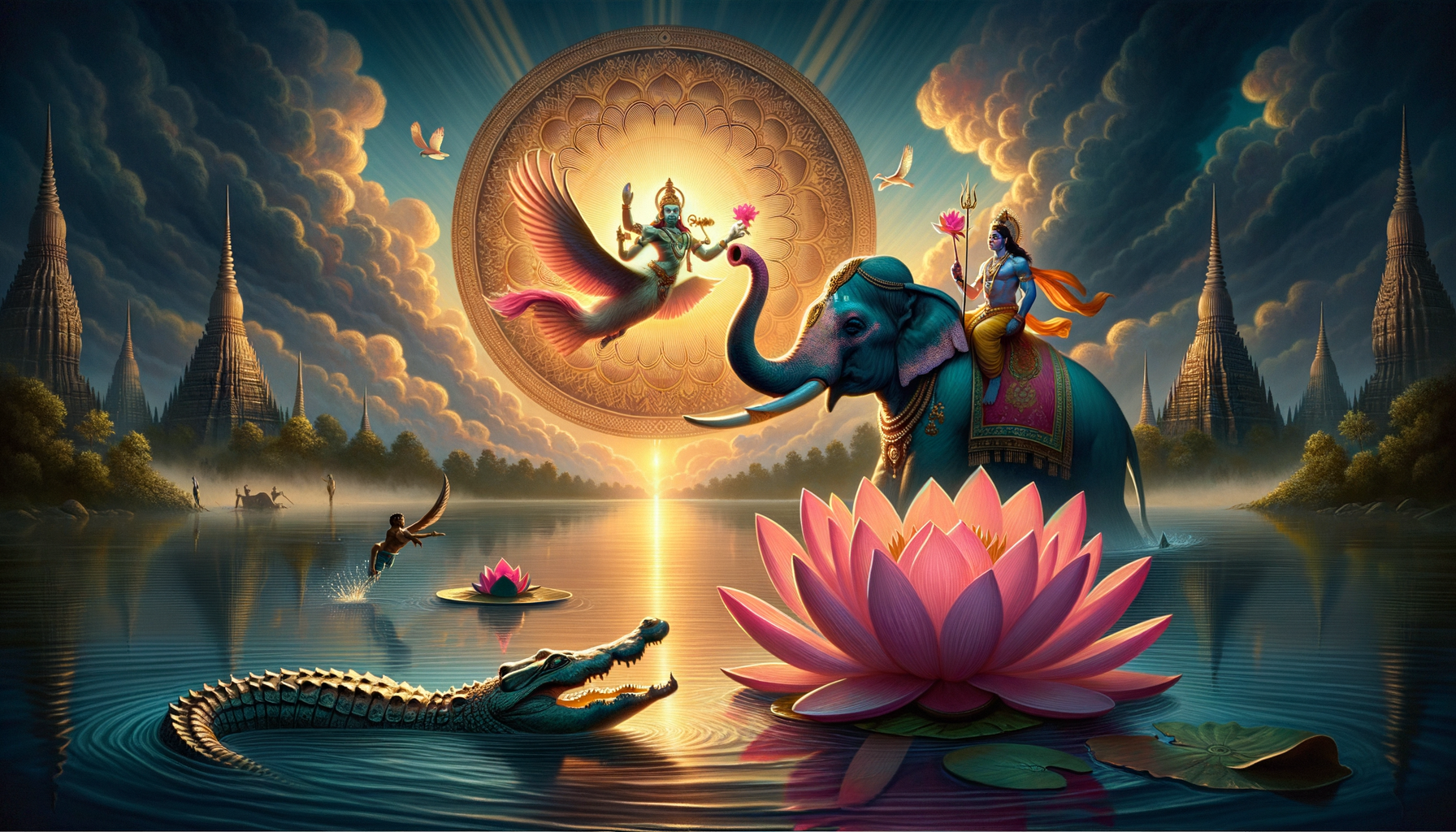
The classical narrative of Gajendra Moksha from the Bhagavata Purana recounts a moment of profound surrender and divine compassion. Responding to Gajendra’s fervent plea, Lord Vishnu, carried by Garuda, arrived with immediacy. In a gesture of complete devotion, Gajendra raised a lotus with his trunk, embodying sharanagati. Pleased by this pure intention, Lord Vishnu employed the Sudarshana Chakra, severed the crocodile’s head, and delivered Gajendra from mortal peril.
Beyond the dramatic rescue, the episode offers layered symbolism central to Hindu scriptures and the Hindu way of life. The lotus signifies unblemished devotion (bhakti) arising from turbulent waters, while the crocodile evokes the tenacity of worldly entanglements and inner afflictions. The Sudarshana Chakra functions as a liberating force that cuts through avidya and bondage, illuminating the perennial pursuit of moksha through unwavering faith and remembrance of the Divine.
These themes resonate across dharmic traditionsHinduism, Buddhism, Jainism, and Sikhismwhere compassionate response, inner discipline, and ultimate freedom are cherished ideals. The narrative’s core message of trust in the higher truth aligns with karuṇā, ahiṃsā, mindfulness, and steadfast courage. In this shared ethical horizon, Gajendra’s surrender exemplifies a universal path of transformation that honors diversity while nurturing unity in spiritual purpose.
In contemporary life, many recognize the metaphorical “crocodiles” of fear, anxiety, or conflict that pull attention into struggle. This account offers a practical orientation: cultivate focused remembrance (smaraṇa), meditation (dhyāna), and selfless service (seva) as means of steadiness during adversity. Such practicesintegral to the wider dharmic familyreframe crisis as an opportunity to deepen insight, compassion, and resilience.
Gajendra Moksha endures as a luminous Hindu story not merely for its miraculous resolution, but for its clear instruction on devotion, ethical resolve, and the possibility of liberation. By foregrounding Lord Vishnu’s swift compassion and Gajendra’s sincere offering, the narrative invites thoughtful engagement with timeless questions of suffering, grace, and freedom. In honoring these values collectively, the story advances unity among dharmic traditions while guiding seekers toward an integrated, compassionate, and liberated life.
Inspired by this post on Dandavats.