Srimati Sita Devi, renowned as the daughter of the Earth goddess Bhumi Devi, stands at the heart of the Ramayana’s civilizational imagination. In Maharishi Valmiki’s framing, the epic is celebrated as “Sita-ayah Charitam Mahat,” the great tale of Sita, emphasizing her centrality not merely as consort of Sri Rama but as the living embodiment of dharma, resilience, and the Sacred Feminine within Sanatana Dharma.
Across traditional accounts, Sita’s appearance is both cosmic and terrestrialshe is venerated as the manifestation of Lakshmi and, simultaneously, as Bhoomija, “born of the Earth.” Valmiki Ramayana (Bala Kanda) records King Janaka’s testimony that the child was discovered in a furrow while he was ritually ploughing the sacrificial field. This “āyonijā” (not born of a womb) origin confers on Sita a sacred uniqueness: a being unmediated by ordinary birth, signifying purity, auspiciousness, and the Earth’s own grace made visible.
The very name “Sita” reveals deep Vedic resonances. In Sanskrit, sītā denotes the furrowa channel opened by the ploughlinking her to agrarian sacrality, fertility, and sustenance. Vedic hymns honor Earth and field deities, and the figure of Sita has long been associated with the life-giving rhythms of cultivation and the ethics of stewardship. In this light, Sita’s appearance evokes a theological ecology that recognizes Earth (Bhumi) as mother, worthy of reverence and protection.
King Janaka, the wise and benevolent ruler of Videharemembered in the cultural memory of Mithila (present-day Janakpur/Janakpuri)discovered the infant while preparing the yajna ground. He accepted the child as a divine trust from Bhumi Devi and named her Sita, thereby linking royal duty, sacrificial purity, and ecological piety in one enduring act. Within the Ramayana’s narrative and pan-Indian tradition, Sita is thus honored by several epithets: Janaki (daughter of Janaka), Vaidehi (princess of Videha), Maithili (of Mithila), and Bhoomija (Earth-born), each attesting to her layered identity.
Her svayamvara at Mithila is a defining moment for Ramayana history and Hindu scriptures. Janaka sets the test of stringing the great bow of Shiva (Pinaka), a task no suitor could complete. Sri Rama, the Maryada Purushottama, not only strings but breaks the bow, signaling both prowess and cosmic sanction. This unionRama of Ayodhya and Sita of Mithilabecomes the paradigmatic marriage of dharma and karuna, governance and grace, and remains a model for grihastha dharma.
The narrative’s later arcs, notably the abduction by Ravana and the return to Ayodhya, prompted rich hermeneutical traditions. The doctrine of Māyā-Sita found in several Puranic and devotional strands proposes that the real Sita remained safeguarded by Agni while an illusory form engaged the ordeal of captivity, thus preserving her honor inviolate. The much-debated agni-pariksha is likewise interpreted in many sampradayas not as a punitive trial but as a liturgical theophanyAgni, the witness, restores the real Sita. Textual scholarship notes that recension and sarga numbering vary, and the Critical Edition of the Valmiki Ramayana reflects careful sifting of manuscripts; yet the devotional consensus remains that Sita’s integrity and sanctity are beyond reproach.
Sita’s return to the Earth in the Uttara Kanda powerfully mirrors her appearance. In response to aspersions, she invokes Bhumi Devi, who receives her daughter back into the Earth. Many traditions read this as Sita’s final act of sovereignty and trutha poignant affirmation that the Earth-born returns, self-possessed and serene, to the Mother who first revealed her. Some textual historians regard parts of the Uttara Kanda as later additions; nevertheless, the theological meaningSita’s unassailable honor and agencyremains a cornerstone of the sacred narrative.
Commemoration of Sita Navami (the Shukla Navami of Vaishakha) brings these themes into living practice. In regions spanning Mithila, Ayodhya, and Janakpur, devotees recite the Valmiki Ramayana, worship Goddess Sita alongside Sri Rama, and reflect on household ethics grounded in satya (truth), daya (compassion), and dharma (righteous conduct). Diaspora communities and Southeast Asian retellings likewise underline the Ramayana’s global cultural heritage, demonstrating how Sita’s virtues resonate well beyond geographic boundaries.
These virtues carry unifying significance across the dharmic family. In Hinduism, Sita personifies steadfast dharma and the Sacred Feminine; in Buddhism, her compassion (karuṇā) and forbearance echo core ethical ideals; in Jainism, her restraint, truthfulness, and moral clarity align with ahiṃsā and satya; in Sikh tradition, her dignified grihastha life and unwavering integrity harmonize with household responsibility, seva, and truthful living. Such convergences exemplify Vasudhaiva Kutumbakam, affirming a shared civilizational ethic that welcomes many paths while honoring a common quest for truth.
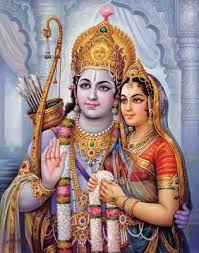
Iconographically, Sita is depicted with Sri Rama and Lakshmana, her presence radiating serenity and moral authority. In temple panels, manuscripts, and murals from North and South India to Nepal and beyond, she is the axis of familial dharma: the listening heart to Rama’s counsel, the source of courage for Hanuman, and the hope that sustains communities in exile and return. The Sacred Femininethrough Sitaanchors the household as a microcosm of the cosmos, balancing strength with tenderness.
As the Ramayana traveled, so too did Sita’s name and memory: she appears as Nang Sida in the Thai Ramakien, and figures prominently in Cambodian Reamker, Lao Phra Lak Phra Lam, and other Southeast Asian traditions. Reliefs at sites like Angkor Wat and vibrant performance arts across the region carry her story forward, underscoring the Ramayana’s historical depth and cultural inclusivity.
The philological insight embedded in “Sita-ayah Charitam Mahat” is also interpretive: the epic foregrounds Sita’s destiny, agency, and virtues as a guiding thread. Rather than a mere companion to a heroic narrative, Sita stands as the epic’s moral centerits compass of empathy, fidelity to dharma, and ecological reverence for Bhumi Devi. This framing invites readers to engage the Ramayana not just as royal chronicle, but as an ethical map illuminated by the Earth-born queen.
Contemporary relevance flows naturally from these insights. Sita’s birth from the furrow celebrates the sanctity of soil and the humility of cultivationtimeless reminders to honor land, food, and the interdependence of life. Her unwavering commitment to truth and duty offers a practical ethic for families, communities, and public life. In an age seeking balance between power and compassion, her example urges principled strength tempered by empathy.
In summary, Sita Devi’s appearanceat once celestial and terrestrialestablishes her as a wellspring of dharma within the Valmiki Ramayana and across dharmic traditions. From Mithila’s sacred fields to Ayodhya’s royal court, from Vedic echoes to global retellings, Sita’s presence endures as a living ideal: Earth-born, truth-sustained, and universally inspiring. To encounter her story is to rediscover an ethic that unites Hinduism, Buddhism, Jainism, and Sikhism in a shared reverence for virtue, compassion, and the luminous dignity of the Sacred Feminine.
Inspired by this post on Dandavats.