
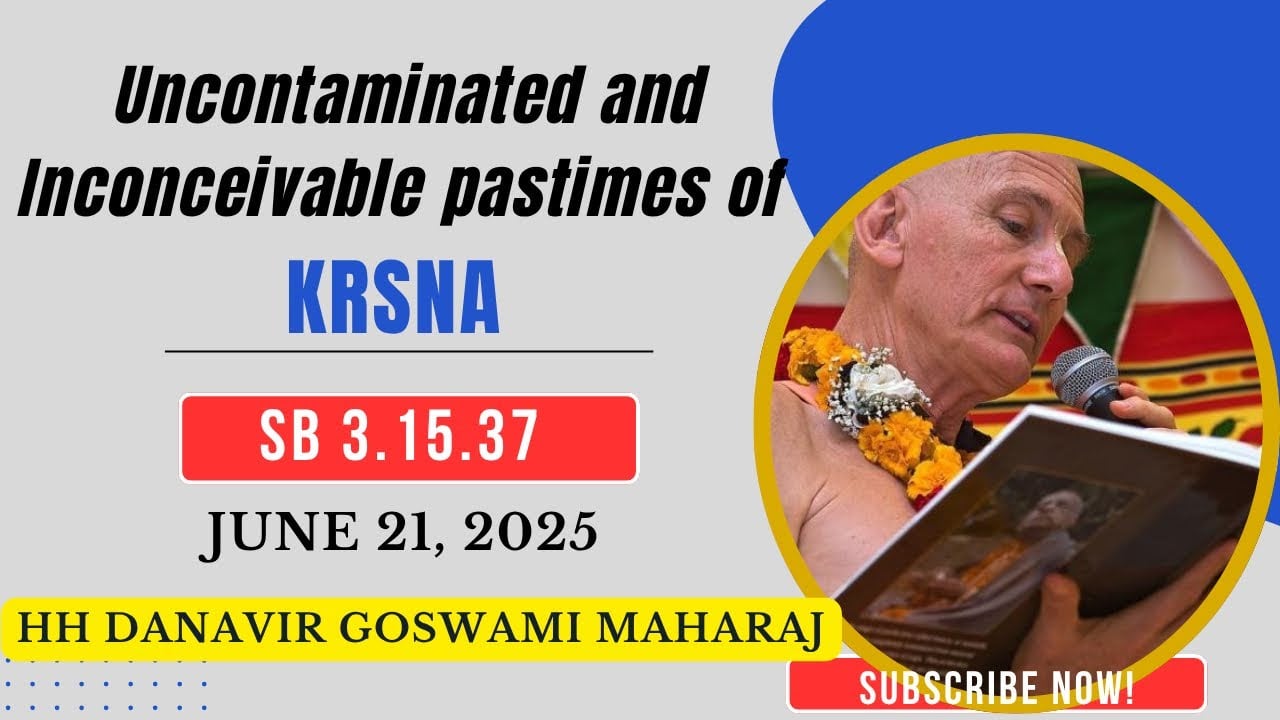
Śrīmad-Bhāgavatam (SB 3.15.37) presents a rigorous theological insight central to Hindu scriptures: the speech of realized sageswhether as blessings (anugraha) or curses (śāpa)carries transformative power within the moral architecture of karma and reincarnation. This potency is not merely punitive. When genuine remorse and corrective intent are present, outcomes can be adjusted without violating the integrity of the law of karma. In other words, consequences are not casually erased; they are redirected as instruments of learning, purification, and, ultimately, liberation.
The well-known Vaikuṇṭha episode involving the Four Kumāras, the gatekeepers Jaya and Vijaya, and Lord Viṣṇu crystallizes this principle. Upon being stopped at the gate, the Kumāras pronounce a curse that Jaya and Vijaya descend to the material realm. The Lord honors the sages’ words yet calibrates the outcome: the gatekeepers are offered a path of accelerated returneither seven births as devotees or three as antagonists. They choose the three, thereby accepting brief demonhood in exchange for swift reinstatement. SB 3.15.37 thus becomes a definitive illustration of how a curse, under divine oversight and the broader justice of dharma, may be modified to serve a redemptive arc.
This “adjustability” aligns with a classical framework in the Bhagavata Purana: brahmatejas (the spiritual potency of sages) interacts with daiva (divine arrangement) and puruṣakāra (human agency) to guide consequences toward moral instruction. Śāpa, in this light, functions less as retribution and more as a pedagogical tool. Prāyaścitta (expiation) and a sincere cessation of offense (aparādha) become the levers by which outcomes are softened or repurposed, ensuring that justice and compassion co-exist without contradiction.
The dramatic outworking of the Jaya–Vijaya decision unfolds across three yugas: as Hiraṇyākṣa and Hiraṇyakaśipu, as Rāvaṇa and Kumbhakarṇa, and as Śiśupāla and Dantavakra. In each case, antagonism culminates in direct confrontation with the Lord and, paradoxically, liberation at His hands. The curse is not nullified; it is reframed as a swift passage back to Vaikuṇṭha, demonstrating that even apparent descent can be harnessed for ascent when the telos is divine reunion. That moral architecturejustice tempered by purposive graceexemplifies the Bhagavata’s distinctive synthesis.
Other canonical narratives reinforce this thesis. Narada Muni’s curse of Nalakūvara and Maṇigrīva to become arjuna trees does not annihilate their prospects; it reforms them. As Śrī Kṛṣṇa (Damodara) liberates them in the celebrated Yamalārjuna episode, Narada’s śāpa is revealed as a constructive intervention: arrogance is dissolved, memory of dharma is restored, and freedom is granted. The curse becomes an instrument of anugraha.
Similarly, the Story of Durvasa Muni and King Ambarisha shows how unyielding spiritual law folds into bhakti’s higher equity. When Durvasa Muni’s wrath invokes peril, the Sudarśana chakra pursues him until he embraces humility and seeks Ambarisha’s forgiveness. The resolution does not erase the serious nature of offense; it demonstrates that the devotee’s compassion and the Lord’s protection can recalibrate outcomes, spotlighting the primacy of devotion within the hierarchy of dharmic remedies.
Vṛtrāsura provides another profound case. Identified as an asura in outward form, Vṛtrāsura in the Bhagavata Purana voices a theology radiant with surrender and devotion, revealing that external designations can mask deep interior piety. Here again, “demonhood” does not foreclose grace. It becomes the crucible through which devotion is tested and ultimately revealed, affirming that liberation can crown even seemingly adversarial roles when consciousness turns to the Divine.
Even episodes like Pūtanā’s deliverance and Ajāmila’s rescue (though not strictly curse-based) elucidate the same moral law: intent and remembrancehowever nascent or mixedinvite a merciful reconfiguration of consequences. The Bhagavata’s throughline is consistent: repercussions educate rather than merely punish; repentance catalyzes redirection rather than instant erasure; and grace fulfills justice without subverting it.
SB 3.15.37 also acknowledges that conflict among sages can occur within dharma’s tapestry. Such episodes, rather than diminishing saintliness, serve as didactic moments emphasizing humility, accountability, and dependence upon the Divine. Classical disputeswhether between Vaśiṣṭha and Viśvāmitra or the many corrective encounters involving Durvasa Muniare framed not as sectarian rifts, but as pedagogical events guiding communities toward higher synthesis. The result is a culture of responsibility that honors both the weight of speech and the possibility of reconciliation.
This moral architecture is not confined to a single stream of Hindu thought. Dharmic traditions broadly converge on a restorative vision in which accountability and compassion work in tandem. Jain practice of Pratikraman, Buddhist Uposatha confessions and kṣamā (forbearance), and the Sikh disciplines of Ardas, seva, and Naam Simran all operationalize repentance, ethical amendment, and community-centered reconciliation. Far from divergent, these practices reflect a shared civilizational insight: consequences are real, repentance is efficacious, and transformation is the goal.
Read in this light, the message of SB 3.15.37 offers contemporary relevance across communities. For practitioners, it affirms that sincere remorseexpressed through truthful acknowledgment, restitution, disciplined practice, and renewed ethical resolvemeaningfully reshapes the trajectory of one’s life without trivializing prior actions. For communities, it underscores why speech should be restrained, counsel should be compassionate, and correction should aim at restoration.
At a practical level, the tradition proposes a structured pathway for recalibration: cultivate anutāpa (genuine contrition), undertake prāyaścitta proportionate to the harm, seek and accept forgiveness, redouble daily sādhana (japa, svādhyāya, kīrtana), and embody corrective virtuesahiṁsā, satya, asteya, śauca, and dayāin sustained conduct. Where appropriate, community-facing acts such as seva and dāna repair social trust, translating inner change into tangible good.
The cumulative witness of the Bhagavata Purana thus harmonizes law and love. Sages’ words are potent because they are yoked to truth; their outcomes can be adjusted because truth is finally ordered toward compassion. From Jaya–Vijaya’s accelerated return to the reforms of Nalakūvara and Maṇigrīva, from the reconciliation of Durvasa and Ambarisha to Vṛtrāsura’s luminous surrender, the pattern remains stable: curses may redirect, blessings may uplift, and both ultimately serve liberation when conscience, community, and grace converge. That synthesisfirm justice guided by merciful wisdomstands as a unifying ideal for Hindu spirituality and a shared aspiration across Dharmic traditions.
Inspired by this post on Dandavats.
