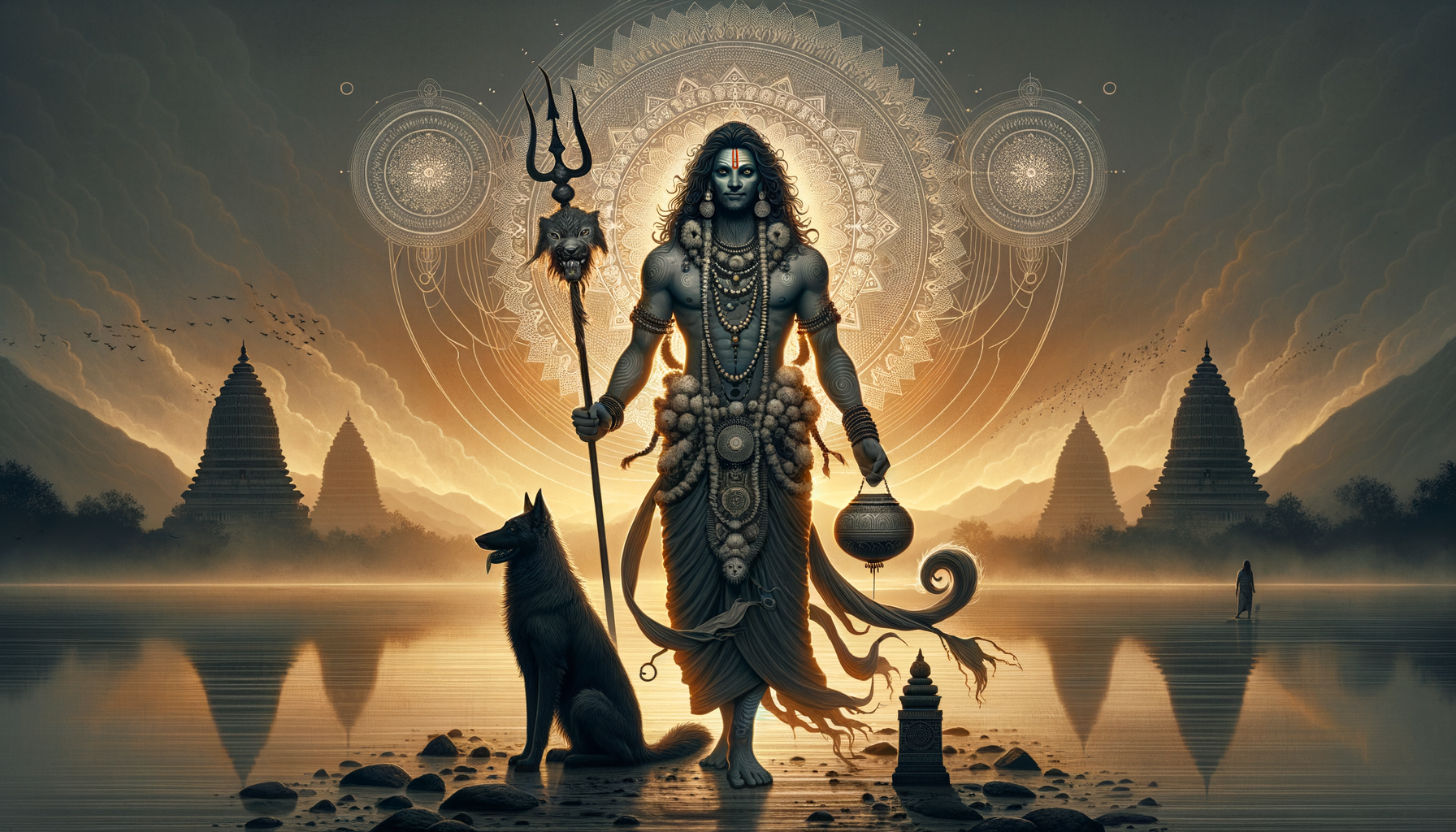
Why is Bhairava seen as the sign of Shiva’s fury? In the Shaiva tradition, Bhairava represents the raudra (fierce) aspect of Shivaintense, uncompromising, and profoundly protective. This fierceness is not unbridled rage; it is a disciplined power that destroys arrogance and safeguards dharma. Understanding Bhairava in this light deepens appreciation for how Hindu mythology encodes ethical and spiritual insights within powerful narratives.
According to Puranic accountsmost prominently in Skanda Purāṇa (Kāśī Khaṇḍa) and Śiva Purāṇathe Trimurti (Brahma, Vishnu, and Shiva) once entered into a dispute colored by pride. Brahma is said to have displayed haughtiness, which threatened cosmic balance. In response, Shiva manifested as Kala Bhairava, the terror of time, whose presence dissolves delusion. As a corrective to Brahma’s arrogance, Bhairava severed Brahma’s fifth head, a symbolic act depicting the cutting of ego at its root.
The legend continues with Bhairava bearing the skull (kapāla), accepting the karmic burden known as brahmahatyā doṣa, until absolution in Kāśī (Varanasi). There, Bhairava becomes the Kṣetrapāla, the guardian of the sacred cityrevered today as the vigilant protector who ensures that only truthfulness and humility gain entry to Shiva’s grace. Devotees often acknowledge Kala Bhairava as the city’s kotwal (guardian), a living testimony to the union of justice, compassion, and spiritual accountability.
Read symbolically, the narrative is an ethical map. Brahma’s “fifth head” can be interpreted as unchecked pride; its removal, as the disciplined elimination of ego that obstructs wisdom. The burden Bhairava accepts signifies that even righteous correction requires responsibility, penance, and purification. Kāśī then represents the inner space where ignorance is dissolved and truth prevails. In this view, Bhairava is Shiva’s fierce compassionan energy that sets boundaries, protects the vulnerable, and restores balance without glorifying violence.
This insight resonates across the broader dharmic family. In Vajrayāna Buddhism, forms like Vajrabhairava (Yamantaka) embody a transformative wrath that conquers inner defilements. Jain teachings emphasize mastery over krodha (anger) and the annihilation of ego, aligning with the Bhairava motif of cutting through pride. Sikh tradition affirms disciplined courage and the protection of righteousness. Each path, in its own idiom, honors fierce ethics guided by compassion and responsibilityaffirming unity in spiritual purpose.
In lived practice, many pilgrims to the Kal Bhairav Temple in Varanasi describe a palpable sense of vigilance and reassurance. The shrine is often visited before other darshans, acknowledging Bhairava’s role as guardian. Devotees speak of leaving with lighter hearts and clearer intentions, especially when praying for courage to tell difficult truths, to set healthy boundaries, or to protect others from harm.
Applied to daily life, Bhairava’s teaching is both ethical and contemplative. It encourages humility when praised, firmness when justice is at stake, and self-scrutiny before decisive action. Practices such as slow, conscious breathing and brief periods of silence before speaking can transmute reactive anger into purposeful resolvetransforming raw energy into raudra that is wise, protective, and anchored in dharma.
Seeing Bhairava as Shiva’s fury thus reveals a deeper truth: the fiercest face of the Divine is also the most carefully compassionate. It confronts falsehood, protects the sacred, and guards the thresholds of inner and outer sanctuaries. For seekers across Hinduism, Buddhism, Jainism, and Sikhism, this legend offers a shared lessoncourage with conscience, strength with restraint, and power in service of truth.
Inspired by this post on Hindu Pad.