Demonstrations at the University of Jammu over the inclusion of a chapter on Muhammad Ali Jinnah in the syllabus have intensified a wider national conversation about how Indian universities should teach contested historical figures. Reports of student mobilizations, including those by Akhil Bharatiya Vidyarthi Parishad (ABVP), place the focus squarely on core questions of academic freedom, curricular governance, and the responsibilities of higher education to present Indian history with rigor, balance, and sensitivity.
Jinnah’s place in the Indian curriculum is not merely a matter of biography. It touches foundational themes in modern South Asian history: the trajectory from constitutional negotiation to the Lahore Resolution (1940), the evolution of the Muslim League’s political program, the clashes and compromises with the Indian National Congress, and the wrenching social consequences of Partition. For many in India, Jinnah symbolizes the two-nation theory and a political rupture that caused extraordinary suffering across regions and communities. For educators, this very complexity necessitates careful, evidence-based pedagogy rather than erasure or uncritical celebration.
The immediate issue, described publicly as a “Jinnah chapter in the syllabus,” centers on a perception-versus-purpose problem common to curricula worldwide: does the inclusion of a figure imply endorsement, or can it serve as a vehicle for critical analysis? Academic best practice distinguishes teaching about a figure—through primary sources, historiography, and interpretive debate—from teaching for any figure, which would amount to advocacy. Universities generally aim for the former, and protests often arise when stakeholders fear a slide toward the latter.
Indian higher education already provides frameworks for navigating such dilemmas. The National Education Policy (NEP) 2020 emphasizes critical thinking, constitutional values, and multidisciplinary learning. The University Grants Commission’s Learning Outcomes-based Curriculum Framework (UGC-LOCF) encourages departments to define transparent learning objectives, map assessments to those outcomes, and show how course content advances analytical reasoning rather than ideological partisanship. Within universities, established statutory bodies—the Board of Studies, Faculty/School Boards, Academic Council, and Executive Council—collectively vet and approve syllabi, offering due process for review and revision when controversies arise.
Historiography offers additional guardrails. Contested histories should be taught through triangulation: curated primary documents (e.g., selected speeches and correspondence), credible secondary scholarship representing multiple schools of thought, and structured classroom dialogues that surface competing interpretations. This approach helps students see how historical claims are built, tested, and revised—without presuming unanimity among scholars or learners.
Applied to Jinnah, triangulation would likely include systematic study of his public arguments (such as the Fourteen Points and major speeches from the 1930s and 1940s), comparative readings of Congress and Muslim League strategies, and the constitutional negotiations leading to independence. The aim is not to normalize or vilify, but to contextualize: to understand how a set of political ideas gained traction, how leaders across the spectrum responded, and how institutions evolved amid escalating communal anxieties and global upheaval.
No account of this period is complete without the social experience of Partition. Ethical pedagogy invites students to examine survivor testimonies, demographic data, and the material legacies of displacement. This includes the lived histories of Hindus, Sikhs, Jains, Buddhists, and Muslims across affected regions. A conscientious course design foregrounds the human cost and underscores dharmic values that support empathy, non-violence, and communal harmony—values that align with the broader national ethos of unity in diversity.
Jammu and Kashmir’s particular vantage point sharpens these stakes. As a border region with complex historical trajectories and cultural interconnections that extend into Ladakh and the wider Himalayas, the sensitivity of curricular choices is heightened. Responsible pedagogy neither instrumentalizes regional histories nor suppresses them; it treats them as vital case materials that illuminate how national narratives refract through local realities.
Student organizations—whether ABVP or others—play a recognized role in democratic campus life. The right to peaceful assembly and expression goes hand in hand with obligations to safeguard academic schedules, ensure safety, and engage with institutional dialogue mechanisms in good faith. Constructive protest and constructive curricular review can, and should, reinforce each other when channeled through transparent, time-bound processes.
Transparency is the single most effective antidote to suspicion. Universities can publish a short “curricular rationale note” explaining why a topic is included, what learning outcomes it serves, which primary and secondary sources are used, and how assessments test analysis rather than ideology. A commitment to periodic review—say every two or three academic cycles—signals openness to revising content as scholarship evolves or as better teaching materials emerge.
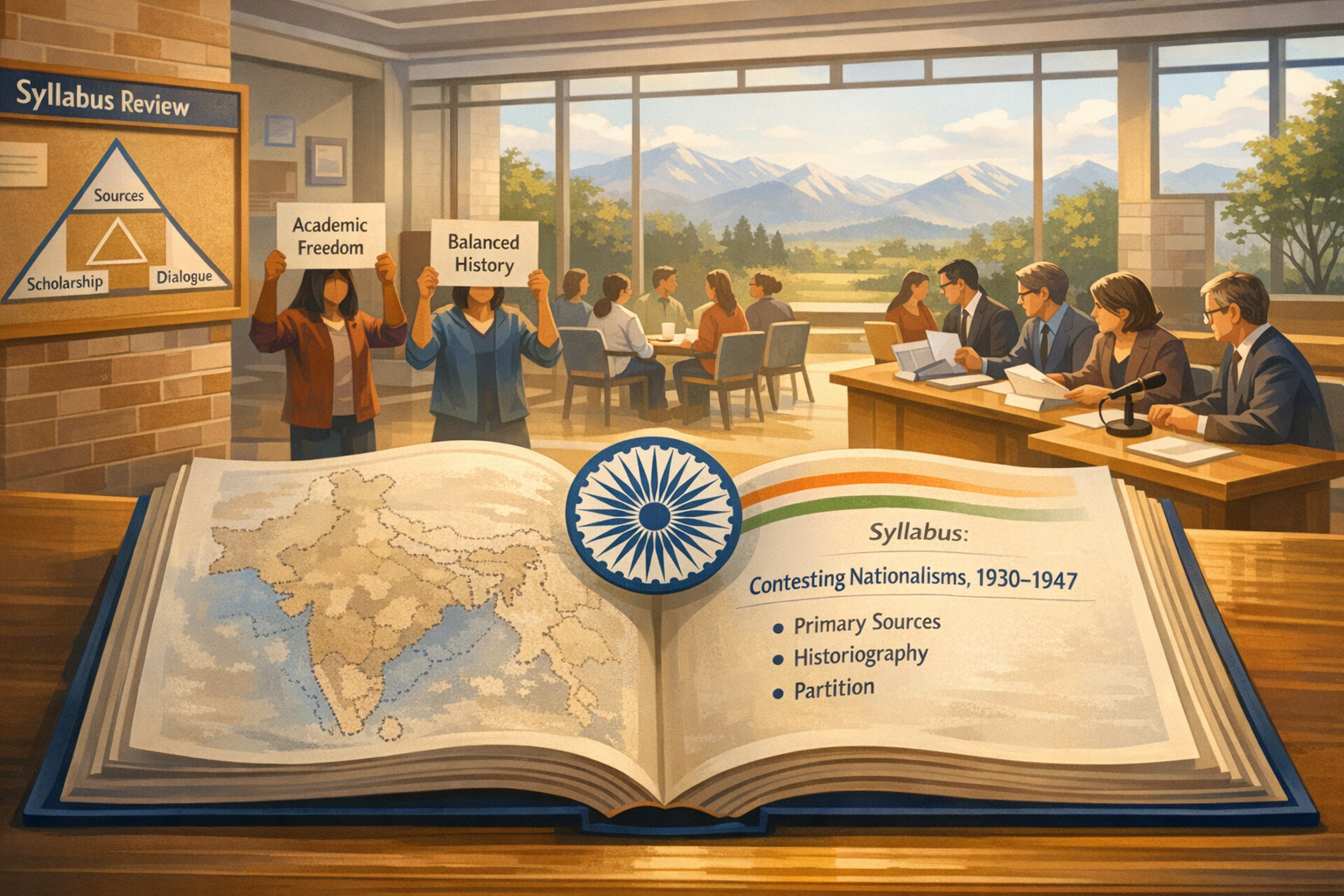
To move from controversy to clarity, a balanced module architecture is helpful. Consider a unit titled “Contesting Nationalisms, 1930–1947: Congress, Muslim League, and Other Currents.” Placing Jinnah within a comparative framework avoids a personality-centric syllabus that can distort causality or intent. Learners examine the simultaneity of ideas—federalism and unitary models, minority safeguards, constitutionalism, mass mobilization, and communal peace initiatives—so that no single figure is taught in isolation from structures and countercurrents.
Clear learning outcomes anchor this design. By the end of the unit, students should be able to: (1) analyze the political arguments advanced by key leaders using primary texts; (2) compare the constitutional proposals of Congress and the Muslim League; (3) explain the historical conditions under which the two-nation theory gained momentum; (4) evaluate the social and ethical implications of Partition using survivor narratives and data; and (5) articulate how India’s constitutional values and plural traditions seek to avert repetition of such traumas.
Assessment formats should reward scrutiny over sloganizing. Annotated document analyses, oral examinations anchored in primary sources, structured debates with evidence rubrics, and reflective essays that integrate historiography all nudge students to interrogate claims. Rubrics can make explicit that credit is awarded for evidence use, counter-argumentation, and methodological clarity—not for taking any particular political position.
Safeguards for sensitive content are equally important. Syllabi can include a brief note distinguishing descriptive study from endorsement, reminding learners that universities analyze historical phenomena, including harmful ideas, to inoculate societies against them. Faculty development workshops on “hot moments” in the classroom, trauma-informed discussion protocols when addressing Partition, and referral pathways for student support ensure a safe pedagogical environment.
Because many public debates conflate school and university materials, clear communication about institutional roles matters. NCERT frameworks inform school education, while public universities customarily rely on their own Boards of Studies and Academic Councils. Nonetheless, the spirit of NEP 2020 and UGC-LOCF—critical inquiry, civic responsibility, and respect for India’s civilizational diversity—offers a common north star for curricular choices at all levels.
Comparative international experience may help set expectations. Robust democracies routinely teach difficult pasts—slavery in the United States, apartheid in South Africa, fascism in Europe—without endorsing them. The presence of a topic signals the educational system’s confidence to confront complexity and inoculate future citizens against ideologies that undermine ethical coexistence.
When controversies crest, process clarity de-escalates. A time-bound Academic Council review, open submissions from faculty and students, and an expert subcommittee on sources and historiography can be announced publicly. Publishing the committee’s terms of reference, timeline, and final recommendations builds trust, whether the outcome is to retain, revise, or reframe the module.
If retention is recommended, reframing Jinnah within a comparative unit and updating readings to ensure multiperspectival coverage can address concerns. If revision is needed, the shift can prioritize themes—constitutionalism, minority rights debates, mass movements—over personalities. If removal is advised, companion modules can still ensure that students analyze the two-nation theory and Partition through primary sources, so that analytical skills and historical understanding are not shortchanged.
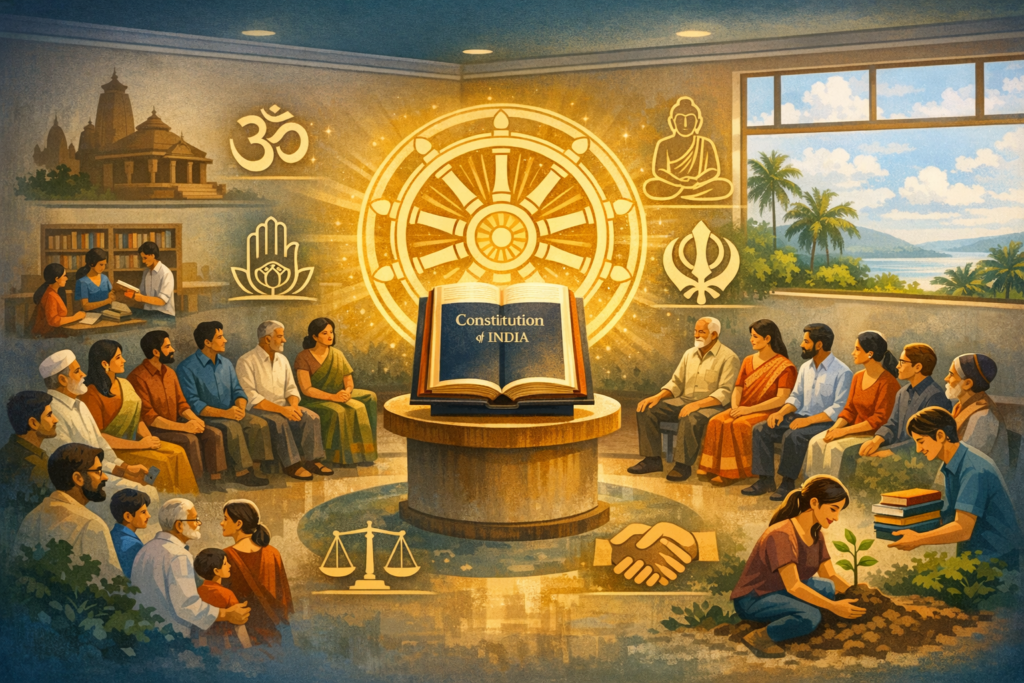
A dharmic lens—affirming the shared ethical inheritance of Hinduism, Buddhism, Jainism, and Sikhism—adds moral clarity without sectarianism. Courses that highlight non-violence (ahimsa), compassion (karuṇā), self-restraint (saṃyama), and truthful speech (satya) show how civilizational values provide resources for reconciliation and responsible citizenship. Classroom dialogues that include Sikh accounts of Partition, Hindu refugee experiences, Jain narratives of displacement, and the historical presence of Buddhist communities in the broader Himalayan region foster empathy and solidarity rather than polarization.
Communication with the public should be proactive. A short FAQ—“Why teach contested figures?”, “How are sources chosen?”, “How is bias mitigated?”—helps align expectations. Regular town-hall style interactions between administrators, faculty, students, and parents can bring disagreements into structured, solution-seeking forums rather than the street alone.
Universities may also consider a campus-wide seminar series on “Teaching Difficult Histories,” inviting historians, political theorists, educationists, and representatives from dharmic traditions to model plural conversation. Such initiatives reframe the moment from a crisis to an opportunity: a chance to reaffirm that India’s knowledge systems are confident enough to face hard truths and charitable enough to hold differences without acrimony.
In practical terms, a measured path forward for the University of Jammu could include: (1) constituting a small expert panel on the specific syllabus in question; (2) releasing a rationale note that maps content to learning outcomes; (3) updating readings to include primary sources and diverse scholarly perspectives; (4) adopting trauma-informed, discussion protocols for Partition-related classes; and (5) committing to a public-facing summary of decisions. Each step signals integrity, transparency, and educational purpose.
Ultimately, the present debate is bigger than one chapter or one campus. It is about how a confident democracy teaches its citizens to analyze rather than anathematize; to learn from history without being trapped by it; and to honor the plural fabric of India—across Hindus, Buddhists, Jains, and Sikhs—by refusing the false choice between silence and sensationalism. A university that grounds its choices in rigorous evidence, procedural fairness, and civilizational values will not merely settle a syllabus dispute; it will teach, by example, what responsible scholarship looks like.
Inspired by this post on Struggle for Hindu Existence.