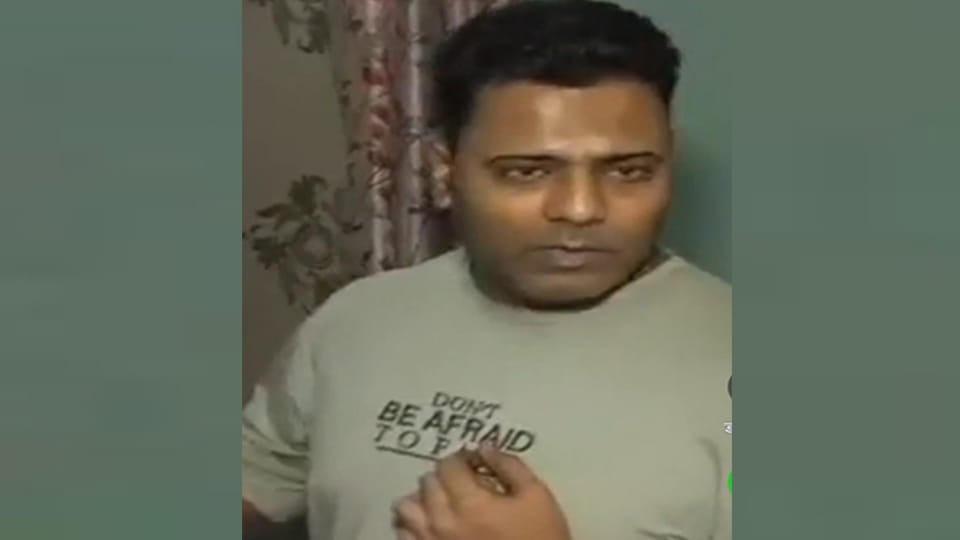
Hindu Janajagruti Samiti (HJS) has called for immediate legal actionup to and including arrest if statutory thresholds are metagainst Nationalist Congress Party (NCP) leader Vikas Lavande, following remarks alleged to be derogatory toward the Warkari Sampradaya. The demand underscores the enduring cultural and spiritual centrality of the Warkari tradition in Maharashtra and highlights a familiar policy tension in India: balancing constitutionally protected free speech with the state’s obligation to prevent injury to religious sentiments and preserve public order.
At the core of the controversy is the Warkari community’s unique place in Maharashtra’s social fabric. The Warkari Sampradaya, rooted in the Bhakti movement and centered on devotion to Vithoba (Vitthal) of Pandharpur, has for centuries embodied egalitarian values, community service (seva), and devotional singing (abhang). Any perceived slight to this tradition resonates far beyond doctrinal boundaries because it touches shared public memory, regional identity, and intergenerational practices that bind communities together.
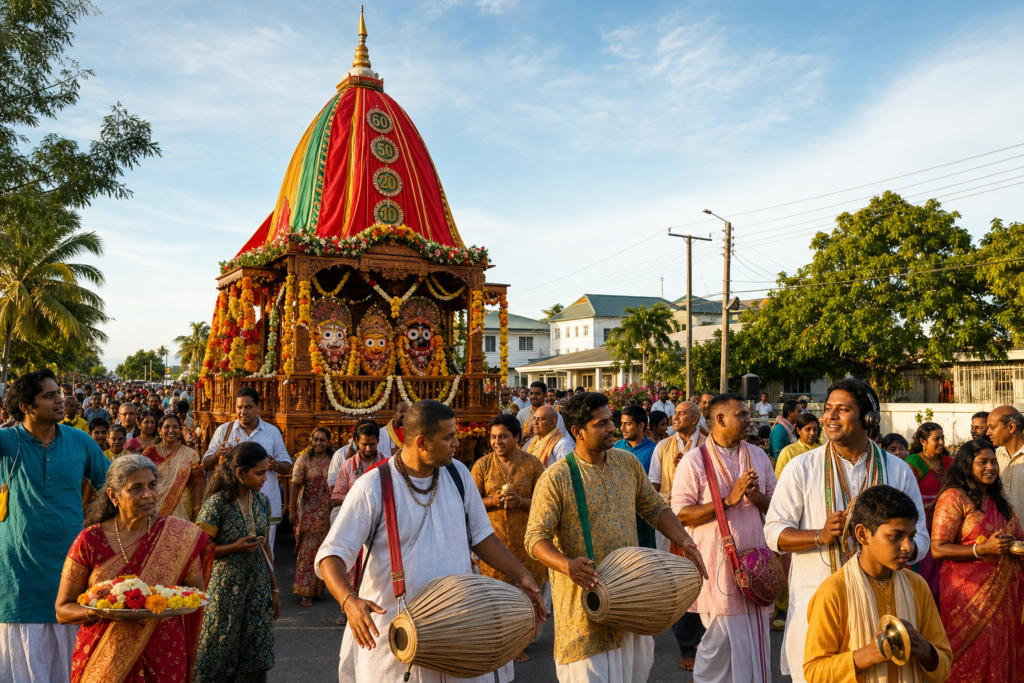
The Warkari pilgrimage (Wari) to Pandharpur during Ashadhi Ekadashi exemplifies disciplined devotion: participants traverse long distances on foot, engage in collective singing, uphold vows of simplicity, and sustain a culture of mutual care. For countless households across Maharashtra, the Wari is also a social institution, a living repository of ethicshumility, restraint, and compassionthat mirrors allied dharmic values visible in Jain ahimsa, Sikh kirtan and seva, and Buddhist karuna. As such, disparaging references to Warkaris are often experienced not merely as criticism of a group but as an affront to widely shared moral sensibilities.
HJS’s intervention must be situated in a broader civic context. Civil society organizations in India frequently serve as first responders to perceived cultural injury, amplifying community concerns and petitioning state institutions for redress. In this case, HJS has articulated a stringent askswift police actionframed as necessary to deter speech that could inflame tensions and fracture social cohesion.
From a legal standpoint, several provisions of the Indian Penal Code (IPC) may be implicated when speech allegedly denigrates religious beliefs or communities. Section 295A penalizes deliberate and malicious acts intended to outrage religious feelings by insulting religion or religious beliefs. Section 153A addresses the promotion of enmity between groups on grounds of religion and other categories, while Section 505(2) deals with statements conducive to public mischief that foster enmity or ill will between groups. Depending on the facts, Section 298 (uttering words with deliberate intent to wound religious feelings) may also be relevant. Whether any of these sections apply turns on intent, content, context, and foreseeable impact on public order.
These offenses interact with constitutional guarantees. Article 19(1)(a) protects freedom of speech and expression, while Article 19(2) permits reasonable restrictions in the interests of public order, decency, and morality, among other grounds. Article 25 affirms freedom of conscience and the right freely to profess, practice, and propagate religion, subject to public order, morality, and health. Jurisprudence consistently emphasizes that neither liberty nor order is absolute; both are to be harmonized in practice through narrowly tailored, proportionate measures.
Arrest is not an automatic or mandatory consequence in such matters. Under the Supreme Court’s guidance in Arnesh Kumar v. State of Bihar (2014), for offenses punishable with imprisonment up to seven years, police must assess necessity and proportionality, often issuing a notice under Section 41A of the Code of Criminal Procedure (CrPC) before contemplating arrest. Although Sections 153A and 295A are typically cognizable and non-bailable, investigative discretion remains bounded by the principles of necessity, proportionality, and demonstrable risk to public order. Additionally, Section 196 CrPC requires prior sanction for cognizance of certain offenses (including 295A and 153A), a safeguard that shapes the prosecutorial pathway, even if it does not invariably preclude investigation.
Recent judicial pronouncements clarify the threshold for penal speech. In Amish Devgan v. Union of India (2020), the Supreme Court reiterated that Section 295A applies to deliberate, malicious actsnot merely careless or inadvertent speechwhile encouraging a close reading of words, context, audience, and likely impact. In Pravasi Bhalai Sangathan v. Union of India (2014), the Court underscored the sufficiency of existing statutory tools against hate speech but cautioned against overcriminalization that chills legitimate expression. Shreya Singhal v. Union of India (2015) further sharpened the distinction between advocacy, discussion, and incitement in the digital age.
Practically, this means law enforcement must establish a clear evidentiary trail: the precise words used; the circumstances in which they were uttered; the likely and actual audience; any prior or subsequent conduct demonstrating malice; and tangible risk to public order. Such a fact-intensive inquiry is crucial for ensuring both accountability and fairness. Swift, visible action can reassure affected communities, but it must remain compatible with due process to maintain long-term legitimacy.
The political context intensifies scrutiny. Maharashtra’s public sphere is deeply interwoven with devotional culture, and political actors are expected to model restraint, especially when speech touches identity and faith. Responsible leadership calls for rapid clarification when remarks cause hurt, public apologies where appropriate, and clear reaffirmations of respect for longstanding traditions such as the Warkari Sampradaya.
There is also a social learning dimension. Repeated flashpoints over religious sentiments indicate the need for structured dialogue platformsfacilitated by community leaders, dharmic scholars, and conflict resolution practitionerswhere grievances can be aired and addressed before they escalate. Codes of conduct for public representatives and party spokespersons, including training on constitutional and legal guardrails, can measurably reduce recurrence.
Preserving harmony among dharmic communities requires focusing on shared ethical commitments rather than litigating identity boundaries. The Warkari ethos of humility and service (seva) resonates with Sikh community kitchens (langar), Jain vows of non-violence, and Buddhist compassion. Elevating these convergences strengthens a civic vocabulary of respect that can withstand partisan pressures.
In practical terms, several immediate steps can reinforce cohesion. First, transparent fact-finding should establish an authoritative record of what was said and in what context. Second, proportionate legal actionranging from a notice under Section 41A CrPC to arrest if necessaryshould reflect the gravity of findings. Third, structured community outreach should acknowledge hurt, reaffirm respect for Warkaris, and invite collaborative initiatives that honor Maharashtra’s Bhakti heritage.
Media and digital platforms play a pivotal role. Editorial diligence in framing sensitive stories, avoidance of sensationalism, and prompt correction of inaccuracies help prevent amplification of harm. Public figures can mitigate injury through timely clarifications, while community organizations can communicate disapproval without resorting to dehumanizing language, thereby modeling the very restraint they seek from others.
Ultimately, HJS’s call for immediate action captures a widely shared expectation in Maharashtra: that institutions respond firmly when devotional communities believe their dignity has been undermined. Yet the most durable outcomes arise when legal accountability, constitutional freedoms, and ethical leadership converge. That convergence is the bedrock of social trust.
Safeguarding the dignity of the Warkari Sampradaya is not solely a matter of legal remedy; it is a cultural commitment to ensure that ancient pathways of devotion continue to inspire without fear or derision. When disputes arise, principled enforcement and sincere dialogue together can convert moments of discord into renewed vows of mutual respect, anchoring unity across Hindu, Buddhist, Jain, and Sikh traditions.
In that spirit, the present episode can serve as a constructive inflection point. Clear-eyed application of the law, public reaffirmations of respect for Warkaris, and cross-community engagement rooted in shared dharmic values can transform grievance into a renewed social compact. Maharashtra’s Bhakti inheritancenourished by the songs of Sant Dnyaneshwar, Sant Tukaram, and countless nameless pilgrimsoffers the ethical grammar to do exactly that.
Inspired by this post on Hindu Jagruti Samiti.