On October 22, 2025 in Lucknow, Uttar Pradesh Chief Minister Yogi Adityanath drew national attention by expressing concern about the politicization of religionphrased as “political Islam”and by urging greater scrutiny of halal-certified products. The remarks prompted wide discussion across India’s public sphere, particularly around consumer rights, religious labeling, and the broader imperative to safeguard social cohesion.
At the core of the debate lie two distinct issues that merit careful separation: the political mobilization conducted in the name of any faith, and the faith traditions themselves. An academic approach highlights this distinction to preserve interfaith harmony, especially among the dharmic traditions of Hinduism, Buddhism, Jainism, and Sikhism, which emphasize ahimsa, mutual respect, and shared civic responsibility. Such a lens allows society to examine policy questions without stigmatizing any community or belief.
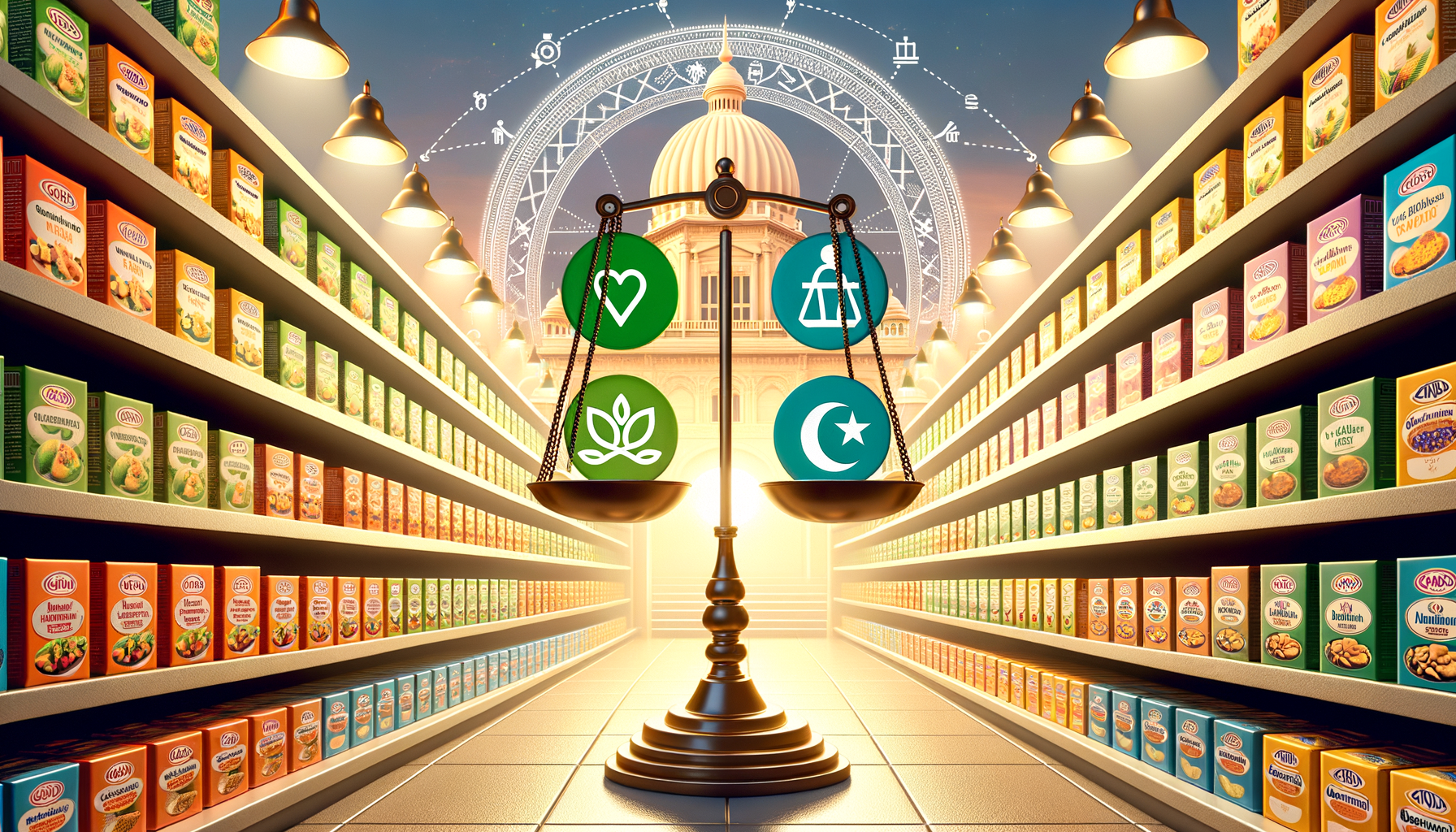
Halal certification functions primarily as a consumer-information and compliance mechanism, similar in purpose to vegetarian, vegan, or allergen labeling. In India’s diverse marketplace, multiple certification regimes coexist, and each raises questions of transparency, standards, and oversight. A balanced discussion can therefore focus on regulatory clarity, clear labeling parity, and consumer education rather than communal polarization or economic boycotts.
Observers across Uttar Pradesh and beyond voiced a central concern: public calls framed around religious identity risk deepening fault lines precisely when society seeks unity. A constructive path emphasizes uniform consumer-protection norms, inclusive stakeholder consultations, and standardized, easy-to-understand labels that empower informed choices. This approach aligns with the civic values embedded in Sanatan Dharmasatya (truth), ahimsa (non-violence), and dharmic accountabilitywhile honoring India’s tradition of interfaith coexistence.
From a policy perspective, regulators and industry bodies can convene an interfaith certification roundtable to review equivalence across systems (vegetarian, vegan, Jain-friendly, halal, and others) and ensure consistent disclosure standards. Parallel investment in consumer-awareness campaigns can demystify certification processes, reduce misinformation, and support fair market practices. Such steps keep the focus on systems and standards, not on communities.
Historical experience in India demonstrates that charged rhetoric around identity often escalates beyond intentions, straining Hindu-Muslim relations and unsettling communal harmony. Lessons from the past suggest that when critiques remain targeted at governance, transparency, and due processrather than at faith identitiespublic discourse produces better social and policy outcomes. In that spirit, balanced regulation and dialogue become safeguards for unity.
Everyday life offers relatable illustrations: families navigating markets during festivals such as Diwali often rely on clear symbols to purchase vegetarian sweets; those with dietary restrictions look for allergen labels; and faith-observant consumers seek assurances that products align with their principles. Enhancing label clarity for allwithout advocating for or against any faith-based certificationboth protects consumer rights and upholds the ethos of inclusivity.
A proven path forward is therefore twofold: strengthen consumer-rights frameworks and deepen interfaith dialogue. Practical measuressuch as a consumer-labeling charter, third-party audits, and grievance redressalcan coexist with community outreach grounded in dharmic values. This balanced approach transforms a contentious moment into an opportunity to reinforce India’s long-standing commitment to pluralism and to the unity of dharmic traditions.
In summary, the recent remarks in Lucknow highlight a broader national conversation: how to maintain social harmony while ensuring transparency in the marketplace. By directing attention to standards, fairness, and educationrather than communal fault linessociety can protect Sanatan Dharma’s universal ideals and strengthen interfaith trust. Such an approach is not merely conciliatory; it is strategic, ethical, and aligned with India’s civilizational wisdom.
Inspired by this post on Struggle for Hindu Existence.