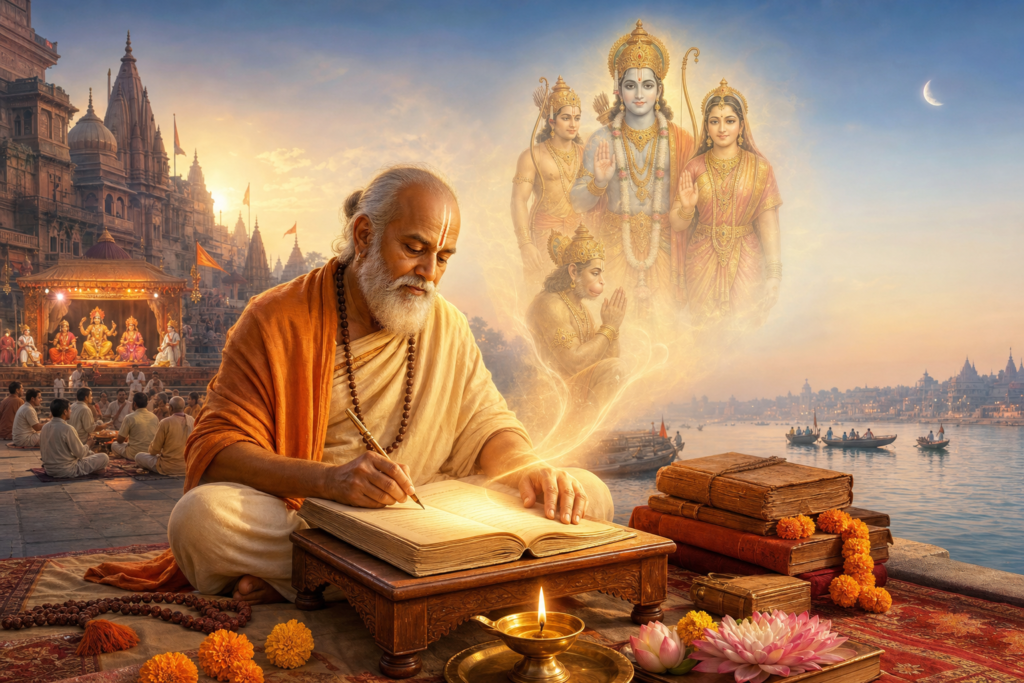
Across the Ramayana tradition, the theme of knowledge and humility unfolds with enduring clarity. The episode often summarized as “Ravana’s mirror” serves as a metaphor for self-examination: when intellect hardens into pride, downfall follows. In this moral landscape, Narada’s counsel to Hanuman functions as a timeless correctiveknowledge must be yoked to humility, devotion, and service.
Hanuman’s education itself exemplifies the sanctity of the Guru–Shishya Relationship. After childhood pranks left mortal teachers exasperated, Suryathe sun godaccepted the role of his guru. As Surya traversed the sky, Hanuman learned while facing the chariot, moving in disciplined synchrony so he would never turn his back on the teacher. This rigorous practice cultivated mastery over grammar, śāstra, and sacred verse, but, more importantly, instilled discipline and reverence that anchor true learning.
Upon completing his studies, Hanuman requested guru-dakṣiṇā. Surya did not ask for wealth or praise; he directed Hanuman to serve Sugriva. The instruction was profound: the fruit of learning is not self-congratulation but dharma through seva. In binding knowledge to responsibility, Hanuman’s education transitioned from proficiency to purpose.
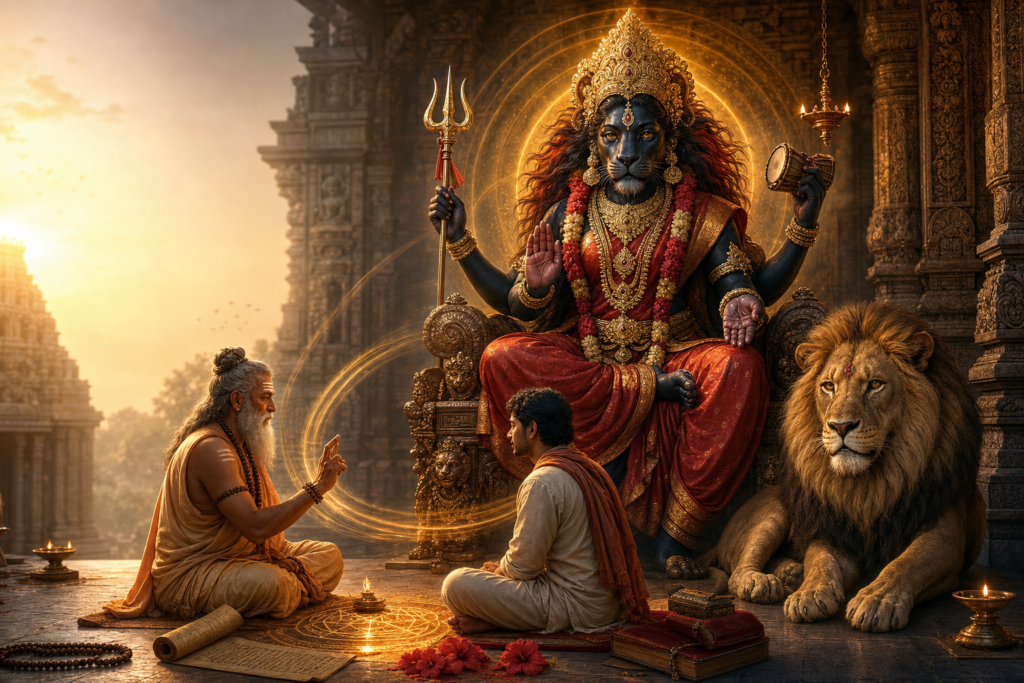
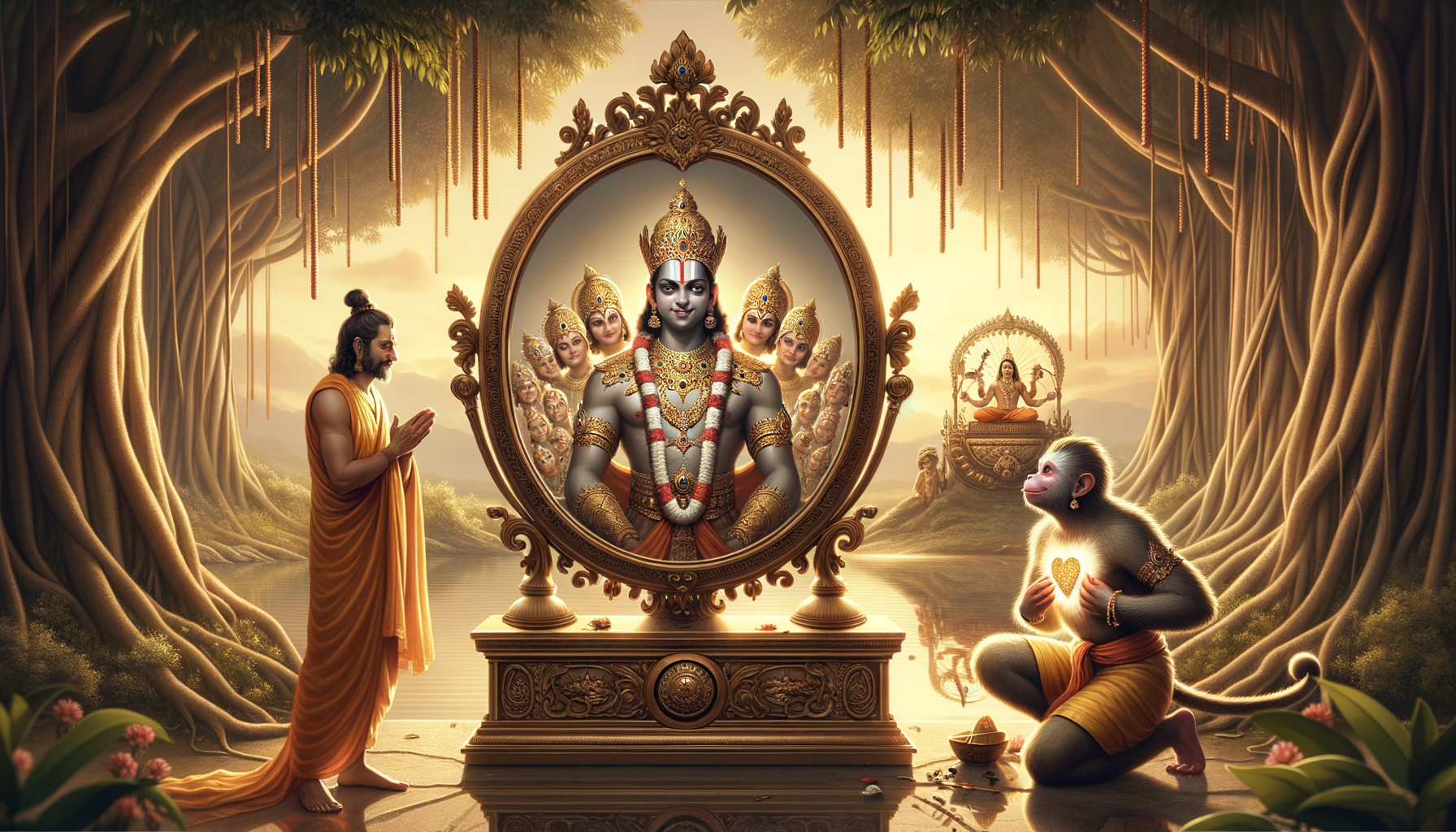
Traditions situate Narada’s wisdom at precisely this juncture where knowledge risks breeding conceit. Narada, the tireless teacher of discernment, is said to have warned that intellect without humility becomes a polished mirror reflecting only one’s ego. To make the point vivid, he invoked Ravanathe brilliant scholar of the Vedas, master of music and statecraftwhose fall was not for lack of knowledge but for excess of pride. In this mirror of Ravana, all seekers are invited to see the subtle danger of intellectual hubris.
Hanuman’s life illustrates the antidote. Though unparalleled in strength, learning, and memory, he consistently chose the path of nimbleness of heartbowing to Lord Rama, identifying as dāsa rather than doer, and subordinating accomplishment to devotion. In visual culture and katha, Hanuman’s chest-revealing gestureshowing Rama and Sita enthroned withinsymbolizes the displacement of ego by loving remembrance. Knowledge remained his lamp, but humility was the hand that carried it.
These insights resonate across the dharmic family. In Buddhism, prajñā (wisdom) is inseparable from karuṇā (compassion); in Jainism, Anekāntavāda cautions against absolutism and enjoins intellectual humility; in Sikhism, nimrata (humility) and seva (selfless service) temper learning with ethical action. The shared teaching is unambiguous: knowledge achieves its highest function when it nurtures unity, restraint, and service to the common good.
Applied to contemporary lifeacademia, public discourse, leadership, and technologythe lesson is practical and urgent. Expertise should invite greater listening, not less; achievement should increase empathy, not entitlement. The Guru–Shishya paradigm offers a corrective architecture: discipline, gratitude, and accountability keep learning aligned with dharma. This is intellectual humility in action, a virtue that prevents the “Ravana within” from eclipsing clarity and compassion.
Narada’s warning and Hanuman’s response together outline a complete path: seek knowledge diligently, receive it reverently, test it against service, and guard it with humility. In that balance, learning becomes light rather than heat, and the mirror ceases to flatter the ego, reflecting instead the larger truth that binds all dharmic traditions in shared wisdom and unity.
Inspired by this post on Hindu Blog.