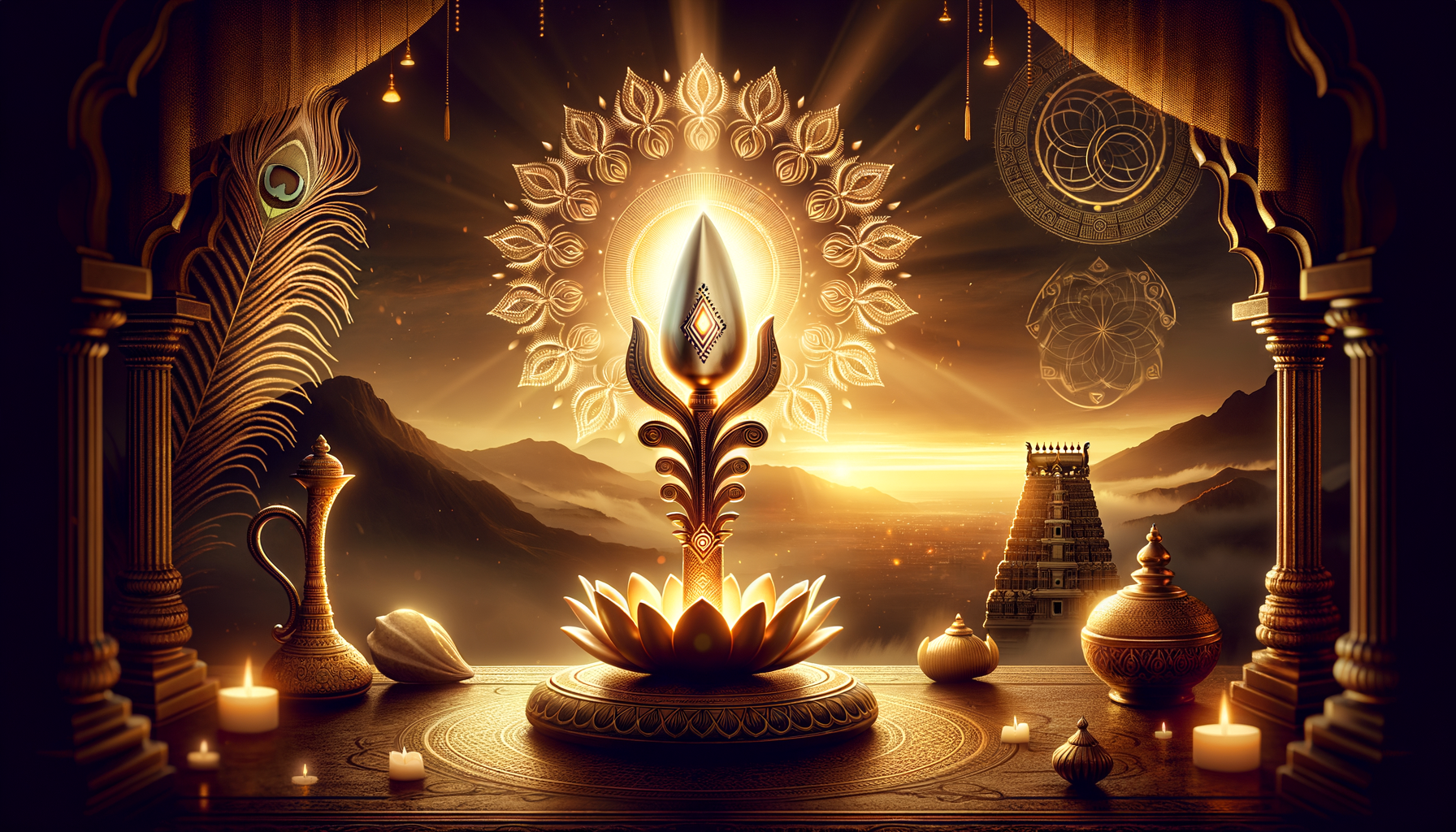
Within the sacred symbolism of Hindu traditions, the Vel of Lord Murugan stands out as a luminous emblem of inner transformation and ego destruction. Far beyond a physical spear, the Vel functions as a contemplative instrumentguiding seekers toward clarity, ethical courage, and compassionate action. In temples and processions across Tamil regions and the wider diaspora, the Vel is revered as a divine weapon that cuts through ignorance, aligning the mind with truth and the heart with devotion.
Iconographically, the singular, gleaming tip of the Vel signifies one-pointed attention (ekāgratā)a decisive focus essential to meditation (dhyāna) and disciplined living. Its sharpness symbolizes discernment (viveka), the ability to distinguish the real from the unreal, the enduring from the ephemeral. In this reading, the Vel is not an implement of outward violence but a precise tool that refines attention, purifies intention, and directs energy toward self-realization.
The “destruction of ego” invoked by the Vel does not advocate annihilation of personality; rather, it points to the gentle yet firm dissolution of ahamkarathe constricting identification that narrows perception. When egoic patterns loosen, compassion expands. In this sense, the Vel operates as a spiritual scalpel: it removes the veils of avidyā (ignorance) that obscure inner clarity, allowing wisdom and devotion (bhakti) to arise naturally. This process is consonant with the ethical heart of dharmic living.
Ritual life further illuminates the Vel’s meaning. During festivals such as Thaipusam and Karthigai, devotees undertake vows, pilgrimages, and Kavadi offerings that embody discipline, gratitude, and surrender. The Vel here functions as a vow made visiblereminding practitioners that courage on the path is not bluster but steadiness, humility, and service. In Tamil temples dedicated to Murugan (also revered as Skanda or Kartikeya), the sight of the Vel evokes both protection and guidance, anchoring communal devotion in shared ethical ideals.
This symbolism resonates across the broader dharmic familyHinduism, Buddhism, Jainism, and Sikhismwhere inner clarity and self-mastery are celebrated. The Buddhist vajra signifies indestructible wisdom that cuts through delusion; Jain teachings cultivate vigilant awareness (apramatta) and right vision (samyaktva); the Sikh Khanda represents truth cleaving falsehood while affirming disciplined courage. In each tradition, a unifying thread emerges: liberation unfolds through clarity, compassion, and responsible action. The Vel’s message, therefore, strengthens interfaith harmony within the dharmic sphere.
In lived experience, a seeker standing before Murugan’s sanctum may feel the Vel’s invitation: hold the mind steady, meet challenges with moral courage, and let compassion guide every decision. Such momentsaccompanied by the sound of the conch, the fragrance of incense, and the cadence of Tamil hymnsturn abstract philosophy into felt insight. The Vel transforms from symbol into practice when the gaze is softened by humility and the heart is readied for service.
Practically, the inner Vel can be “wielded” through daily disciplines. Svādhyāya (self-study) reveals unexamined narratives; viveka (discernment) prioritizes what truly matters; and karuṇā (compassion) ensures that clarity never hardens into judgment. Together, these cultivate inner balance, making the mind resilient and the heart expansive. Over time, reactive ego patterns subside, and a grounded confidencerooted in dharmaemerges.
Seen in this light, Lord Murugan’s Vel is a comprehensive spiritual pedagogy: it instructs attention, fortifies character, and harmonizes devotion with wisdom. Whether contemplated in silence, honored during festival, or remembered in moments of strain, the Vel offers a practical, unifying path toward freedom from ignorance and alignment with truth. It affirms that courage and compassion belong togetherand that real victory lies in clarity of mind and generosity of heart.
Inspired by this post on Hindu Blog.