In the panorama of Hindu philosophy, Shiva is repeatedly recognized as the Supreme, the infinite Brahman that undergirds and suffuses all existence. Within Virashaivism (the Lingayat tradition), this recognition is neither abstract nor remote; it is embodied and made immediate through the linga, the sign of Shiva’s boundless reality. The tradition speaks to a lived, experiential realization of non-duality that honors diversity in practice while guiding seekers toward direct insight.
The term Lingasthala, understood here in a descriptive sense, illuminates the "place" or locus in which the linga functions as the field of realization. Sthala signifies a ground or site, and in Virashaiva usage it resonates with the well-known Shatsthala schemasix stages of spiritual maturationwhere the linga anchors progress from devotion to ultimate identity with the Absolute. Lingasthala thus encompasses both sacred geography and the interior landscape of realization.
Upanishadic sources lay the foundation for equating Shiva with Brahman. The Shvetashvatara Upanishad, with its theistic hymns to Rudra, proclaims an ultimate that is singular, all-pervasive, and causally independent. The Taittiriya and Chandogya Upanishads describe Brahman as the essence of all that is, the substratum in which the many are reconciled in the One. Virashaiva thought draws this Upanishadic current into a distinctive Shaiva channel: the Supreme is Shivawithout second, beyond attributes, yet lovingly accessible through symbol and song.
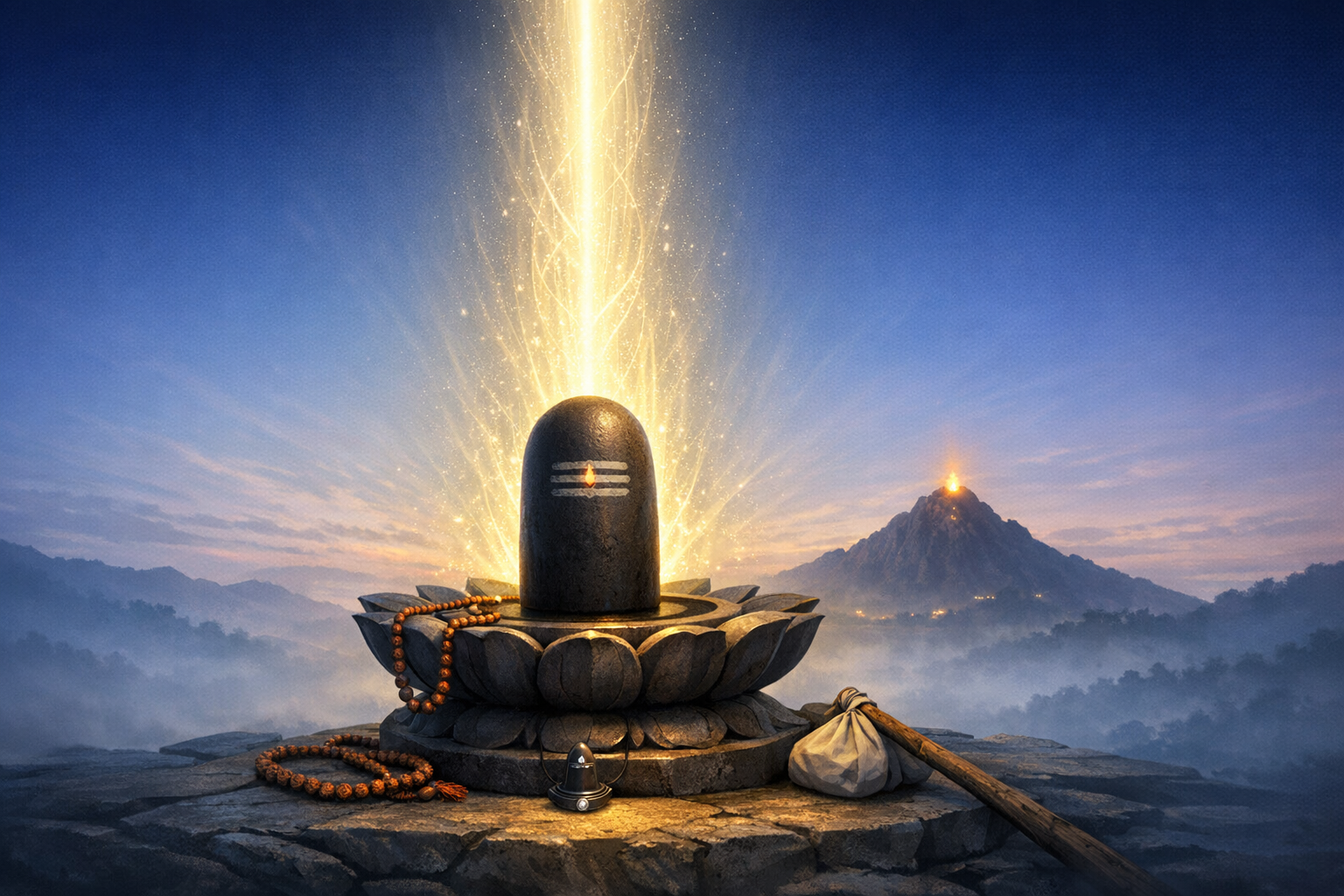
The celebrated Lingodbhava narrative, found in Puranic lore, offers a dramatic theological metaphor: a measureless column of fire from which the linga emerges. Neither Brahma nor Vishnu reaches its limits, signaling that ultimate reality exceeds every form and concept. This myth is ritually remembered at Arunachalaespecially during Karthigai Deepamwhere a beacon on the hill honors Shiva’s untamed infinitude.
Historically, Virashaivism crystallized in twelfth-century Karnataka through the visionary leadership of Basavanna and the sharana movement. The Anubhava Mantapa fostered open dialogue and egalitarian ethos, welcoming women and men from across social strata. Philosophically grounded and socially engaged, the movement advanced a synthesis of devotion, ethical labor, and contemplative knowledgea synthesis that remains emblematic of Sanatana Dharma’s resilience and adaptability.
At the core of Virashaiva metaphysics stands the affirmation that Shiva is both nirguna (attributeless) and saguna (with attributes), with Shiva-Shakti signifying the dynamism of consciousness and its powers. The tradition’s classic anthology, Śūnya Sampādane, speaks of śūnya not as a negation but as fullnessthe pregnant zero in which all forms arise and return. This śūnya, akin to the plenum of Brahman, invites respectful dialogue with Buddhist reflections on śūnyatā while preserving the distinct Shaiva insight into auspicious consciousness (Śivam).
The linga is the definitive Virashaiva sign of this Supreme. Philologically associated with "mark" or "sign," and often interpreted through the cycle of dissolution and emergence, the linga offers a threshold where the finite mind turns toward the infinite. It is aniconic and inclusive, a semiotic bridge from form to formlessness that exemplifies the continuity between saguna worship and nirguna realization.
Virashaiva practice commonly distinguishes three modalities of the linga, each contributing to Lingasthala as the field of realization. The Ishta-linga is personal and portable, worn on the body and worshiped in daily rites. The Jangama signifies the living embodiment of Shiva’s wisdom in itinerant teachers and the realized community. The Sthavara-linga, immovable and enshrined in temples, situates personal devotion within a broader sacred cosmos.
Ishta-linga worship centers the relationship between devotee and the Absolute, translating metaphysics into intimate praxis. Through Lingachara (worship of the linga), one cultivates focused attention, gratitude, and reverence. The mantra "Om Namah Shivaya" accompanies these rites, rhythmically drawing the heart-mind toward the ground of being and reinforcing the recognition that Atman shines as Shiva.
This devotional core is framed by the Panchacharas (five constitutive codes) and Ashtavaranas (eight protective observances). Together they cultivate purity, ethical clarity, and an ever-deepening interiorization of worship. The outward coveringssuch as sacred ash, Rudraksha, and the constant remembrance of Shivanurture an inward awakening that steadily matures from faith to insight.
Virashaiva literature maps spiritual ascent through the Shatsthala, classically enumerated as Bhakta, Maheshwara, Prasadi, Pranalingi, Sharana, and Aikya. The sequence moves from devotional intimacy and service to the assimilation of grace, the stabilization of inner realization, and the culminating non-dual identity in which individual and Supreme are known as one. Lingasthala, as an interpretive lens, recognizes the linga as the steady axis of this ascent.
What makes this ascent experiential is anubhavadirect encounter with truthrather than mere conceptual assent. The linga functions as pramāṇa (a means of valid knowing) by focusing awareness, refining attention, and aligning breath and mantra until the witness-consciousness dawns. In that dawning, Shiva is not merely believed but realized as Brahman, the substratum of every perception and the luminosity of every thought.
Virashaiva insights converse fruitfully with adjacent Shaiva and Vedantic streams. Kashmir Shaivism’s pratyabhijñā (recognition) describes awakening as remembering one’s innate Shiva-nature. Shaiva Siddhānta articulates disciplined ritual culminating in grace-infused knowledge. Advaita Vedanta proclaims Brahman as the only reality and the Self as not other than That. Across these streams, Shiva and Brahman converge as names for the same boundless plenitude.
Linguistically and symbolically, the linga carries cosmological depth. Its vertical axis mirrors the axis mundi, the pole of the universe around which the cycles of manifestation and withdrawal revolve. In many sacred settings, the yoni base signifies Shakti, the creative matrix. Together, linga and yoni affirm that reality is both consciousness and its power, utterly one yet playfully manifold.
In practice, Virashaiva seekers internalize cosmology through breath, mantra, and contemplative presence. Some focus the mind through gentle trataka on the Ishta-linga; others stabilize attention at the heart or between the brows while intoning "Om Namah Shivaya." As thought subsides and breath quiets, a "prāṇa-linga" awareness emergesan immediate sense that life-force itself is a gateway to the unconditioned.
Ethically, the movement grounds insight in the rhythms of daily life. Basavanna’s emphasis on kayaka (work as worship) and dasoha (selfless offering) weaves devotion into craftsmanship, livelihood, and social responsibility. This integrated path resonates with the broader dharmic commitment to compassionate serviceakin to Sikh seva and the Jain dedication to ahimsawithout compromising the rigor of contemplative realization.
Sacred architecture intensifies this symbolism. From the Jyotirlinga shrines to the majestic sanctum of Brihadeeshwara, temple lingas anchor communities in a shared axis of meaning. The aniconic form welcomes every seekerregardless of backgroundinto a silent pedagogy where sight, scent of vibhuti, and the cadence of bells conspire to still the mind and open the heart.
Contemporary observers often note a common arc in lived experience. At first, the linga feels like a holy object; over time, it discloses itself as a mirror of the witnessing Self. Awe gives way to intimacy; separation softens into presence. The journey is not an escape from the world but an infusion of life with clarity, courage, and compassion.
Mantra sādhanā deepens this movement. The pañcākṣarī "Namah Shivaya" is correlated in traditional expositions with the five elements, subtly re-harmonizing the sensorium and re-centering awareness. The mantra’s inward momentum tempers reactivity, transforms habitual patterns, and draws awareness toward the substrate that the Upanishads call Brahman.
From an epistemic standpoint, the linga navigates the paradox of form and formlessness with precision. It invites a seeker to begin where the senses can reston a concrete focal pointyet it refuses to confine the infinite. Thus devotion ripens into discernment, and saguna worship matures into nirguna realization without discarding the devotional heart that made recognition possible.
Scriptural voices reinforce the metaphysical claim. The Shvetashvatara Upanishad raises Rudra to the level of the cosmic Absolute; the Taittiriya’s Śrī Rudram extols the all-pervading presence of Shiva in every direction; later compositions such as the Shiva Gita articulate the path of devotion culminating in identity with the Supreme. Across genres and eras, a consistent theme surfaces: Shiva is the infinite Brahman, intimate to all beings.
Crucially, dharmic pluralism is preserved. The acceptance of diverse ishta-devatās and methodologiesjñāna, bhakti, karma, rāja yogaensures that communities and individuals can grow along paths suited to their dispositions. This ethos aligns naturally with Jain anekāntavāda (the many-sidedness of truth), the Buddhist cultivation of wisdom and compassion, and the Sikh affirmation of oneness in Ik Onkar, strengthening bonds of mutual regard among the dharmic traditions.
Virashaiva thought, therefore, does not seek uniformity but unity. It upholds the freedom to worship and realize according to one’s nature while guarding the shared insight that ultimate reality is one. In the broad tent of Sanatana Dharma, this vision fortifies communal harmony and invites constructive dialogue across traditionsHinduism, Buddhism, Jainism, and Sikhismeach contributing distinctive strengths to a convergent quest for truth.
In contemporary life, Ishta-linga practice offers a portable sanctuary. Brief morning worship, a mid-day recollection through mantra, and an evening contemplation can steady attention amidst modern complexity. Such rhythms complement mindfulness-based disciplines while remaining rooted in Vedic and Shaiva sensibilities, bridging classical wisdom with present needs.
For seekers who approach through knowledge, Virashaiva literature offers incisive formulations. The Shatsthala conveys a graded pedagogy; the Panchacharas and Ashtavaranas refine conduct; the Vachanas of Basavanna, Akka Mahadevi, and Allama Prabhu preserve a luminous vernacular theology. Together they articulate how devotion, ethics, and insight infuse one another until the distinction between worshiper and worshiped has quietly dissolved.
Across India’s sacred geography, devout communities remember Lingodbhava as the revelation of Shiva’s measureless light. In this remembrance, Lingasthala becomes more than a location; it becomes a way of seeing. Every shrine, every household altar, every breath-centered recollection of "Om Namah Shivaya" is recognized as a gateway through which the finite apprehends the Infinite.
Philosophically, identifying Shiva with Brahman resolves theological plurality at the level of final truth while honoring plurality at the level of practice. Metaphors of light and axis, disciplines of mantra and breath, and ethical commitments to service and truthfulness converge upon the same recognition: the Self is not other than the Supreme. In Virashaiva terms, this is Aikyathe consummation in which separation has no foothold.
The resulting vision is neither sectarian nor exclusionary. It is a rigorous, compassionate invitation to realize the foundation that the Upanishads, Shaiva agamas, and Vachanas describe in their own registers. In a world prone to fragmentation, the Lingasthala insight reframes life as a sanctuary of presence, where every act can be a gesture of worship and every relationship a mirror of the One.
Viewed in this light, Shiva as the infinite Brahman is not only a metaphysical postulate but a transformative orientation toward reality. Virashaivism offers practical meansIshta-linga worship, mantra, service, ethical disciplineby which that orientation is stabilized. The outcome is a calm clarity that strengthens families, communities, and the living unity of the dharmic traditions.
Lingasthala, then, signifies the entire arc: the place, the practice, and the presence through which the Infinite is both contemplated and known. By attending carefully to this signsteadily, gratefully, with humilityseekers discover that the sign and what it signifies are not two. In that discovery, Shiva is realized as Brahman, and the heart recognizes itself as boundless.
Inspired by this post on Hindu Blog.